Tag Archives: Scotland

Past Tense Future Imperfect

It’s a pleasure to introduce this month’s guest poet Jon Miller. We met some years ago on a poetry workshop. His biography is at the end of the post.

Jon was winner of The Poetry Business International Book and Pamphlet Award 2022 and his latest pamphlet Past Tense Future Imperfect (2023) is published by Smith|Doorstop from which these three poems are taken.

They Made A Crime Series Here

We are miles off Hringvegur, American satnav garbling
‘Fjardarheidi’: a high pass, a blizzard shreds the windscreen,

then down to Seydisfjordur, where the road stubs itself out
against the fjord; like us, it has given up fighting the inevitable.

Past the fish factory, its yellow flag cracking the wind.
Corrugated sheds, oil tanks. Houses stare into themselves.

This town has let out all its breath, waits to take another
next century. For the lonely, binoculars stand on windowsills.

A thought bubble: Stay low. The world is not your lobster.
Tie everything down. Run for port. A beard hides a lot of guilt.

Picnic benches crouch like crabs at car parks and supermarkets;
husbands keep engines running in case wives make a break for it.

A camper van – rented – drifts by, turns down the wrong road,
bikes shrouded in grey, a child’s face at the window.

Beside the filling station three farmers lean into a trailer,
debate the efficacy of bladed implements. One looks up.

Nothing connects until everything does. We have tickets,
drive into the ferry, its belly, its deep machine hum, extras no longer.

Lost Child

Not the brazen trumpeters
or the flittering sailboats
or in the minds of mariners
with their white-washed eyes
is there a button of hope.

Neither in the small boys roaming
the fogged avenues
called home for tea
returning with birds’ nests
and the ruins of puberty.

You become a twitch
in the fingertips of newscasters
or out here where it happened
the midnight click of the latch
the song in the five-barred gate.

This Way to the Observation Lounge

Out through the placid archipelagos they go
at ease in their daylit aquarium
moving over water at the pace of a slow car.

The sea is flat on its back. The flag barely mutters
at the mast. All are hypnotised by empty sea and sky,
by the line where nothing meets.

They have left the world to turn without them.
and sit with hands clasped in laps
as if listening to a sermon on vacancy.

Asleep, they twitch to escape their clothes.
They know themselves the way the blind
feel what they cannot see.

I could tuck in chins, settle a head on its neck,
retrieve dropped novels, while their eyes read dreams
the way an unborn child pushes against its mother’s belly.

They are at rest. Someone is on the bridge.
Over the horizon is harbour. Weather is busy somewhere else.
Who they are has fallen away like rain over islands.

Biography

Jon Miller lives near Ullapool in the Scottish Highlands and has had poetry published in a wide range of literary magazines as well as being a contributor of book and exhibition reviews and literary journalism. He formerly editor of Northwords Now, a magazine featuring writing from the north of Scotland. He was short-listed for the Wigtown Poetry Prize in 2021 and awarded joint First Place in the Neil Gunn Poetry Competition 2022.
Carnation Lily Lily Rose

It’s a great pleasure to feature four poems from our guest poet Jane McKie. Her collection Carnation Lily Lily Rose was published by Blue Diode earlier this year. The title and title poem are after John Singer Sargent’s painting of the same name. Each word is also the heading of the four sections of the book.

The collection includes a range of poetic forms and shapes: prose poems, a concrete poem, long and thin poems. We meet couplets and triplets, striking titles: Cairn to a Dead Biker, X-Ray of a Deer’s Skull. The poems crackle with energy and vitality. The book is ‘a hymn to all the different kinds of connective tissue that lightly, but firmly, weave us into the fabric of our own and others’ lives’. (David Kinloch).

Lord, Make Me an Instrument

Here the clouds outrun land: greyer, fleeter,
casting their shadows on the estuary and making
mud move at their speed, blown rather than
fixed, flexing with light / dark / light / dark,
sea-blite at the edges to catch the odd discarded
fag butt. Sea pea, clover, yellow vetch.

Further out, the flattened eelgrass – a trammelled
thatch without the tide; with it, upstanding,
like proud speech. Into this landscape creeps
a man following redshank, black-tailed godwits;
watch him huddle – glimmer of a struck match.
Winged souls call to the crackle of his breath.

Sand

Tonight, I’m in an arbour designed
by an artist who moonlights as a gardener.

Our host’s aesthetic sixth sense is spot on:
look how the roses jostle the frame,
how the lattice pins them like pretty moths.
A drink in one’s hand is compulsory.

And we guests are laughing, playing up
a hunger that may be on the wane,
but holds us, tonight, as snug as palms
around glasses. It is brilliant, this garden,
and familiar, as if it is not a garden at all
but a gateway, and we are not guests
at a middle-aged party but school-leavers
on a promised, delicious brink.

Tonight, if you sliced me open,
you would find a swirl of glitter:
all the shades of the sand
at Alum bay squeezed
into one miniature glass lighthouse.

Antigravity

They hover along pavements, barelegged,
on Mini Micro scooters, a flock of them –

the best of us. Hovering in shirtsleeves, hearts
and mouths open before guile sets in.

Don’t they feel the cold? Hovering to class
like motes in light.

On this unbearable, ordinary day, we mothers
can’t stop them lifting off the ground,

their small hands to their mouths
as they giggle, spitting out milk teeth,

growing too quickly. Catch onto
their waistbands and don’t let go.

Harness

I think of the invisible harness that hitches us, one to the other,
how it signifies both baggage and provision;

how, in the past, I have slipped the harness
and tested freedom, finding it overrated;

how mood is a harness, like gravity, pitching our orbits
a little off-kilter;

how sometimes the harness pinches and we are inclined
to worry it, fidgeting, even to tear at it;

how we trust the harness to repair itself like skin.

Biography

Jane McKie works as a Senior Lecturer in Creative Writing at the University of Edinburgh. Her first collection, Morocco Rococo (Cinnamon Press) was awarded the 2008 Sundial/Scottish Arts Council prize for best first book of 2007. Recent collections include Quiet Woman Stay (Cinnamon Press, 2020) and Jawbreaker (2021) which won the Wigtown Poetry Festival’s Alastair Reid’s Pamphlet Prize 2021.

Jane, as a member of the Edinburgh-based Shore Poets, facilitates poetry readings and music. She is interested in collaboration across forms, writes with 12, a collective of women writers, and with Edinburgh’s genre spoken word group Writers’ Bloc.

Fieldfare, blown off course, early spring

A lively and intriguing title for a poem sequence by our guest poet Lydia Harris. Her work has featured here before (March 2019). This sequence is from her new collection Objects for Private Devotion, beautifully produced by Pindrop Press, published last year. Lydia lives in the Orkney island of Westray. Many of the poem sequences in her new book focus on local culture, people, nature, objects – such as the prayer nut which provides the cover image.

The sequence about the fieldfare is inspired by the great Serbian poet Vasco Popa. The Blackbird’s Field is also a sequence, from Popa’s Collected Poems, close on 400 pages – drawing on folk tale, surrealist fable, personal anecdote, and tribal myth.

Fieldfare, blown off course, early spring

After Vasco Popa 

My Fieldfare

He’s made of bone pins.
He’s a book inside a box
with a beak-shaped lid.
A snapped-shut lock.

He Makes Landfall

at Hagock where the Scollays
ploughed in patches,
wore tracks with their boots,
gulped spring water,
built their house.

Body

His muscles hurtle
from rump to neb.

First Song

The sky is my eye,
earth my egg.
From Noup to the Ness
in the turn of my head.

How I know him

His underwing flashes,
he wheels before settling
on plough or pasture.

His Manners

When the tide is asleep
he swallows it.
His wings are granite
with a hundred eyes.

Second Song

Bone grinds skin,
stone splits grain.

His Passion

Flames again.
He thinks he is clay.
The sea wrought him
like a mace head,
speckled, banded,
half-way done.
Bird before he was bird.

Third Song

Snapped flint,
water-worn
sea pebble.

His Dress Code

He squints through an eye mask,
lifts his mottled back through west winds,
across north winds.

A Flagstone in the Wall Speaks to Him

Grapple with my grain.
My night surfaces.
Tap the lichen from my face.
Draw silver from my base.

Lament

I’ve lost my folk,
my night ships,
my dear blood,
thick then thin,
night bird, stray bird.

Tongue

A whip of liver-coloured flesh
sheathed in the coffin of his beak.

His Heart

Its flicker forms ice,
his own padlocked air.
His map of the wind
stiff with frost
in the skirts of an old storm.

He Takes His Leave

Fooled by the moon.
He’s lost his bearings,
like the night boat.
We need to talk
on the edge of sight.

Biography: Lydia Harris lives in the Orkney island of Westray. Her first pamphlet Glad not to be the corpse was published by Smiths Knoll in 2012. In 2017 she held a Scottish Book Trust New Writers’ Award. Her pamphlet A Small Space was placed first in the Paper Swans competition 2020.

Kilmartin

Loch Awe, Argyll and Bute, Scotland

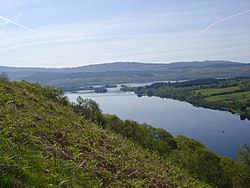
A fellow psychologist I worked with for many years lived near Loch Awe, Argyll and Bute, Scotland. He’d often told me about the splendid views they had from their small house. Loch Awe is the third largest as well as the longest (41 km) freshwater loch in Scotland. If you’re into that kind of thing, it’s famed for trout fishing. The ruins of Kilchurn Castle must be one of the most photographed castles in Scotland!

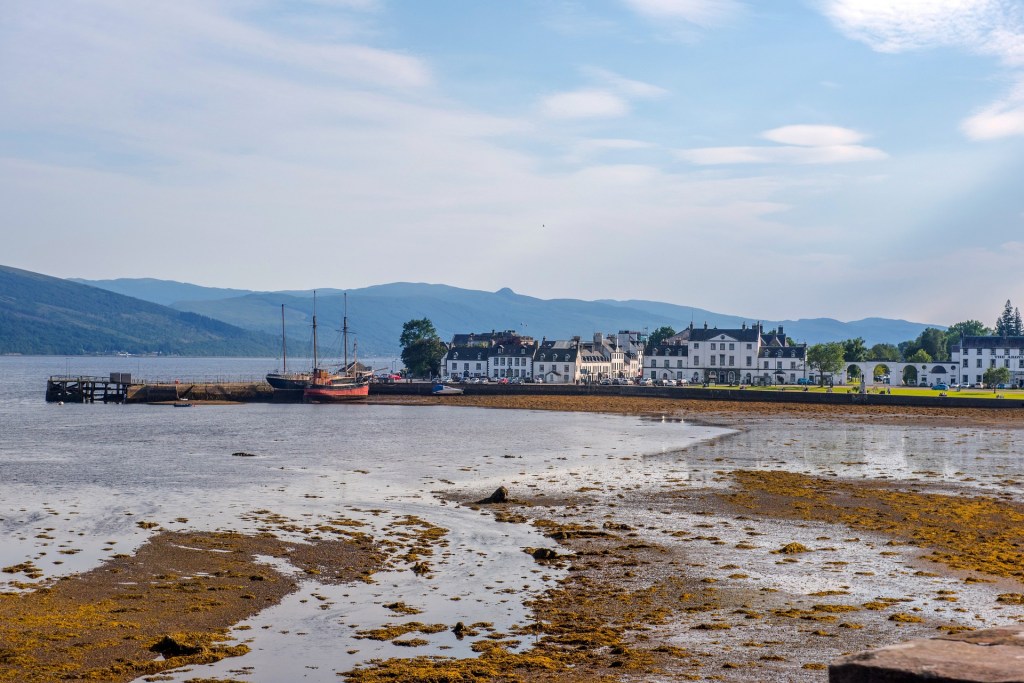
Before visiting my colleague, I stopped for a coffee and something to eat in Inveraray, with its splendid Georgian architecture. There were coach loads of tourists at the Castle, but I went for some retail therapy: bough a comfortable, warm jacket that I keep in the caravan for those below zero April days.

Inveraray, photo credit Sophia Shilmar on Pixabay

My next stop was Kilmartin Museum in Lochgilphead. The area round Kilmartin with Kilmartin Glen is rich in historic monuments, 150 of them prehistoric: standing stones, stone circles, cairns, rock carvings – often with the familiar cup and ring mark.

Kilmartin Museum with shop and cafe

I was almost the only visitor at Kilmartin Museum which, surely, added to my experience …

Kilmartin Museum

slowly rotting the shell of a coracle

standing stones rock carvings cairns are projected on the walls of a dark room

the floor throbs with pre-historic sounds

i am pulled into this distant past of hunters warriors and i am crying

Cup and ring mark, Achnabreck – speckled in Gaelic

Glad not to be the corpse

NWA_ScottishBookTrust_HIGHRES_January_18_2018_KatGollock_-73_Lydia_Harris-200x300
A knock-out title for a poetry book, I should say. Lydia Harris and I met on the Poetry Business Writing School in 2012, the year Smiths Knoll published her pamphlet.
The others are glad not to be the corpse is the first line of a poem with the title
We make a video  on All Saints, North Street for English Heritage.

Many of Lydia’s poems have this filmic quality. They’re typically condensed narratives, with arresting first lines, and slivers of telling monologue or dialogue. They are also a masterclass in choosing titles. Could you resist I couldn’t ask if he was glad he’d married me; Widow to step-son; Lice-infested sea trout; Oxygen mask? The next poem is a delicious example:

The rolls arrive at the Inchnadamph Hotel

She doesn’t say ‘I never should have married you’,
instead tries I’ve cleaned our tennis shoes.
He spots the van through his binoculars,
the rattle on the cattle grid alerts the lad who helps.

The rolls brim with themselves,
two each, in baskets on the tables,
they smell of steam and Morag’s overall,
the early morning shuffle in the bakery.

A twist of butter opens out, floats on cloud.
Perhaps I’ll find a horseshoe charm, a wind-up bird.
She reaches for the marmalade.

I’d like a Harvey’s Bristol Cream, he says.
Tonight, she laughs, at five.

The day’s a swing-boat,
red plush seats, a fringe of gold.
He’s helped her in,
pulled the rope to make it rise.

 
Shortly after we met, Lydia moved to Scotland. She has made her home on one of the northern Orkney islands, a small but vibrant community. Recently, her pamphlet of Westray poems An unbolted door was published. I’m very pleased I can share a few poems from the book here. Lydia’s website is homeabout.co.uk


Lydia


How to Approach the Pier

With a bowline tied to your monkey-fist,
with your heaving-rope coiled sun-wise,
bow to Faray, engine in reverse.

With your stern door lined up to the ramp,
to starboard, the quarry, slumped
where the stones for the pier were hacked free.

With outlines of Wideford and Keelylang
papered on the skyline. The tide running high
and the wind southerly.

With trails of foam in your wake,
Geldibust to port. With the stanchions easy,
hung with tyres.

With a route pressed to your palm,
in your pouch, the honed spoon
and that knapped flint from Howar.


Jeemo Services My Van in January

He keeps spare bulbs in a fridge,
cattle in the byre next door,

spreads shafts and flanges
round the anvil
like the gaming pieces
and spindle whorls from Scar,

the woman who bore them
so long dead
she’s in the sky
over Ouseness at night,
unravelling her skins.

 
From the Box Bed

Our sheets are sails on the sweet hay sack
and we sail to the moon with an ebb and a flow.

Your hands smooth my throat in the starlit room,
there’s nothing to say but the brush of flesh.

My lips drink your breath and the tide is in,
the clock on the wall makes the only sound

but for the air as it leaves your lungs,
sweeter than scallops from the pan,

for where has it been,
inside your skin and I take you in.