Tag Archives: poems

Perfectly eggspressed: Easter brunch

A great many thanks to my fellow poets who responded splendidly on Facebook to the George Perec ‘e’ challenge. It’s a feast. I hope you enjoy the selection. I send them and you warm Easter greetings.

Steve Smythe:
Send me every gem she ever kept.
Steve Smythe:
Beef, beer, weed: perfect.
Helen Kay:
Helen expects eleven eggs every week. 
Sarah L Dixon:
Every beret fells seven men even when they tend seeds, mend fences, then recede. End.
Steve Smythe:
Best strengthen the steel sheep  pen
Hannah Mackay:
Chew seven spelt seeds. Renew every few weeks.
Steve Smythe:
Feel the breeze; expect red cheeks.
Hilary Robinson:
Send me the new bed, fresh sheet-bedecked.
Janet Sutherland:
She expects her energy ends here.
Barry Fentiman-Hall:
When Ben went there Jen went red.
Sarah J Bryson:
He knew every beech tree grew free, the breeze renewed, endlessly.
Katy Evans-Bush:
She’d never pre-empt these seven, then exempt.
Angi Holden:
Envy the clever shepherd – the twelve speckled sheep he secretly keeps chew where the endless greenery stretches between cherry tree edged beech crescents.
Sue Kindon:
The Beer Fest swells the seventh tent; breezy revellers emerge, three sheets teetered.
Oz Hardwick:
The elect erected dressy needles, yet clerks scythe empty chests.
Pam Thompson:
We’re held, spent – thresh sleep/speech event, feel stress.
Rachel Davies:
When we’re elderly trekkers the knees need rest
Sarah Mnatzaganian:
Eyes drench every element when they weep.
Stephen Payne:
He prefers terser sentences.
Vanessa Lampert:
Yes the egg never left me, yes the elf then wept, even better, he grew mettle greener, severed the tree then tweeted the red hedge news.
Sally Evans:
she emerges even when she expects endless reverses.



By way of bonus, here is poet Rod Whitworth’s contribution – using only ‘i’ and ‘y’.


I

I mind (with liking) this child
imbibing milk.
Lit with infinity,
it insists it is big.
Bit by bit — spiting
my might, my right —
it fights my will.

I find sticks in bins
igniting nightly,
kindling my
illicit still.
Timing it by twilight
I skip by drinking
whisky, singing
in high winds, rhyming,
rhythmic. By limp light
I’m writing mythic signs
my child might find
inspiring. I sigh.
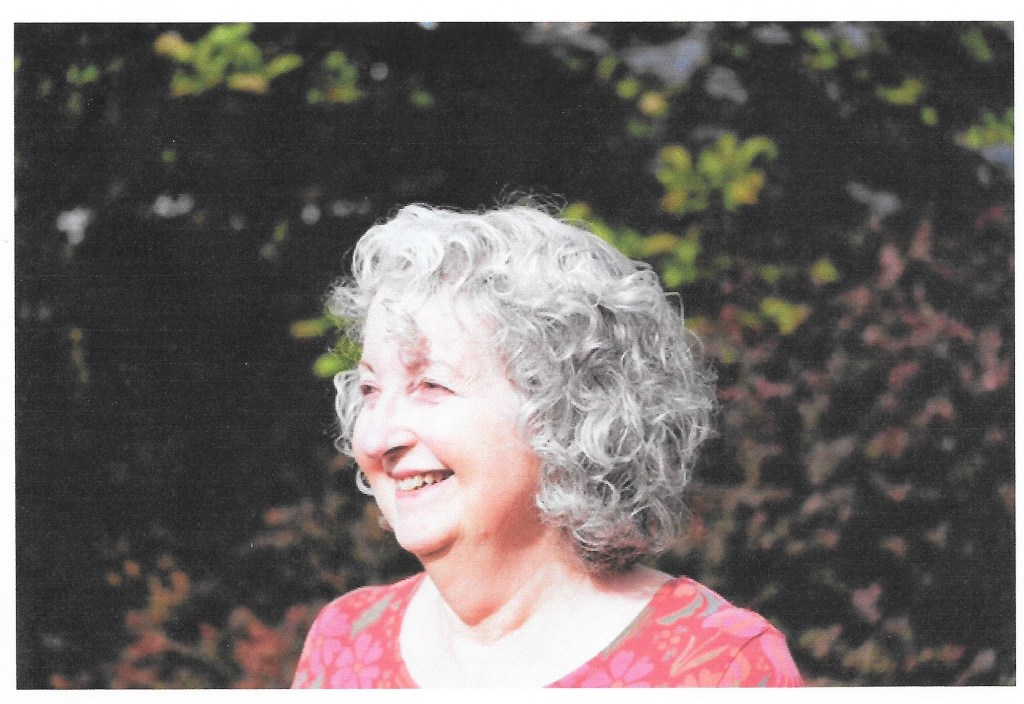
Revelation – poem


It is an enormous pleasure to introduce this month’s guest poet Hilary Robinson. We met many years ago on writing workshops in Manchester.

Hilary Robinson


Hilary Robinson has lived in Saddleworth for over 40 years. Publications include The Interpreter’s House, Obsessed with Pipework, Strix, The Morning Star, Riggwelter, Atrium and Poetry Birmingham and several anthologies including Please Hear What I’m Not Saying (Fly on the Wall Poetry 2018), A New Manchester Alphabet (Manchester Writing School 2015), Noble Dissent (Beautiful Dragons Press 2017), Bloody Amazing! (Yaffle/Beautiful Dragons Press 2020) and The Cotton Grass Appreciation Society. In 2018 twelve of her poems were published in the first joint DragonSpawn book, Some Mothers Do . . . alongside Dr Rachel Davies and the late Tonia Bevins. Her poem, ‘Second Childhood’ was shortlisted in the 2016 Yorkmix Poetry Competition.


Hilary has collaborated with composition students from the Royal Northern College of Music as part of the Rosamond Prize and was involved in the 2016 Leeds Lieder Festival. She is currently collaborating with composer, Joseph Shaw, on an opera to be performed at the Royal Northern College of Music.

In June 2021, Hilary’s debut pamphlet, Revelation, was published by 4Word Press. Hilary has an MA in Creative Writing from Manchester Metropolitan University. The central section of Revelation is a series of poems which explore the aftermath of betrayal in a marriage. From this section I have selected four poems. Nikolai Duffy says that these poems ‘sing with a lyrical precision that is as authentic as it is unflinching.’

Revelation

And I beheld the last seven years open up before me
and they gave up their secrets.

And I beheld my beloved’s face concealed by a fine beard
and his feet that were turned to sand.

And I beheld seven office chairs, unoccupied except
for two, on which sat my beloved and his shame.

And surrounding my beloved and his shame were all the places
they had been while I had slept on in our bed.

And all the places they had been were also all the places
he had taken me. And I wept that this was true.

And I beheld his eyes turn to streams as his remorse descended
from him. And lo — his arms reached out for mine.

And I tightened my golden belt around my waist, knelt down
by his side and said that I forgave him.

That September

Every time he went to the window
he saw them. Gangs hired to find us,
gangs armed with torches burning
even though it was early September
and still light. Gangs getting closer.

He’d let everyone down, his partners,
clients, staff, his family. Most of all
he’d let me down in ways I’d never imagined.
Now they were at the end of our drive. Now
he’d found a way to stop the fire he’d caused.

It took four of us to prize his fingers
from the Swiss Army Knife’s twin
blades. I never knew what happened
to that knife. I wiped blood from his hand,
found the doctor’s home number.

The rest is a history of ashes, scorched
earth of a marriage that somehow
bore new life after hospital, after
ECT, after many hours of therapy.
This house still stands.

Brittle

In the kingdom of glass everything is transparent, and there is no place to hide a dark heart.
Vera Nazarian, The Perpetual Calendar of Inspiration

To become glass, learn to make yourself
fluid as egg-timer sand.

Hone yourself to brittleness with just a little
give to accommodate rough winds.

Research your ancestry — try to enter
the mindset of silica.

Practise the occasional sharp look,
the cutting remark — hide in the shadows.

To become glass, give in — become transparent;
melt into the view from this bedroom.

Trying to Take my Husband to the Antica Carbonera

There is no chance I’ll find the Calle Bembo
with its kinks, its turns, its lamps
hanging above shops of antique Murano beads,
its shiny cobbles and those buskers
trotting out Vivaldi through the season.
No chance I’ll find what translates

where Cath and I ate wild mushrooms
cooked four ways and spent so much
they brought us Limoncello on the house.

Yet here we are. This is the first Venetian street
our feet touch on the way to the Al Codega.
The food is perfectly seasoned. Tonight
we’re on the roof. I have another angle on this street.

Georges Perec and the ‘e’ – writing prompt


I discovered a book programme on Dutch TV. It’s called Brommeropzee (mopedonsea) after a Dutch short story. There are two presenters. Based on my brief observation, I would say: she is E for Empathy, he is E for Ego.

One item was an interview with Guido van de Wiel. He has previously translated Perec’s 1969 novel La Disparation (A Void) into Dutch – see the cover. Like the original, the text does not include a single vowel ‘e’.


In 1972 Perec published a companion piece Les Revenentes (The Exeter Text). In the interview Guido showed long lists of words containing only the vowel ‘e’. He has worked on this translation on-and-off for 12 years. The translation follows the original in form (lipogram) and content.


Brommeropzee issued a challenge to viewers: compose a coherent sentence of at least 10 and at most 30 words, using any consonant, but only the vowel ‘e’. Here is my sentence: De beleefde kreeft heeft even geleden en elders negeert de kwelder de heen-en-weer regen.


Translated: The polite lobster has suffered briefly and elsewhere the salt marsh ignores the to-and-fro rain. There are no rhyming sounds as in my Dutch original, but you get the flavour.


If you like a challenge, compose a (decent) sentence of words using only the vowel ‘e’ and send them to me via the Contact page. I’ll publish a selection in a few weeks.

Mothering Sunday – a poem

Credit: Silviarita via Pixabay

Today It’s Mothering Sunday in the UK and Ireland, and Summer Time begins. I want to thank Hilary Robinson for letting me share her poem, a gentle homeward journey with rich detail. It also shows how a strong title pulls the reader in. Hilary is the guest poet next month with more poems from her poetry debut Revelation.

Things I Say to my Mum in the Nursing Home

Let’s go to Verdon’s for a quarter of sweets—
American Cream Soda, Rainbow Crystals.
Let me taste the Sarsaparilla Drops,
Fruit Salads, Flying saucers, Cherry Lips.

Walk me up to Marsden’s — I’ll sink
my fingers into dried peas, watch
as butter’s cut and patted into shape;
sugar’s wrapped in rough blue bags.

Take me to the monkey-nut shop
after an hour in Northmoor Library,
breathing in the leather, old-book smell,
where the men scour papers for good news.

Hold my hand, take me to the park
so I can swing high, standing up,
or roly-poly down the slopes,
risk roundabouts, the Wedding Cake.

Take me back to our backyard,
to the tin bath hung on an outside wall,
to my stiff, hard dolls, my teddy bear.
Pass me my square of pink flannelette.

Lockdown Sonnets

It is a huge pleasure to introduce this month’s guest poet: Hamish Wilson whom I met four years ago when I attended a workshop at Garsdale.

Having taught in schools for 31 years, Hamish moved to Cumbria in 2016 to set up and run The Garsdale Retreat, http://www.thegarsdaleretreat.co.uk, a residential creative writing centre. This has allowed him the time and space to develop his own writing career.

The Garsdale Retreat

He has had poetry published in two anthologies: This Place I Know – A New Anthology of Cumbrian Poetry (Ed. Darbishire, Moore, Nuttall/Handstand Press, 2018) and Play (Ed. Taylor, Williams/PaperDart Press, 2018) and was shortlisted for the following competitions: WoLF poetry competition in 2017 and 2018 and Write Out Loud’s Beyond the Storm (Poems From the Covid Era) in 2020. He has also had poems in Culture Matters and The Morning Star.

In 2019 he performed Parallel Lives, (a sonnet sequence with live music, film and photography, exploring the creative lives of John Lennon and Dylan Thomas) at The Brewery Arts Centre, Kendal.

Written in 2020, Lockdown Journal is a sonnet sequence which explores his experience of the pandemic between 28 March and 21 April, reflecting on daily life in Garsdale as well as the wider world.

I asked Hamish to select three sonnets from Lockdown Journal as a way of marking the second anniversary of the pandemic.

Saturday, 28 March, 2020

The road is quiet. The weekend bikers
who came back with the curlews, have not returned.
This first weekend of Covid lockdown’s like a
languid bank holiday without the burn

of off-comers. Spring greens on regardless,
daffs trumpet; lambs skip, suckle; horned Highland
cattle shadow on the fell; lapwings test
their stuntman wings, plummet to earth (as planned).

At home, virtual visitors ease the time
with supportive texts, puzzles, You Tube vids;
parodies of songs, coronavirus rhymes,
zoom-conferencing and Happy Hour bids.

The News At Six brings contact nationwide,
a thousand UK people now have died.

Friday, 10 April, 2020

Days which bleed to other days still make their mark,
Good Friday’s on regardless and they fear
we’ll enjoy it with dangerous outdoor larks.
We’re shown deserted beaches, seaside piers

which forecast what they hope the weekend brings;
‘Your front door’s safer than a protective mask…..’
cut to bench taped like a crime scene, chained up swings:
stay-at-home’s fine-enforced now not an ask.

Up here, where social distancing’s the norm,
our walk on Blea Moor fell is not policed –
the only drone, a distant train, informs
we’re not alone and breaks the blanket peace.

A sky lark ascends, arpeggios on high,
coal-black speck of dust in the empty sky.

Tuesday, 21 April, 2020

Larks, invisibly high, white noise the sky,
we climb the tussocked sea towards the cairn,
the railway shrinks to Hornby, lapwings cry
like broken squeaky toys. Spring warmth returns.

In shirt-sleeves, we zig-zag slow to summit,
pause to watch a matchbox car surprise
the Coal Road, before we reach the sunlit
limestone and meet a ram skull’s hollow eyes.

The news is billed as good as we’re prepared
with twenty thousand beds to match the needs
of future patients in intensive care.
The experts tell us now we can succeed

to break the rise in deaths, to turn the tide.
Up here, we see our house, our tiny, tiny lives.

Trying – writing prompt

Madingley Hall, near Cambridge

Yesterday I talked with friends about Cambridge. That brought back memories of a one-week workshop at Madingley Hall with the poet Lawrence Sail. Madingley Hall is a 16th Century building just a few miles from Cambridge. It is set in seven acres of splendid gardens and grounds, designed by the famous Capability Brown in the 18th Century.The weather was good the week I was there and we would all find a quiet corner outside and get writing.

Credit: Pasja1000 via Pixabay

Writing prompt

One of the exercises was about personification. We mentally went through the alphabet and stopped at a letter that resonated with us. What kind of life does that letter have? What do they want and what is difficult for them?

The poem Trying was published in my debut Another life (Oversteps Books Ltd, 2016).

Trying

Trying not to be like
one who has gone before.
Allocated a slot
at the back of the queue:
a circle dancer with a club foot.

Striving to become
the symbol of perfection.
Dragging a tail,
leaving tiny furrows
on the rough terrain.

Trying then to hide
in foreign places.
Archaic words spoken with a twang:
Qua, quorum, quota, quasi.

A cold place they tell me.
Quebec.

After midnight – haiku

DSC00273


A few days ago I learned that Stuart Quine died in hospital of Covid-19.  His haiku were featured on my blog in September last year, under the heading A glint of wolf. You can read them here

Stuart himself provided the biographical notes and he made the selection of one-line haiku.

Here in the caravan in the Netherlands I found a copy of Presence from July 2019 with the one-line haiku below.  I am grateful to have known him.

after midnight firelight playing the accordion keys

The Outsider


unnamed

Albert Camus


It seemed fitting to spend 31 January (Brexit Day) with a good old friend. She has the modern smart phone needed to scan my Dutch passport. It was good to have moral support: I had a crying fit during the identity check part of the application. Luckily, I only started crying after she’d taken my photo which the Home Office staff/system will check against the photo in the passport!  And the automatic check on my National Insurance (NI) number confirmed that I was eligible to apply for “settled” status.

I’ve been resident in the UK since 1973 and I have close friends here and my writing, but it has felt less and less like home after the 2016 referendum.

At secondary school (Gymnasium) we learned English, German and French and we crawled at a snail’s pace through l’Étranger, the 1942 novel by Albert Camus which is a classic in world literature.  Camus developed the philosophical concept of Absurdism and the way he died in a car accident, aged 46, could be considered absurd.

The poem is from my debut collection Another life, published by Oversteps Books Ltd in 2016.

On reaching his 102nd Birthday

He always liked his drink,
so it’s no surprise that Albert went North,
that unused train ticket in his pocket.

He is said to have died in a car crash,
but police do know people who
walk away and without a scratch.

After walking for weeks, he reached Norway
where the days are short
and the nights are made for alcohol.

Camus lived in a modest house
with a butcher’s block in the kitchen
where he cut reindeer and smoked.

A flock of swans flew through his dreams,
so he married the next woman to walk past,
taught her two sons to play football.

She taught him to sleep soundly at last.
A pied-noir at rest under the Herring Lights,
on the cold edge of man’s world.

Yellowish green and faint red glowing,
these arcs and rays and curtains of gas,
the fight against dawn and the sun.

Mid-December

garden_fox_in_snow


At our Manchester Poets Christmas meeting on Friday someone read Stopping by Woods on a Snowy Evening. This poem, along with The Road not Taken, is one of Robert Frost’s most famous poems. Many people who are not poets have come across them.

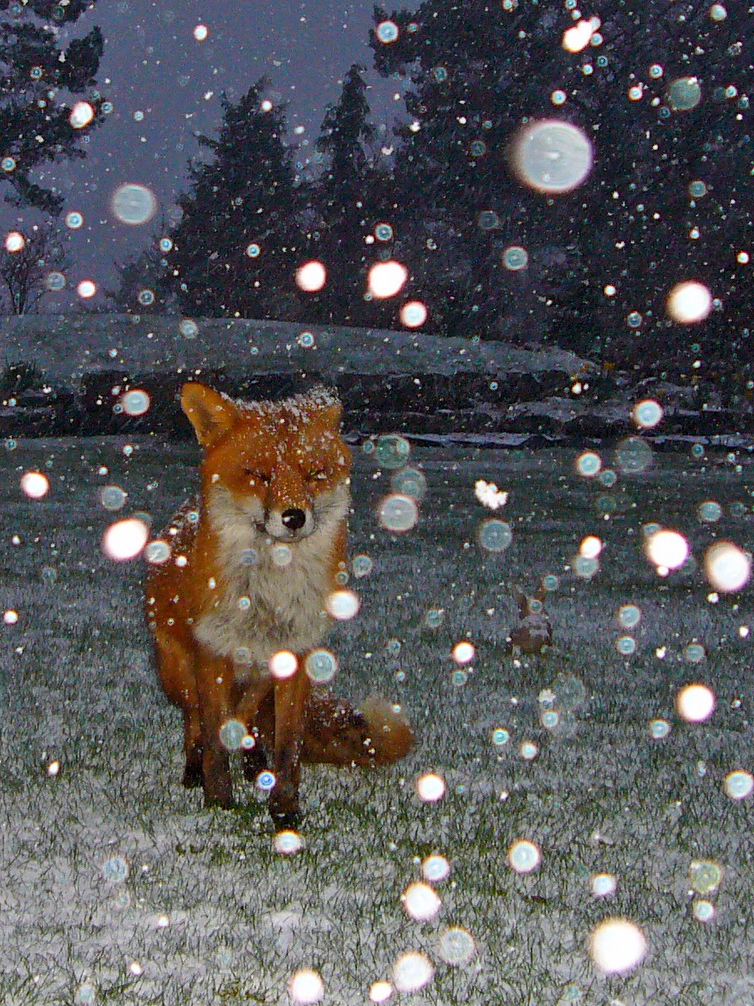
Here is Questioning Faces, a short winter poem by Frost. It has marvellous precision and economy. It inspired my poem Mid-December. It is based on a real observation: seeing the fox in my rear garden under the light cast by the helicopter. Getting the end-rhyme across the two stanzas was an interesting task.

 
Questioning Faces

The winter owl just banked in time to pass
And save herself from breaking window glass.
And her wings straining suddenly aspread
Caught color from the last of evening red
In a display of underdown and quill
To glassed-in children at the windowsill.

 
Mid-December

Some people might pray for the day
to end, so they can cover glass
panels with ceiling-to-floor lined drapes,
or plain blinds that click into place.
Sitting by the radiator
I count the nights before Solstice,

think of the fox who’s come to stay.
She, padding across stiff white grass,
makes no such distinctions, escapes
gardens, water meadows; her face
now up to the police helicopter
beaming light on the world that is.

St. Nicolaas, 5 December 1957


_Groeten_van_St._Nicolaas!__St._Nicholas_and_a_helper,_St._Nick_is_in_a_white_robe,_orange_cap,..._(NBY_1458)


Traditionally, both St. Nicolaas and Zwarte Piet (Black Peter) arrive in ports in the Netherlands on a steam ship towards the end of November. A white horse awaits the holy man who rides through the streets. In the week or so before St. Nicolaas’ evening, children would leave a carrot for the horse in their shoe (few of us wore clogs!) by the fireplace. The evidence that St. Nicolaas and Zwarte Piet had come down the chimney to visit was there the next morning: some sweets, chocolates or a small piece of marzipan in those shoes.

Black Peter is a helper, distributing sweets to the children who’ve been good. However, he also carries a large bag. Any child that has been misbehaving during late November-early December risks being noticed and being carried off to Spain in that bag.

The competition from Father Christmas has become stronger over the last decades. In recent years, there has also been a controversy in the Netherlands about Zwarte Piet and a small UN Human Rights deputation even came to investigate the accusations of racism and colonialism. Some councils and schools now have a white helper (not blacked up) and elsewhere St. Nicolaas visits on his own. The controversy is ongoing with demonstrations, petitions and activism.

On the 5th of December I will be in the UK, on a writing week. I still love marzipan, but I am cutting down on sweets and I have asked St. Nicolaas for a large batch of good, new poems! The poem is from my debut collection Another life (Oversteps Books Ltd).

 
St. Nicolaas, 5 December 1957

We’re crowded in our dining room.
Grandmother has closed her face.
There’s me in pyjamas, smiling.
I’m next to my father’s father.
His heart will give out soon.
I’ve just been given a book;
animal stories with illustrations.

My brother too smiles, because
our mother isn’t there.
She may be in the kitchen
or upstairs, ill, thinking
about walking out on us.
My father has taken this photo.
He too will have closed his face.