Tag Archives: poem

Music – poem

Schimmel sideways


Looking in the Cloud for a picture of a frog I came across a photo of my piano: a white horse (Schimmel). My friend Marianne who left me the old caravan had a digital piano here. I took that across to the UK and started having lessons with John who came to the house.

The next year (2009) I even took the Grade 1 examination. Turned up at the venue to find bemused children staring at me. I passed, just short of a Distinction. As a reward, I got  a proper acoustic piano. Found this lovely Schimmel with a warm European sound.

Horror! One day I lifted the lid to see a moth appear from between two white keys. Yes, a proper infestation. Fortunately, the wonderfully eccentric tuner, also called John, managed to take the piano apart and deal with that. I continued with lessons. But I was too anxious to go for the Grade 2 or Grade 3. When I moved into the flat, so did the piano. On its side, still a mellow sound. I sold it a couple of years ago. It went to a good home …

The poem Music is from my second collection Nothing serious, nothing dangerous, published by Indigo Dreams Publishing (2019).

 
Music

There was always music going on in our house,
live music, piano and song. The organ was
down the road, past the Catholics’ houses.
We were Protestant then, some of us, anyway.

There was always music in our house.
Bach on a black piano and Brahms
Mein Mädel hat einen Rosenmund.
My mother, the diva, practising before
her weekly lesson with the best alto
in Holland, who kept a pet monkey.
My father, with his piano hands,
shaking his vigorous black hair.

In our house there was always music.
More often than not it would be
minor chords, discordance, long
silence above the empty bar lines.

Moment – poem


Clingendael 2

Photo credit: Ted Koehler

The warm, sunny weather this week has helped me to stay more in the present. I’ve been for walks in the nearby estate of Clingendael.

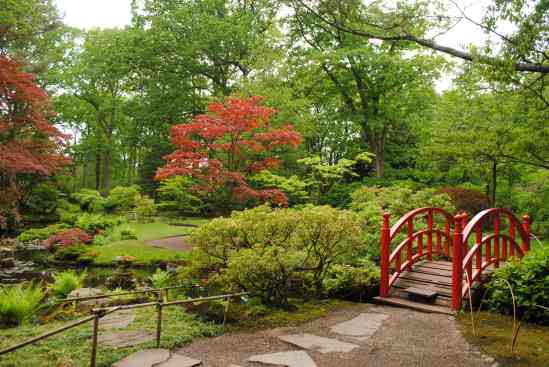
Clingendael estate has a 17th Century manor house which is home to the Dutch Institute for International Relations. Since the 16th Century the gardens have been remodelled, from the original French design, to the popular English landscape style. Now you can find a rose garden, splendid azaleas and rhododendrons, and a walled fruit garden. There are some marked walks, cycling paths, and canoeists and rowers can travel through by water.

However, Clingendael is most famous for its Japanese garden. It is the only Japanese garden from around 1910 and is, therefore, of great historical importance and a state monument. Marguerite M, Baroness van Brienen made several trips to Japan by ship to purchase the lanterns, statues, bridges and the wooden pavilion. Because of its fragility, the Japanese garden is only open eight weeks of the year, from mid-May to early July. Because of the Corona-crisis, it is closed. Here you can view a short video clip that The Hague city council put on their website.

Clingendael 3

Photo credit: Ted Koehler


My poem Moment from my second collection Nothing serious, nothing dangerous was inspired by a poem with the title This Moment by the Irish poet Eavan Boland who died recently, aged 75, after a stroke. Her poem, with its short, choppy lines starts A neighbourhood/At dusk and is an excellent example of how a short poem can give us a snapshot of time, the night and temporality. You can read the original poem here. It is deceptively simple, but Boland uses several poetic techniques to achieve the effect, such as alliteration and repetition.

 
Moment

A suburb at dawn

People are turning back
from dreams
into their own lives

Frost and spiders,
shrubs cradle themselves.

One side of the road is black.
One row of houses a yellow pink.

A cat wakes up
to the footsteps above,
secure in his oval basket.

Frost fades,
spiders stretch,
ferns unfold in the sun.

Illness – poem

flag-1275831_1280

photo credit: Michael de Groot, Pixabay


I was evacuated within hours of being born: an un-exploded bomb from WW2 had just been found in the hospital grounds. My mother and I were despatched to the nearby town of Haarlem. After a bike ride my father found us there in an old people’s home.

May last year I posted about the small memorial on the Waalsdorpervlakte in the nearby dunes, how the sound of the bells reached me, sitting inside the caravan. You can read more here. This year there will only be one person ringing that large Bourdon bell tomorrow evening, and the wreath-laying ceremony by the monument on the Dam, Amsterdam will also be scaled down.

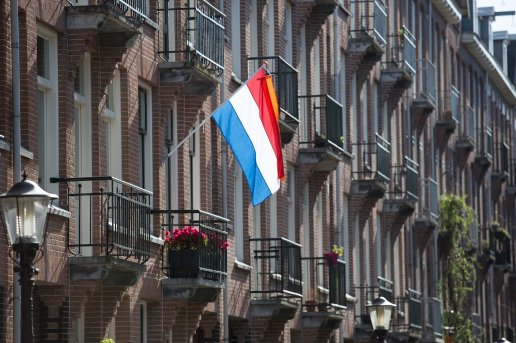
Liberation Day, the 5th of May, is celebrated on a large scale only every five years. This year, 75 years on, would have been a major event and a Public Holiday. Flags will be flown, for sure.


Moensplein


The poem Illness is from my pamphlet A Stolen Hour which was published in March this year by Grey Hen Press. Because my mother’s father owned an electrical shop, we had a small black-and-white television soon after they became available. You can see the house still has that balcony. I like how in the poem the personal and the public are combined.


Illness

I’m sure it’s May 1956. Grandfather still runs the electrical shop,
but his wife is in hospital. Next month German tourists
will park their cars in resorts on the Dutch coast.
I’m sure I can smell the smoke from the butcher’s next door,
but I’m ill in bed, can only see pink trees above the balcony.

I’m curled up, a sniffy nose and my ears blocked,
but I can’t turn my face away from the place in the dunes,
a pile of boots and shoes. There must have been butterflies.
These twenty men marched out of town, the execution.

I can see myself at the ink-stained desk, a grainy photo.
Then the photo starts moving, shakily, away from the light.
I’m ill again, but not in my bed in my bedroom, because my mother’s
mother is there in her best dress, lying still. Downstairs
the front room curtains have been drawn.

Portrait – poem


Exterior-2
In the pre-pandemic life, I would next Tuesday evening have travelled by train to Stalybridge. Now I am in the Netherlands and will probably eat orange-coloured cakes (left over from King Willem Alexander’s birthday celebrations on Monday).

 
The Poetry Society was founded in 1909 to “promote a more general recognition and appreciation of poetry”. It is now a thriving UK arts organisation with over 4,000 members worldwide. Volunteer members run local branches, called Stanzas. These tend to meet monthly to write and critique members’ poems.

 
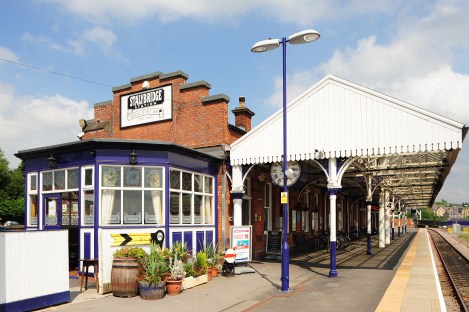
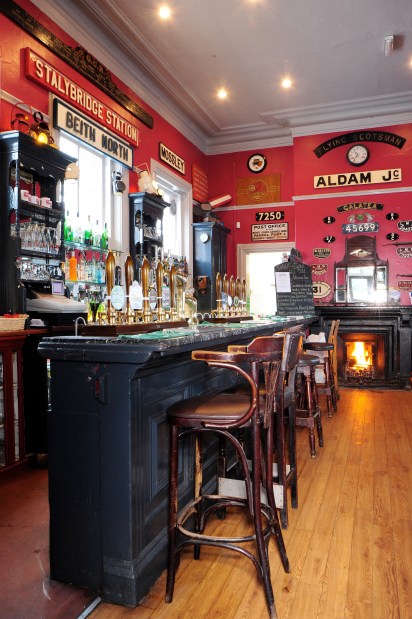
The East Manchester & Tameside Stanza meets in the buffet bar on Platform 4 of Stalybridge railway station. The building is one of the very few remaining Victorian station buffet bars. It has the original fittings and fire, and it includes the original 1st class ladies’ waiting room with an ornate ceiling. This award-winning pub is like a museum: lots of photos, railway and other memorabilia.


3.-Interior-portrait-Stalybridge-Station-Buffet-by-Michael-Slaughter-LRPS

 
During feedback sessions, the poem is read twice – by the poet and someone else. The reading may well be interrupted by an announcement We’re sorry that the 19.21 to Manchester Piccadilly has been cancelled…

 
Portrait was published in my second collection Nothing serious, nothing dangerous. It benefited from feedback from the EM&T Stanza regulars. I hope they are all keeping safe and well.


Portrait

When I look down
in the water of our harbour,
quiet, resting between barges,
I hope to find a portrait.

White foam is gloves I dropped long ago,
or my grandmother’s starched lace cap,
metal curled at her temples.

*

When I look down in the black water
I hope to see the fish that has
swallowed my wedding ring,
the ring I lost or threw away.

*

When I hold water in my hands
I have it: a portrait of my forgotten
eyebrows, my fingers a gold frame.

The light streams in – poem


Keukenhof 18

Yesterday afternoon I watched a TV programme about the Keukenhof, a major Dutch tourist attraction. Annually visitors come from over 100 different countries. A team of 40 gardeners has worked for three months last autumn planting around seven million bulbs – tulips, hyacinths, narcissi. Easter w/end is usually one of the busiest times; this year the Keukenhof will not open to visitors.

The photos are from 2018 when I went with my sister and brother-in-law. Now you cannot visit the Keukenhof, the Keukenhof will come to you. On the website they will be posting more videos. Go to de Keukenhof


purle tu;los


The poem is by Thomas Tranströmer, from his collection The Sad Gondola, 1996. May you and those dear to you be safe and sound this Easter.

 
The Light Streams In

Outside the window, the long beast of spring
the transparent dragon of sunlight
rushes past like an endless
suburban train – we never got a glimpse of its head.

The shoreline villas shuffle sideways
they are proud as crabs.
The sun makes the statues blink.

The raging sea of fire out in space
is transformed to a caress.
The countdown has begun.

Vanished – poem


broom-2884860_1280

Photo credit Milliways42 on Pixabay

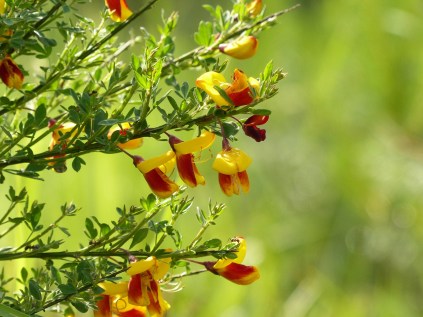
The storm last weekend changed my To Do list: on Sunday morning I opened the door to see the terracotta-coloured broom had been cut down – two parts lay entangled on the lawn.

 
I had planted that broom with its coconut scent, the yellow forsythia and white spiraea as a new hedge in spring 2012 after the new caravan was towed into place November 2011. Nico, the trusted on-site DIY man had removed the gate, shrubs and old hedge, and had taken apart the old wooden caravan my friend Marianne had left me a few years earlier. When she bought that old caravan her partner, a sculptor, had trimmed the tall conifers and shaped them into four guards. I had wanted to keep these, so Nico dug them up and they’ve been attached to the new fence. You can see they’re beginning to look grey and grumpy…

the for men
Good things happened this week too – an extended Skype lunch with a good friend in Manchester. The onsite shop and snack bar has opened, so I can treat myself to the occasional saté and French fries.

I hope that you and those dear to you are keeping well and safe.

The poem is from my second collection Nothing serious, nothing dangerous, with Indigo Dreams Publishing, 2019.

 
Vanished

Vanished the coconut scent of the bronze gorse,
forsythia, the thin red stalks of fuchsia.

Lavenders are dotted around the borders,
a white one with the old red rose that Marianne planted.

The shadows must rest in the memories of grass blades.
Does grass carry its memory from year to year?

Early evening already, the new conifer hedge catches
the sun. The single siren of an ambulance going to Bronovo.

A blackbird hides among the orange berries,
sky is greying. Vanished into the earth
my friends, enemies. Finches swing on the fat ball.

Here I am walking – poem

trotting-3598639_1280

Photo credit: Digwen on Pixabay


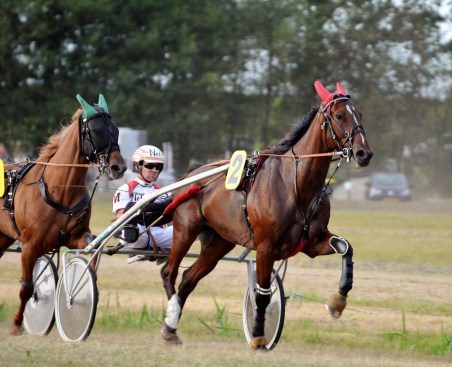
These are my neighbours. Yes, camping Duinhorst backs onto a racecourse. Duindigt opened in 1906. Most of the races held are trotting races, with the jockeys sitting on a sulky as in the picture. Some days I can hear the faint sounds of commentary, or a national anthem at the end of a race. And, very often when I’m out and about I come across horses being exercised. That is where the writing started.  It is the second poem in my second collection Nothing serious, nothing dangerous.

I was going to fly to Holland on 5 April, but things are serious and dangerous. I managed to get a flight out on Wednesday 18 March from Manchester to Schiphol in the Netherlands, and went straight to my caravan. You know from following my blog that I am a Dutch national, long-term resident in the UK. Faced with “social distancing” and a possible four-month’ quarantine, I felt it would be easier in the caravan. It has a small garden and I can go for a bike ride, or a short walk in the nearby dunes – as long as I keep my distance.


Here I am walking …

 
Here I am walking with a small horse.
I found it on the path to the supermarket
where it stood, eyes closed, by yellow gorse.

All this happened a long time ago,
before I was born, before the war,
and the rope in my hand smells of horse.

We can turn to the right, walk over
the dual carriageway, head for the dunes,
four bronze crosses to remember

the war dead and we’ll arrive,
place our feet on the beach
where it’ll soon be night.

Chaos – poem

airport-4922358_1280

Photo credit: oho725 on Pixabay

Poetry readings and workshops have been cancelled. People are panic-buying pasta and toilet paper. A few friends have cancelled lunch dates: I have an empty diary.  So, I have started packing boxes for my move later this year, while listening to the radio. My flight is booked on 5th of April and I hope that the borders are still open by then. I can blog over in the Netherlands just as I can here: I have Wifi inside the caravan. If I become ill, it’s easier to self-isolate over there.

Meanwhile, here is a short poem about chaos. It first appeared in The North magazine and was later published in my debut collection Another life. Look after yourself, keep safe and look out for those around you.

 
On the town

In the time it took to buy a birthday card, a special
80th birthday card, they had arrived in a long, black limousine,
jumped out, set fire to the hotel and released wicker
baskets. The flying baskets with wicker wings chopped
tops of trees, trees falling on traffic lights – chaos everywhere
and in the middle of it the small bronze statue.
A smiling woman holding doves covered in bird shit.
The wind howling, sirens crying like the end of the world had come.
And me and that card that had cost me £2.99 and nowhere
to buy stamps, no letter box to post it.

Ferry crossing – poem

Fokkina_McDonnell_Poetry_Launch_3March2020_with_GKB_Painting (002)

The Departure, book and me (Photo: copyright Sophie J Brown)

 
Here I am with my second collection Nothing serious, nothing dangerous at the launch, held at the International Anthony Burgess Foundation, Manchester on the 3rd of March. It was a wonderful occasion, made very special by Graham Kingsley Brown’s painting The Departure being there too.

His daughter Sophie Brown (herself a talented artist) designed this website. Visit www.grahamkingsleybrown.com and click on the Curator’s Diary for her account of the launch and to read what the meaning of the painting may be (entry 28 November 2019).

Below is the first poem of the book. This may well be the ferry from Harwich, UK to Hook of Holland, the Netherlands. A ferry crossing is a departure of a kind …


Ferry crossing

Two people sit at a table by an oblong picture window.
Sun lights up their hands which are curled round coffee cups.

The window is made of safety glass. There have been announcements:
location of lifebelts, life rafts, long and short blast of a horn.

While words are hidden at the obscure side of imagination,
other people are queuing for lunch or buying alcohol in the shop.

The folded hands are the back of playing cards, The Queen of Spades,                                    operas, novellas, the shortest of short stories.

It is not strange to see these cards turn into sea gulls.
A white ferry is a city where nothing is permanent.

A man with a frown – poem and writing prompt

rain-3518956_640

Photo credit: Pixabay

It is March, so here is an example of personification. It comes from a workshop: we were asked to choose a month and write about it, as though it was a person.  Do you see March as a man too? Does his emotional state reflect typical March weather?


March

He is a man with a frown,
walking in a military
manner. He is the eldest
son of a Rossendale baker, who
married young and placed his hopes
on other people’s shoulders.

He studied accountancy at a redbrick
in the Midlands, ironed shirts himself,
lost his accent, met a nurse
in town one night, got drunk,
a lower second degree, a baby,
a small semi in the suburbs.

Last year he didn’t get a rise,
didn’t get promotion either.
He thinks about renewing insurance,
calculates the cost of divorce,
puts his hands in his pockets and
strides over the zebra crossing.

He often feels like going crazy, going
off with a woman half his age, living
in the south of France, but he walks
back to the empty house, hiding
under a large black umbrella,
cursing under his breath.