Valentine’s Day: a love poem by my friend Kathleen Kummer. She lived and worked in the Netherlands when married to a Dutchman. Poems from her debut collection Living below sea level featured here on 25 June 2018. To celebrate our 20-year friendship, I will be posting more of Kathleen’s unpublished work over the next few months.
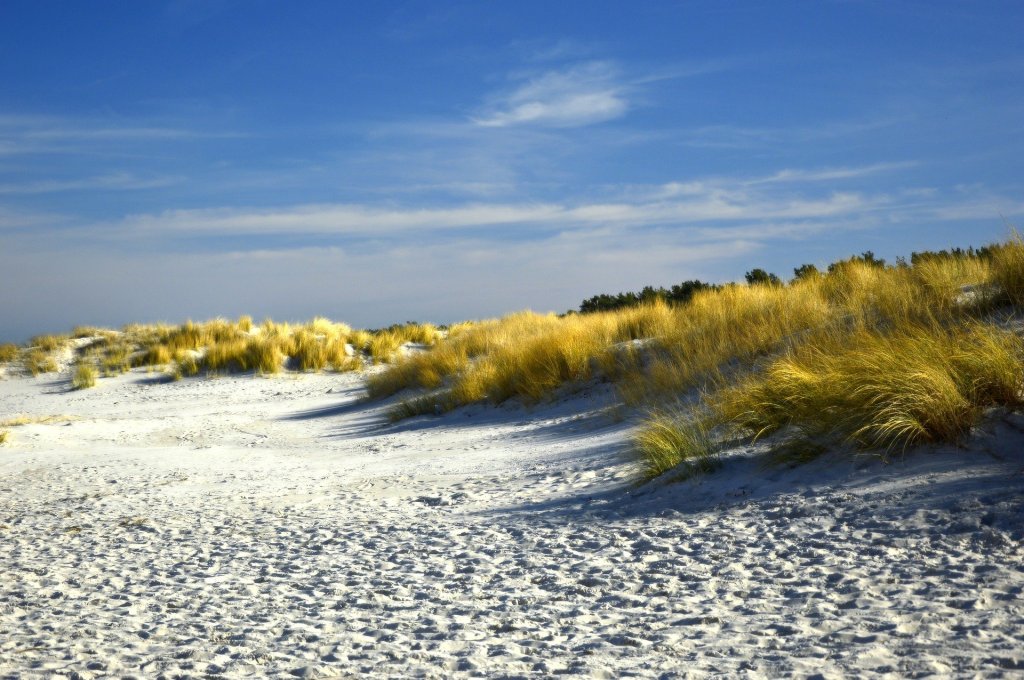
Credit: Leo65, via PIxabay
Hiding Place
Like a holy relic rarely exposed, they lie in a drawer, not handled, let alone read, for half a century, their violet ink on airmail paper, your, my, dried blood on a membrane which is beginning to flake. If touched, it would instantly turn to dust. If read, the dried blood would flow again and burn.
The drawer is hard to close: coarse strands of pain, regret and grief obstruct it. I am able to ease it with the memory of lying with you by the sea, unseen by those who walked through the marram grass, throwing up little showers of sand on us. Nothing has been as soft, as caressing as the sand dunes that summer.
On a writing workshop last weekend, I introduced Vasco Popa’s The Golden Apple: a round of stories, songs, spells, proverbs & riddles. I have been using some of the riddles and proverbs as writing prompts.
Vasco Popa (1922-1991) was Serbia’s greatest modern poet. Ted Hughes was an admirer of his work and wrote the introduction to his Collected Poems. Popa collected folk tales from many sources. He found a rich inspiration for his own poems in this “eternally living wellspring of folk poetry” which he combined with vivid imagery and a touch of the surreal.
Here are two riddles from The Golden Apple. The answers are at the end of the blog.
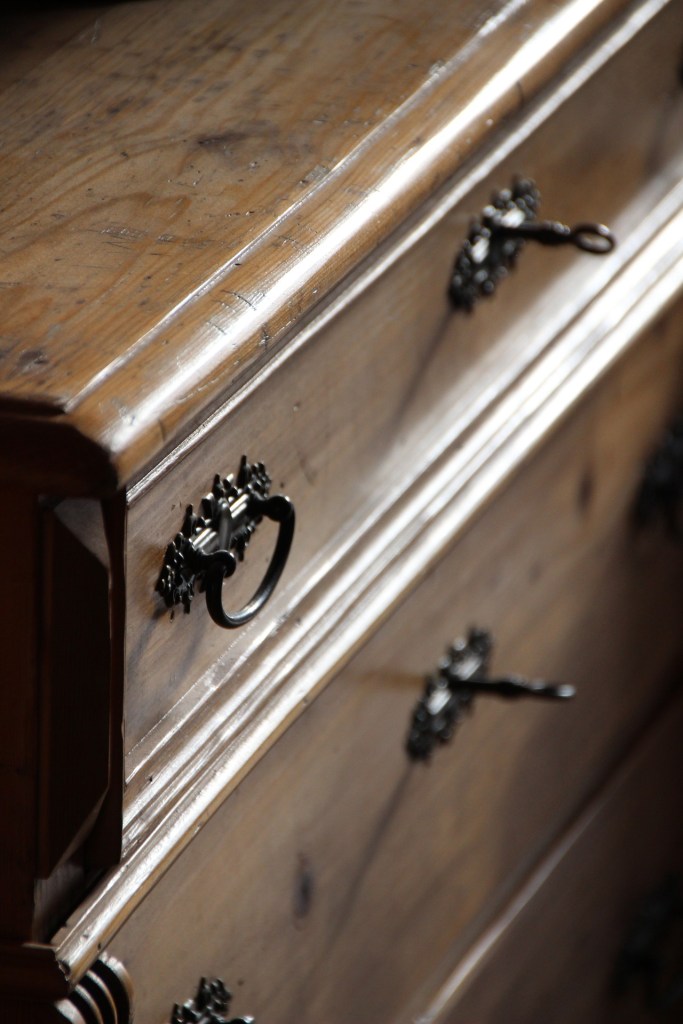
With an iron key I open a green fortress And drive out the black cattle
A horse with its pack goes into a house and comes out of it, but its tail never goes in.
Vasco Popa
Popa’s Collected Poems inspired my poem Fairy tale. It was first published in erbacce and then in my debut collection Another life (Oversteps Books Ltd, 2016).
Fairy tale
Someone needs to go to a deep cupboard in a dark room the others wait outside
The first one becomes a grandmother with a stoop then someone else steals her white lace cap her smile her soft voice they go to lie still in a deep dark bed in a cold room
Then someone else walks a long way through the wood, across the saddled serpent under a cold sheet of dark clouds
That someone is dressed in crimson already – it will save time the old one will rescue the red girl but they will not have enough bricks to finish the job
after that someone else will get to be hungry and someone will always be eaten
It is a great pleasure to introduce this month’s poet. Alex Josephy and I met last November. We both read at the ‘virtual’ Poetry in Aldeburgh festival, along with poets Sharon Black and Christopher North – all of us with a connection to Europe.
Alex lives in London and Italy. Her collection Naked Since Faversham was published by Pindrop Press in 2020. Other work includes White Roads, poems set in Italy, Paekakariki Press, 2018, and Other Blackbirds, Cinnamon Press, 2016. Her poems have won the McLellan and Battered Moons prizes, and have appeared in magazines and anthologies in the UK and Italy.
As part of the Poetry School Mixed Borders scheme, she has been poet-in-residence at Rainham Hall, Essex, and in Markham Square, London. Alex is a poetry mentor and writes reviews for publications such as Envoi and London Grip. Find out more on her website: http://www.alexjosephy.eu
I have chosen four poems from Naked Since Faversham which show the range of her work. I hope they speak to you, as they did to me.
Grasshopper, Castelvecchio
Stalled between diagonal slats, you’re a dry hull, ridge-backed
as if whittled from a vine stem, forelegs splayed to grip the ledge
you’ve chosen for shelter. Hail made me close the shutters;
that’s when I noticed you, remote in winter torpor. When I woke
you were still here, a cold wedge interrupting the light.
Each time I pass I look for you, imagine how the frost
deepens, fills your hollows; hear no rasp of song, no longing
for green. Cavalletta, little horse, I hope we’ll see the spring.
A Word in Your Ear
Cielo, the heaven of unimportant things: half an hour together
in the usual bar. It’s a light still on when the morning sky
starts to remember blue. Cielo, just look at the shape of it:
five strokes, a hasty dot, slight enough to skim a canvas
on a brush-tip, watery peaks and arcs. That fluent curve –
a sudden smile, stand-offish verticals, and then a hug.
A little bite of something sweet and quick – cielo, cielo, ce l’ho!
warbles the pastry cook. His cielo is yeast that swells the heart
of a brioche, opens rooms of warm air in a bread roll.
Going Up
At the door I pause to salute the white plastic vessel. Press
the panel, cupping a palm beneath. The blessing flows;
I wring my hands, fold them, gather a fearful breath, hope
for the best. Together we can fight infection. Shed what I’ve carried,
invisible on the wheezy bus. This is a clean hand zone. Trace finger bone
to knuckle, heart line to life line. Catch a whiff of spirit,
hurry through Reception, head for the silver lift.
Therapy
Take thistledown, hold it in the bowl of your palms. Feel it tingle like Spumante.
No, it can’t mend your heart, but it will float you to the surface of your skin.
Each time you long for your child across the ocean, find a river
or a canal., worn stone steps down to the towpath. Accept
a kingfisher’s quick shot of blue, a moorhen’s buoyancy; how easily
they dive, come up somewhere unexpected, sleeved in a twist of air.
Poetry rises out of one solitude to meet another in recognition and connection. It companions us. (Edward Hirsch)
A postcard arrived this week from the academy of american poets in New York. I make a small donation each year for the pleasure of their daily poem in my inbox. The quote was against a background of black tree trunks in snow. The machinery in the P.O. sorting office has scuffed the postcard, but I am glad to have it.
It made me think of other definitions of poetry and poetry about companions. Looking in my folders, I came across an old poem which was homework set by our tutor, the late Linda Chase. She asks us to personify an abstract concept and then write about two types of people who are opposites. The poem seems to me highly relevant to our times.
The twins
The older one by a few minutes, she’d come to the door and be the first to greet you. Her bright eyes shine, her cheeks are red, but there is an edge to her fixed smile. She sings nursery rhymes out of tune, whistles through cracked teeth, she gives and then takes back. Many have been taken in by False Hope.
At dawn we’ll enter, climb the back stairs.
They lie in their bed, both still asleep. The sun travels across the blanket and lights up her face. She makes soft puffing noises, like secrets whispered in a dream. I’ll touch her shoulder gently to wake her, while you watch for movement in the other bed: the grunting sounds, the claw-like hand clutching the sheets.
Soon Hope will walk with us, small steps on grass covered in dew.
One year ago I received an email in Dutch from poet Elsa Fischer. She had read my second collection and related to the poems about the Second World War. Elsa and I have kept in touch by email. Her poems were featured here on 24 May 2020 – the end of that month we were going to meet in person in The Hague ..
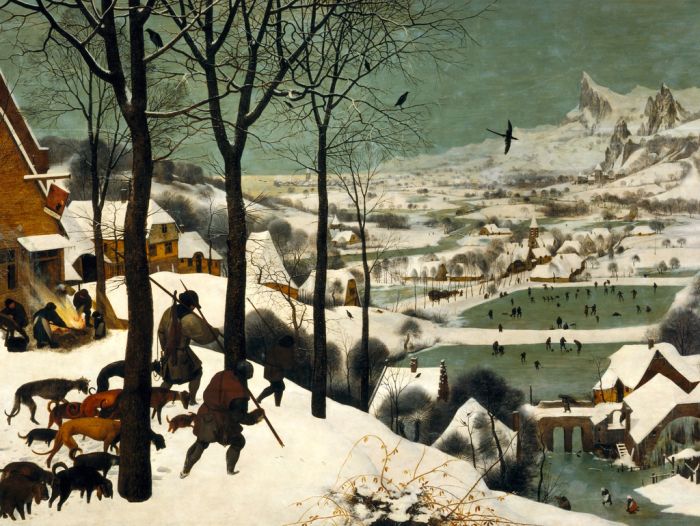
A 1,000-piece jigsaw of Pieter Bruegel the Elder’s Hunters on the Hill is waiting in the hall – a present for a friend. Seeing it there reminded me that Elsa and I have both written a poem inspired by that painting from the Kunsthistorisches Museum in Vienna. On its website you can see all the works by Bruegel that still exist from their 2018 exhibition.
Prompt: Choose the same painting, another work by Bruegel. Or work from the cover design of a jigsaw …
Jonathan McAloon published a fascinating article on Artsy “The Deadly Truth Behind Pieter Bruegel Elder’s Idyllic Landscapes” (4/2/2019). The winter of 1564-65 was the coldest winter of the century. Europe was living in what’s now called the “Little Ice Age”. It would be so cold that rivers froze enough for local people to have rent-free marketplaces on them. Frozen birds fell from the sky, people could enjoy themselves skating. There were also food shortages, resulting in illness and riots.
Elsa’s poem Hunters was published in the journal Poetry SalzburgReview. Mine is in the pamphlet A Stolen Hour (Grey Hen Press, 2020). We’ve both taken the viewpoint of someone in the landscape.
Hunters
I’ve come to feast again on Flemish grotesque at the peasant wedding and Shrove Tuesday’s kermis.
To watch the hunters as they bring in the kill, the trails of blood not far from where I stand
for cover. I hear branches and shrubs and ice breaking and feel no pity until the knives release
a medieval agony of entrails, shimmering, steaming, on to the floor of the estaminet.
The heady beer explodes, the pissoir smells. I grab a cue at the billiard table. I am seventeen.
Piercing the cold like the crow’s flight I escape into the northern twilight, away from memories.
In a far corner
It is a clear afternoon. I hear children laughing, the clacking of skittles, skates carving the ice.
I know it is Friday and hear the silence of crows. My bones are strong, my wife is in good health.
I do not yet know that on the hill the hunters with their wet and tired dogs are heading for home.
I think about my wife, heavy with child, her apron as white as the snow under my feet.
I see plumes of breath from my lips, as though I’m a horse with plough. Branches on my shoulder creak, shudder. I’m yoked to this life.
I am grateful to Josephine Corcoran for posting this poem on her And Other Poems site today. You can read the full poem and many other wonderful poems here Josephine had a brief submission window from which she selected those poems that would connect with many people, poems that would lift our spirit in these difficult times.
Blackbird
There’s a blackbird on the wooden fence. It looks left, then right, stretches up and its yellow beak plucks an orange berry from the pyracantha.
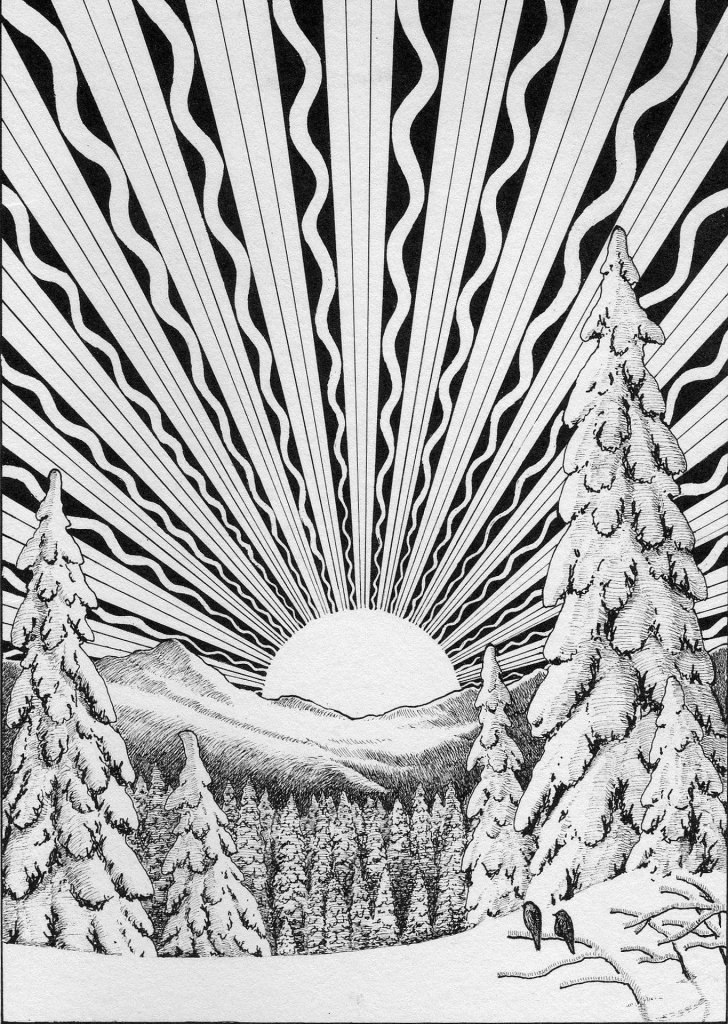
It is almost Solstice, the day in December that means the most to me: the shortest day, the gradual turn towards the light.
I will celebrate with a short meditation, then some music and mulled wine. I send you warm wishes for Solstice, Christmas and for the New Year. Thank you all for your support and your comments. On Sunday 3 January I will post again.
The marvellous illustration is by gdizerega on Pixabay, and the winter solstice haiku by Matthew Paul. It was first published in The Haiku Calendar 2014.
winter solstice the street-cleaner picks up a glass half full
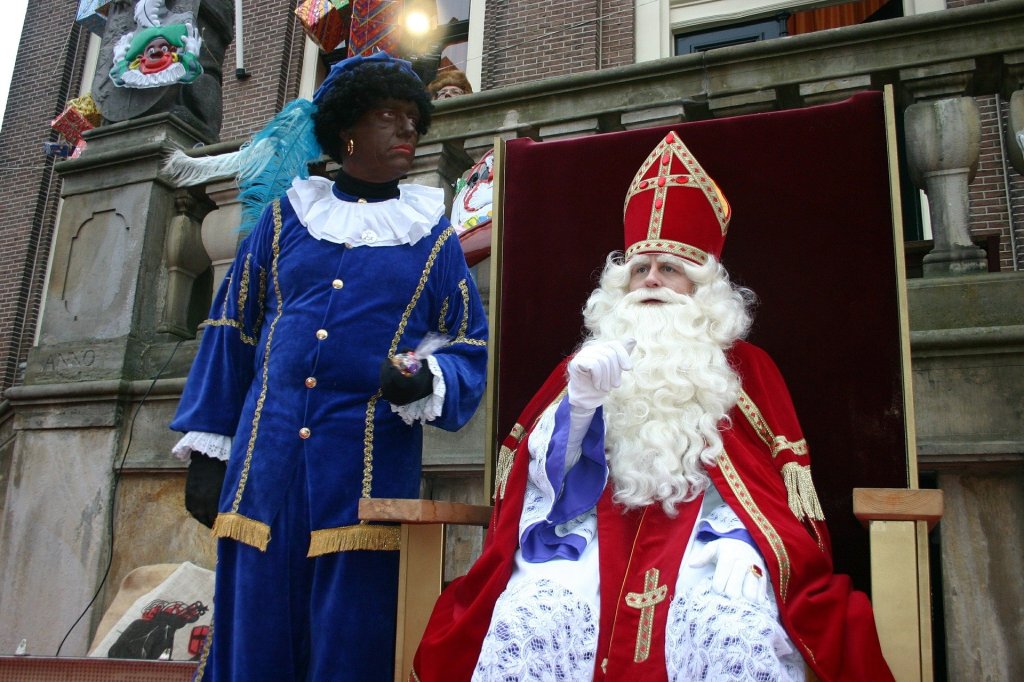
St Nicholaas arrives in the Netherlands by boat, each year at a different port. He then rides through the town on his white horse. It’s on the mid-November Saturday. In the three weeks’ run-up to St Nicholaas Eve (5 December) he will appear in other towns, always with at least one Zwarte Piet who carries a large bag with goodies and, traditionally, a birch bundle to clean a chimney. But, as children we were told that, if you were naughty, you’d get spanked – even worse, you might be put inside that bag and taken away to Spain …
Since 2010, there has been growing concern about Zwarte Piet and racism. There have been demonstrations for and against the tradition. Motorways have been blocked. Arrests made.
St Nicholaas and Zwarte Piet, olliebrands0 via Pixabay
The arrival of St Nicholaas attracts large crowds: not good in a pandemic. This year the Dutch, pragmatic as ever, have killed two birds with one stone. The holy man arrived in a non-existent village, called Zwalk. The verb Zwalken means to drift, wander about. His arrival was shown live on Dutch television on 14 November. There were no crowds, no protesters.
Here is the white horse, a display in the famous Bijenkorf store in Amsterdam.
The traditional sweets connected with St Nicholaas were already in the shops late September when I was due to travel back to Manchester. Alphabet letters, capitals in dark or milk chocolate, along with marzipan figures, gingerbread cookies (pepernoten), speculaas filled with almond paste…
St Nicholaas sweets and cookies, nietjuh via Pixabay
Once children know the truth about St Nicholaas – that he is based on a Greek bishop who lived 270 – 343 in Myra, in what is now Turkey – and they have pocket money, they can buy presents for other members of their family. Traditionally, these are hidden in a surprise – a humourous, unusual or personalised packaging, made of papier maché and painted. These may come with a “poem” that is supposed to come from the good old man himself. Poor St Nicholaas can only compose doggerel!
St Nicolaas writes to my dear brother. He wants to know: Why is it so much bother
for you to take a turn at doing the dishes? The knives and forks are not dangerous fishes!
Coffee cups, soup bowls, the dirty plate: Why do you always leave it so late?
The plastic bowl with soapy water isn’t deep. Honestly, you won’t drown, you could do it in your sleep!
Promise St Nicholaas that you’ll improve and he’ll send you some presents and his love.
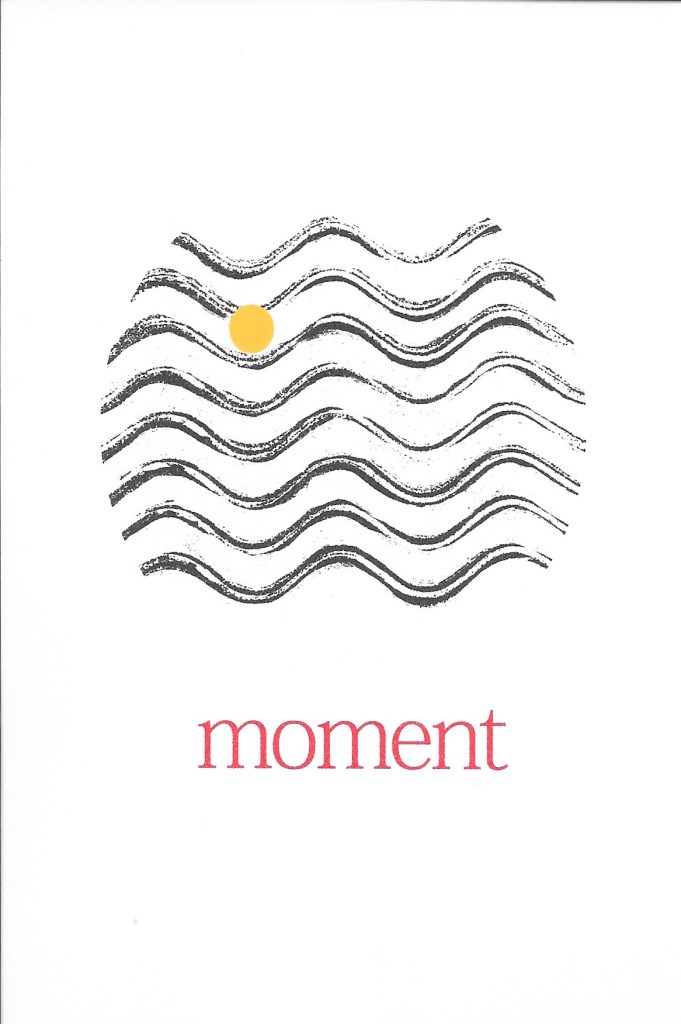
Moment arrived at the beginning of the year. A wonderful surprise. It’s a pocket-book size anthology of haiku, senryu and tanka by Ian Turner. Ian, this month’s poet, was for many years a member of our regional haiku group which used to meet monthly. After his 30-year career as an Fine Art Lecturer, he relocated with his partner to France where he is now a practising fine artist.
Beautifully produced on thick cream paper, Moment includes well over 300 haiku. Ian has organised these in small sets on a number of themes which recur through the book: the seasons, various places and locations, both in nature and urban, animal behaviour, human activities. So, there is variety and consistency. The poems cover the period 1997 – 2020 and most have been previously published in quality haiku magazines: Blithe Spirit, Presence, Snapshot Press, Shamrock Haiku Journal.
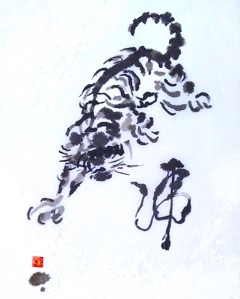
Ian tells me he is photophobic, so instead here is the image of indigotyger, Ian’s taoist spirit persona. I hope you enjoy my selection from his anthology.
that’s me in the far thistle field stalking a tethered pit pony hooves and heart skip a beat
early thaw a snail emerges from the meter box
hospital maze I become number seven on a pink plastic chair
the cool silence of a prayer room last flight call
swishing shingle the putter of a fishing boat in a smudge of light
throngs of tour coaches a gypsy woman’s empty paper cup
phantom moon red deer at the turnpike in their own time
yet more protests riot police greet each other on both cheeks
stood in a rippling white cloud the black calf
safe storage facility a life free of stuff so insecure
wild sage deep in the maquis a clank of goats
after a squall the ink stained letter in an unknown hand
Earlier this week I read for Todmorden Wednesday Writers. The Zoom event was well attended, with the open mic attracting poets from UK and abroad. I still want to abolish January – blogged about that before. The Todmorden poets liked this November poem. The pumpkin picture perfectly represents how I’m feeling right now – lockdown in November!
November
The month that offers only Halloween and All Souls’ Day. That Danish hygge nonsense – an IKEA trick to sell more scented candles, cocoa, woollen blankets with a Nordic pattern. All those Scandinavian series – Killing, The Bridge, different actors playing Wallander, every instalment set in November. Groundhog month. Lit-up pumpkins will never warm the knuckles of your heart. Every November day is an odyssey. To be away twenty years and be recognised only by a mangy old dog. Check your bonfire for hedgehogs, remember Battersea Dogs & Cats Home in your will. Do away with Christmas.









 Acacia Publications