Tag Archives: pandemic

Chalking the Pavement

It is a great pleasure to introduce this month’ guest poet Kate Noakes. Kate and I met during the first lockdown on Zoom (a group set up by a fellow poet). Kate Noakes’ most recent collection is Goldhawk Road (Two Rivers Press, 2023). Her website is www.boomslangpoetry.blogspot.com. She lives in Bristol.

Earlier this month Kate’s poem The Sick Spring appeared on the blog. It is from her pamphlet, Chalking the Pavement, published by Broken Sleep Books in 2024. At the heart of the book is Field Notes 2020. Field Notes has 65 entries: observations of life during the first lockdown in the form of prose poems.

I’ve chosen five, from the beginning and end of the sequence. All of them show Kate’s acute attention to detail as she ‘captures the soon-forgotten details of the changes to our lives’.

Field Notes 2020

Children are rediscovering, or discovering, the pleasures of chalking the pavement with hearts and messages of love for the NHS. Hopscotch has the thrill of the new, but neither the girl nor her mother knows how to play it. I look around for a handy stone. None are at arm’s length.

*

The slates pathing my garden are sleek with wet. Dust is dampened. This morning after weeks of early summer-in-spring is a change and a good one. I’ll rest indoors trying not to dwell on my friend’s friend: just two years older than us and dead. All day the blackbirds have busied about the garden in search of nesting materials. Such industry, even in the constant day-drip of rain.

*

My neighbour tells me he’s been scaled back to three days a week with attendant pay cut, yet considers himself lucky; most staff in his firm having been let go, along with eight percent of those in hospitality.

*

A windy day for children to learn or relearn the small pleasure of flying a kite. Prescriptions need at least a week’s notice and the pharmacist tells me there is some drug rationing. We have learned that a life is worth sixty thousand pounds; in case you’re ever wondered. And again there is no surprise in discovering that some people believe rules only apply to others.

*

I want my day to always start with a fishing heron and a cormorant drying its wings on the foreshore near the bridge, the tide running out, and the sun brilliant on the water. White stripes on the river path every two metres are a constant presence that it is hard to ignore.

Saved by bankruptcy

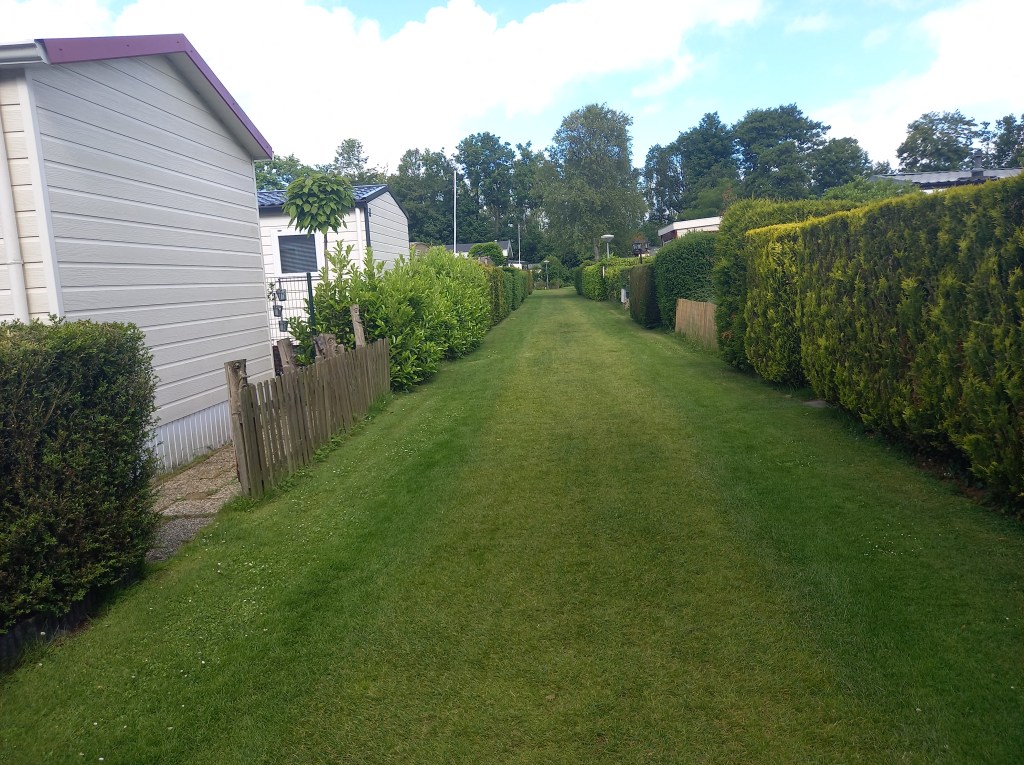
Photo credit: Pieter van Marion, NL

I had booked return flights Manchester – Exeter to visit my poet friend Kathleen. My trip was going to be in the third week of March 2020. On the 5th of March Flybe filed for administration and ceased all operations immediately. I lost £65, but I was very relieved: If I had flown to Exeter, I might well have been stuck in Devon as that first lockdown started…


On Sunday 15 March I learned the British government was considering a compulsory quarantine. The next day I emailed the owner of the campsite asking if I could arrive early. He replied immediately. I booked a flight, transferred money, packed, agonised over which poetry books to take to my ‘desert island’ near The Hague. I flew to Schiphol on the Wednesday. The local buses already had the area near the driver closed off with white-red plastic.


Here are two poems about that first lockdown:

The departure

Half a century condensed into Brexit, pandemic.
At the threat of a four-month’ compulsory
quarantine I fled to my bolthole in Holland.

Six months of safety in a static caravan,
waking to birdsong each morning,
shielded from the sun by the golden elm.
I walked my daily rounds on the grass lanes.

Forsythia, tulips, narcissi, rhododendron,
pyracantha, salvia, rock rose, asters:
the seasons’ steady markers. From a distance
I waved to neighbours finally arriving.

In the cupboard of the spare room
lay the letter confirming my ‘settled status’
on the other side of the North Sea.

The undertakers

A double spread in the paper
features a large photo.

This man, in his thirties, a narrow
horizontal moustache, soft smile.

He sits in a wooden boat, his right hand
resting on a plain white coffin.

People are asked to email text and selfies.
Made into cards, these are placed on the coffin.

He is based in Amsterdam, will transport
you safely through the canals.

That undertaker has just opened a crematorium.
He also owns a chain of hotels.

The pandemic has cut the numbers allowed
to be in the room. There is livestreaming.

People, he says, are glad of it.
The intimacy makes it easier to speak.

At the end of September 2020, the campsite closed. I got a Covid test somewhere in the centre of The Hague and flew back to Manchester.

Late lockdown poem

I wake up and know, of course,
that I am not a morning person.
The sound of rain, of course,
and fewer sirens as people
are supposed to be at home.
My lifelines are the same, of course:
motto, comfort break, medication.
Of course, I think about exercise,
settle for Composer of the Week,
dead, of course.

Marie-Louise Park, Didsbury, Manchester, UK

A postage stamp, Joshua calls it

He’s right and there’s traffic noise
from the main road and people
with dogs on long leads,
but not all the benches
are dedicated to the dead,
Marie-Louise is a pretty name
for a park and the 43 Airport bus
is a hybrid and no-one much
was going to the airport
that autumn: I often had the bus
to myself, both ways.

Lockdown Sonnets

It is a huge pleasure to introduce this month’s guest poet: Hamish Wilson whom I met four years ago when I attended a workshop at Garsdale.

Having taught in schools for 31 years, Hamish moved to Cumbria in 2016 to set up and run The Garsdale Retreat, http://www.thegarsdaleretreat.co.uk, a residential creative writing centre. This has allowed him the time and space to develop his own writing career.

The Garsdale Retreat

He has had poetry published in two anthologies: This Place I Know – A New Anthology of Cumbrian Poetry (Ed. Darbishire, Moore, Nuttall/Handstand Press, 2018) and Play (Ed. Taylor, Williams/PaperDart Press, 2018) and was shortlisted for the following competitions: WoLF poetry competition in 2017 and 2018 and Write Out Loud’s Beyond the Storm (Poems From the Covid Era) in 2020. He has also had poems in Culture Matters and The Morning Star.

In 2019 he performed Parallel Lives, (a sonnet sequence with live music, film and photography, exploring the creative lives of John Lennon and Dylan Thomas) at The Brewery Arts Centre, Kendal.

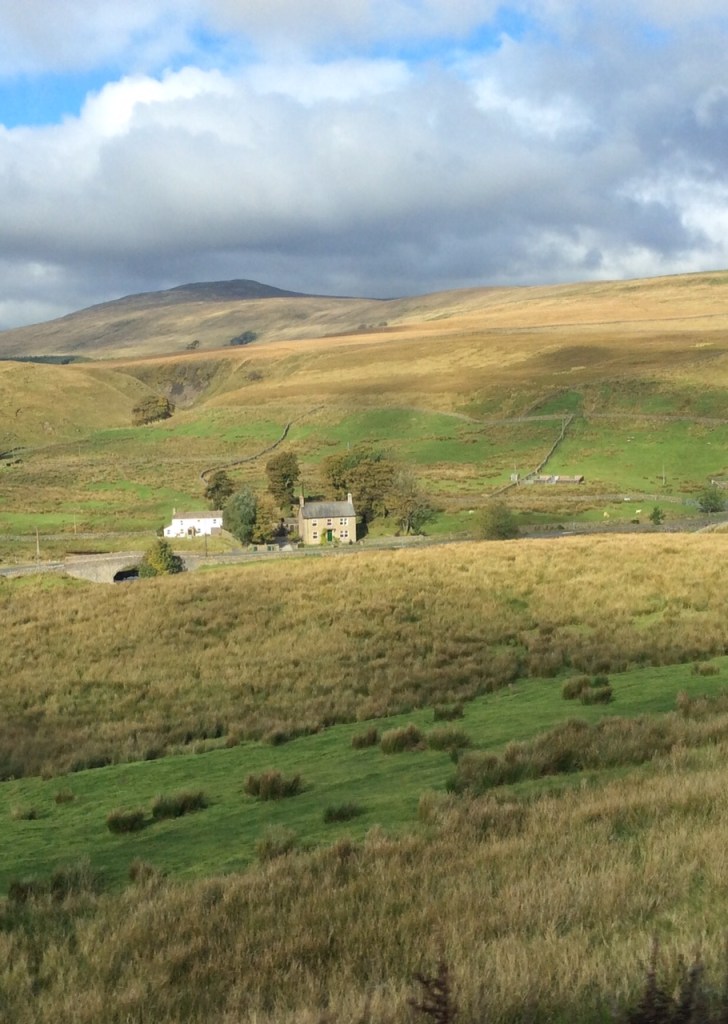
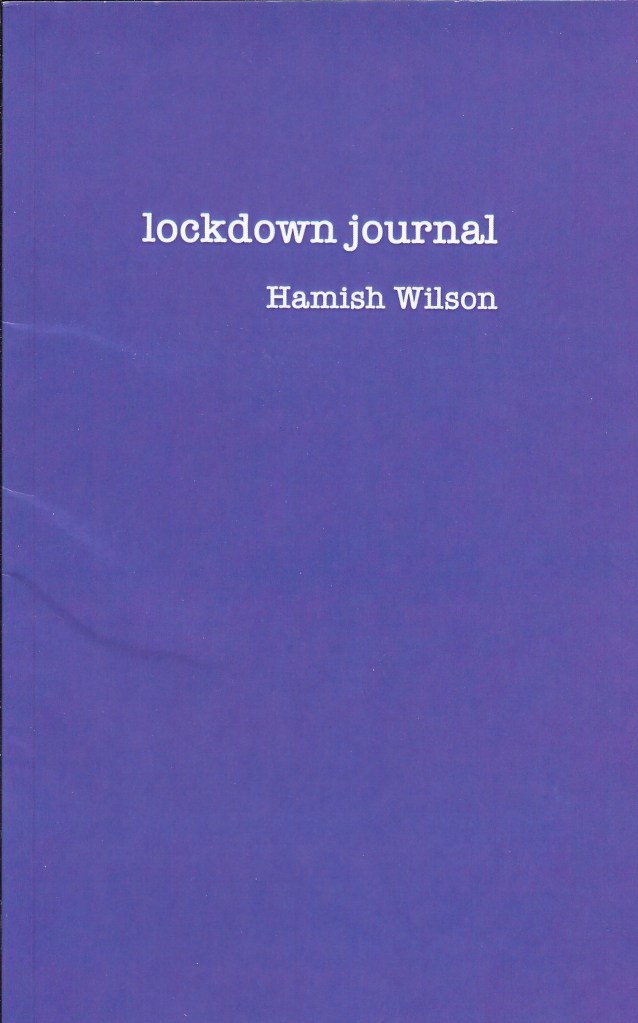
Written in 2020, Lockdown Journal is a sonnet sequence which explores his experience of the pandemic between 28 March and 21 April, reflecting on daily life in Garsdale as well as the wider world.

I asked Hamish to select three sonnets from Lockdown Journal as a way of marking the second anniversary of the pandemic.

Saturday, 28 March, 2020

The road is quiet. The weekend bikers
who came back with the curlews, have not returned.
This first weekend of Covid lockdown’s like a
languid bank holiday without the burn

of off-comers. Spring greens on regardless,
daffs trumpet; lambs skip, suckle; horned Highland
cattle shadow on the fell; lapwings test
their stuntman wings, plummet to earth (as planned).

At home, virtual visitors ease the time
with supportive texts, puzzles, You Tube vids;
parodies of songs, coronavirus rhymes,
zoom-conferencing and Happy Hour bids.

The News At Six brings contact nationwide,
a thousand UK people now have died.

Friday, 10 April, 2020

Days which bleed to other days still make their mark,
Good Friday’s on regardless and they fear
we’ll enjoy it with dangerous outdoor larks.
We’re shown deserted beaches, seaside piers

which forecast what they hope the weekend brings;
‘Your front door’s safer than a protective mask…..’
cut to bench taped like a crime scene, chained up swings:
stay-at-home’s fine-enforced now not an ask.

Up here, where social distancing’s the norm,
our walk on Blea Moor fell is not policed –
the only drone, a distant train, informs
we’re not alone and breaks the blanket peace.

A sky lark ascends, arpeggios on high,
coal-black speck of dust in the empty sky.

Tuesday, 21 April, 2020

Larks, invisibly high, white noise the sky,
we climb the tussocked sea towards the cairn,
the railway shrinks to Hornby, lapwings cry
like broken squeaky toys. Spring warmth returns.

In shirt-sleeves, we zig-zag slow to summit,
pause to watch a matchbox car surprise
the Coal Road, before we reach the sunlit
limestone and meet a ram skull’s hollow eyes.

The news is billed as good as we’re prepared
with twenty thousand beds to match the needs
of future patients in intensive care.
The experts tell us now we can succeed

to break the rise in deaths, to turn the tide.
Up here, we see our house, our tiny, tiny lives.

Lying in bed with my life – poem

Credit: Myriams Photos via PIxabay

Can’t you sleep either? After a dark year,
many old friends gone, I thought I heard you sing
outside the window
inches from my ear. Who are you singing for
this time of night? Did I dream you?

This is the first stanza of Ruth Padel’s poem Night Singing in a Time of Plague. You can read the full poem on the Poetry Society’s site here. It is a response to John Keats’ poem Ode to a Nightingale. The poem was commissioned as part of the Keats200 bicentenary – a celebration of Keats’ life, works and legacy.

We are close to the first anniversary of the pandemic. The borders of the Netherlands remain closed to visitors from the UK. I have been sleeping less well for weeks now. Here is Kathleen Kummer’s poem, also about the difficulty of finding sleep.

Lying in bed with my life

I am lying in bed with my life.
It is one of those sleepless night when I chafe
at its bulk alongside me. It will fill the hours
with my clan of northerners and sundry others.
I shall speak for them all, the living and the dead.

I know the words, which I’m good at repressing
when they were my own and unkind. I shout Cut
if the scene is unbearable, switch on the lamp
to get rid of it, a shame, as I might still have seen
my mother’s harebell-blue eyes and the family
wearing each other’s hats at a picnic.

The curtain at last turns grey and grainy,
and my life rolls up fast with a click inside me.
I’m reminded of that when my daughter says
I don’t suppose you’ve got a decent tape-measure?