Tag Archives: fiction

Having Her Cake


It is a pleasure and a privilege to share three poems from Wendy Klein’s new pamphlet Having Her Cake, published by Grey Hen Press. The pamphlet is dedicated to Barbara Cox (1943 – 2019). Several poems give us vivid details about their lifelong friendship. However, the focus is Barbara’s ‘physician assisted’ death. The opening poem starts: Barbara never knows what time it is in Britain. California calling ends: the kindly California law / on assisted dying / I tell her I’m coming.

Having her Cake

The chocolate cake, left over
from her annual pre-Christmas do
sits on a large white china plate,
dwindling in size day by day,
an unwashed fork lying next to it,
a temptation to any passers-by,
though no one ever sees
anyone else eating it
and it would have been sacrilege
to open the cutlery drawer,
select a clean fork,
place the used one in the sink
or the dishwasher, but someone
on the third day I’m there removes
the plate, crumb-covered and sticky,
replaces it with a tidy paper version
tucking the now over-large piece
of cling-film around the edges
clumsily, carelessly, as if
it no longer mattered, as if
at any moment it could be binned
plate and all.

What you can’t wake

The dead. No, not even the dogs,
grumbling at being shut
in their crates, beside her bed
peering through the grate, eyes
full of reproach.

No, you can’t wake the dead,
but the not-quite-dead
are too awake, their eyes
peeled until the last,
their flesh jumpy,
their muscles braced.

Beneficiary

Released from the need to worry
for herself, she frets
about the falling stock market
on behalf of her beneficiary,
a willowy young hairdresser,
the daughter she never had,
who will inherit everything:
the rambling shambolic bungalow
with its million and one flaws:
the water pressure that shuts down
the whole system when the shower is on,
necessitating bouts of shouting,
water, water if someone so much as
turns on a tap to rinse a cup,
brushes teeth, flushes the toilet
in any other part of the house —
a second-hand Honda Jazz,
a rusting dishwasher, a dog run
which looks like a concentration camp
for canines, meant to be protection
from ‘critters out there,’
and the stock market falling,
falling, falling.

Biography


Widely published and the winner of many prizes, Wendy Klein is a retired psychotherapist, born in New York and brought up in California. Since leaving the U.S. in 1964, she has lived in Sweden, France, Germany, and England. Her writing has been influenced by early family upheaval resulting from her mother’s death when she was nine months old, her nomadic years as a young single mother and subsequent travel. She has published three collections: Cuba in the Blood (2009) and Anything in Turquoise (2013) from Cinnamon Press, and Mood Indigo (2016), from Oversteps Books., plus a new and selected, Out of the Blue (2019) from The High Window Press. Her first pamphlet Let Battle Commence (2020) from Dempsey & Windle, was based on her great grandfather’s letters home while serving as a Confederate Officer in the US Civil War. She shares her work on https://www.cronepoet.com.

Saved by bankruptcy

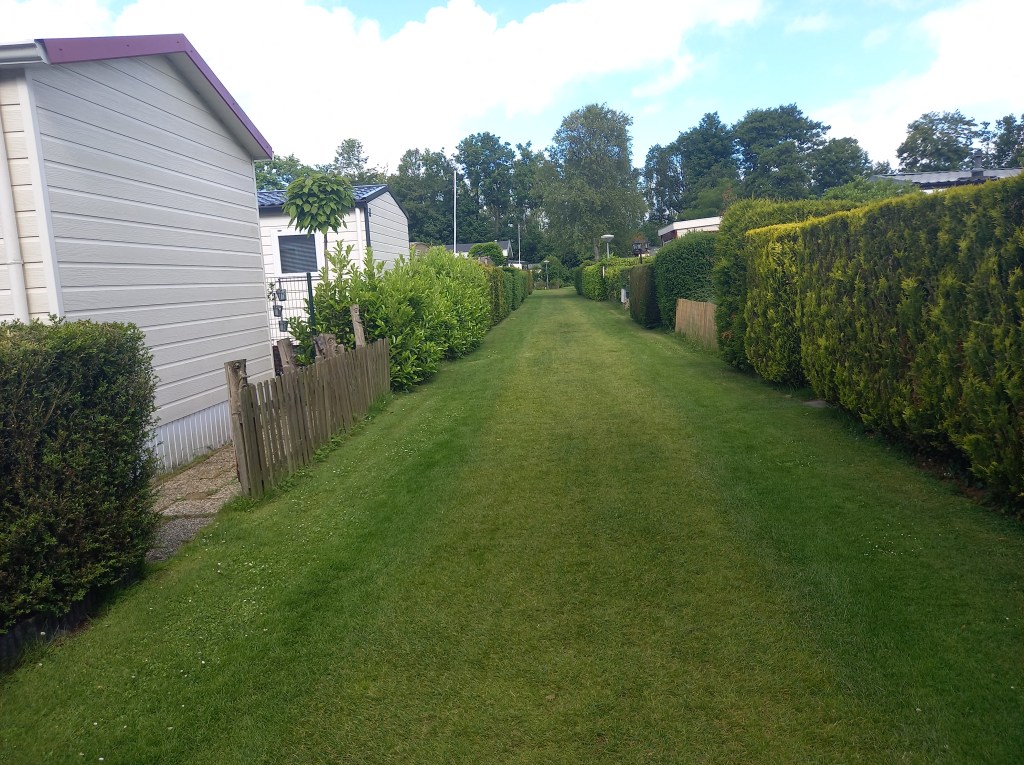
Photo credit: Pieter van Marion, NL

I had booked return flights Manchester – Exeter to visit my poet friend Kathleen. My trip was going to be in the third week of March 2020. On the 5th of March Flybe filed for administration and ceased all operations immediately. I lost £65, but I was very relieved: If I had flown to Exeter, I might well have been stuck in Devon as that first lockdown started…


On Sunday 15 March I learned the British government was considering a compulsory quarantine. The next day I emailed the owner of the campsite asking if I could arrive early. He replied immediately. I booked a flight, transferred money, packed, agonised over which poetry books to take to my ‘desert island’ near The Hague. I flew to Schiphol on the Wednesday. The local buses already had the area near the driver closed off with white-red plastic.


Here are two poems about that first lockdown:

The departure

Half a century condensed into Brexit, pandemic.
At the threat of a four-month’ compulsory
quarantine I fled to my bolthole in Holland.

Six months of safety in a static caravan,
waking to birdsong each morning,
shielded from the sun by the golden elm.
I walked my daily rounds on the grass lanes.

Forsythia, tulips, narcissi, rhododendron,
pyracantha, salvia, rock rose, asters:
the seasons’ steady markers. From a distance
I waved to neighbours finally arriving.

In the cupboard of the spare room
lay the letter confirming my ‘settled status’
on the other side of the North Sea.

The undertakers

A double spread in the paper
features a large photo.

This man, in his thirties, a narrow
horizontal moustache, soft smile.

He sits in a wooden boat, his right hand
resting on a plain white coffin.

People are asked to email text and selfies.
Made into cards, these are placed on the coffin.

He is based in Amsterdam, will transport
you safely through the canals.

That undertaker has just opened a crematorium.
He also owns a chain of hotels.

The pandemic has cut the numbers allowed
to be in the room. There is livestreaming.

People, he says, are glad of it.
The intimacy makes it easier to speak.

At the end of September 2020, the campsite closed. I got a Covid test somewhere in the centre of The Hague and flew back to Manchester.

Late lockdown poem

I wake up and know, of course,
that I am not a morning person.
The sound of rain, of course,
and fewer sirens as people
are supposed to be at home.
My lifelines are the same, of course:
motto, comfort break, medication.
Of course, I think about exercise,
settle for Composer of the Week,
dead, of course.

Marie-Louise Park, Didsbury, Manchester, UK

A postage stamp, Joshua calls it

He’s right and there’s traffic noise
from the main road and people
with dogs on long leads,
but not all the benches
are dedicated to the dead,
Marie-Louise is a pretty name
for a park and the 43 Airport bus
is a hybrid and no-one much
was going to the airport
that autumn: I often had the bus
to myself, both ways.

Congratulations!


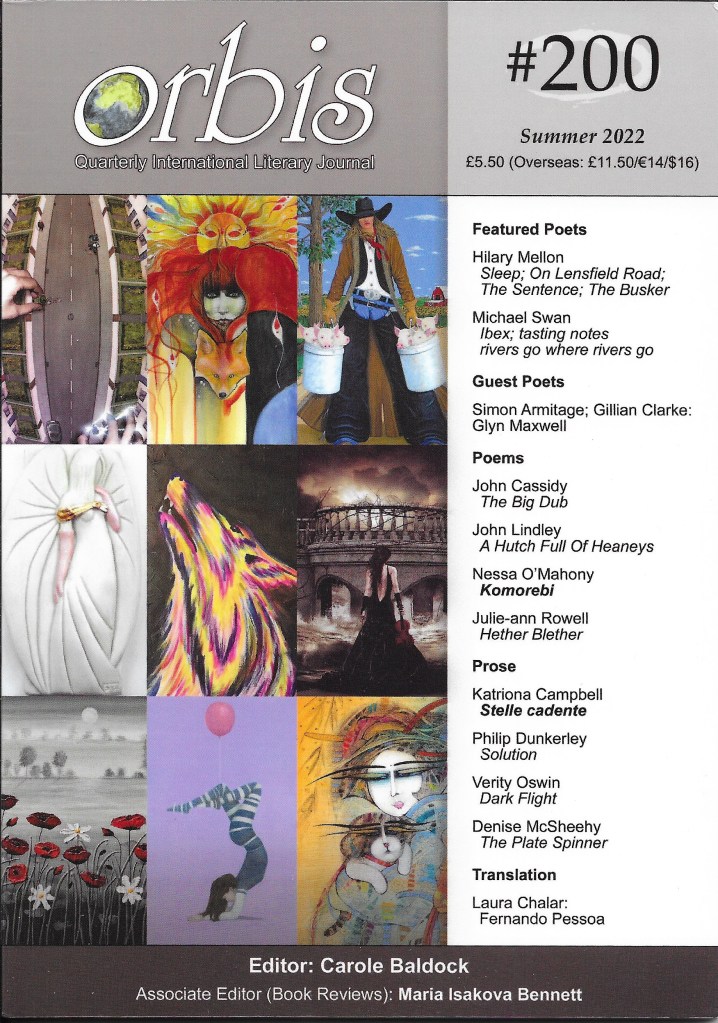
Congratulations to Orbis Quarterly International Literary Journal and Editor Carole Baldock. The 200th issue has just arrived. It is a bumper bundle and I look forward to getting stuck in.


Orbis is not just a poetry magazine, it is an international community of poets: each issue carries Lines on lines – brief communications from readers and I particularly like the Readers’ Award. Each issue readers can nominate up to four contributors whose work most appeals. A sum of money goes to the poem(s) that get the most votes and a similar amount is split between the runners-up. I find that I read each poem or prose piece with more attention – to have a rationale for my choices and votes.

I appreciate that my work has been featured in orbis three times. Below are two poems which featured most recently.

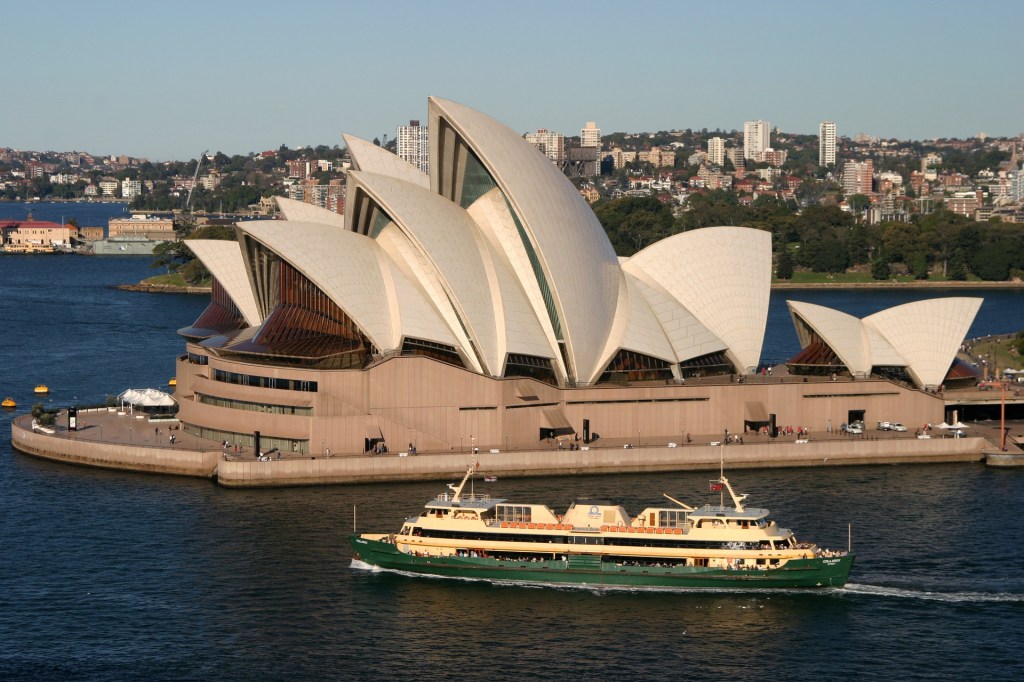
Credit: Steven Hill via Pixabay

The fire in Sydney

We’ve been out in the harbour
to get our Lifeboat Certificate.
The only woman, too feeble to row,
I had to steer the lifeboat
alongside SS Oronsay. First time
I didn’t manage to line it up.
Passengers lean over the railings,
watch us circle for a second attempt.

A fire on board has cut the electricity.
Our lifeboat cannot be winched back up.
The small, wizened Australian examiner
stares straight ahead. A passing ferry hoots.
From the galley portholes drifts
the smell of freshly baked bread.
The ferry hoots again. We dare not wave.
We don’t know yet if we’ve passed.

The last dogs

are running along the flood line.
Visitors are leaving for home, vacating the boarding houses; hotels.
A few people sit outside their huts: Parnassia, Shangri-La, Paradise;
grand names for a row of painted wooden boxes
which will be taken apart, then taken away at the end of the season.
The last dogs of the day are running along the flood line.
Gulls are scattering. It’s still warm. Somebody is singing a Beatles song.

Words to Remember

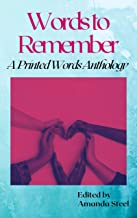
I am pleased to be one of the 43 writers who have contributed to this anthology by Printed Words. It includes fiction, creative non-fiction and poems. They cover writing about cancer and loss, but there are also pieces of writing that provide some lighter relief. The profits of the book are going to several cancer charities. Words to Remember is edited by Amanda Steel (@Amanda_S_Writer) and is available on Amazon as a paperback and Kindle Edition.


One of my two poems is Bitterne Park, Southampton. A friend who also used to work for P&O bought the house that I shared for just a few years with my late husband. I can still visit…

Bitterne Park, Southampton

The blackout curtains
don’t let the sun through.
I wake to the small sounds
that come with morning:
squirrels jump around the oak tree
at the heart of our cul-de-sac.
A bus strains up the hill.

At the Triangle, the bank opens
and the smiley greengrocer
limps his vegetable crates outside.
On the river Itchen
John strokes his beard, thinks
about brewing tea.

It is meant to be an ordinary day.
But this month is a long-distance runner,
this month is a marathon.

On the other side of the narrow bridge,
a woman is taking two large black bags
into a charity shop. Suits and shirts,
all washed, dry-cleaned, ironed.
She had forgotten the silk ties.
Now they’re rolled up, placed
in a see-through Biza bag
that once held duty-free cologne.