Category Archives: Art

A Mirroring – guest poet

Ken Evans

It is my pleasure to introduce this month’s poet: Ken Evans. Ken and I met some years ago at writing workshops in Manchester. I hope you enjoy these new poems.

Ken longlisted in the National Poetry Competition this year, and in 2015, while doing a Poetry Master’s in Manchester. In 2018, Ken won the Kent & Sussex competition. His poems feature in Magma, 14, Under the Radar, Envoi, The Lighthouse Literary Journal, The High Window, Obsessed with Pipework, and The Interpreter’s House.
 
In 2016, Ken won the Battered Moons Competition and was runner-up in Poets & Players. A first pamphlet, ‘The Opposite of Defeat’ appeared in 2016. Ken’s first collection, ‘True Forensics’ in 2018. He’s thinking he may be close to finishing a second collection…

A Mirroring

A tiny hop on one leg when you see me,
a straightening to rise and bob,
then a small correction, mid-

air, as you pivot yourself to steady,
like a dust-devil swaying over
tarmac after days of brown desert.

Your black leather jacket and red blouse,
a grey plait across one shoulder, all
thought through before, but for a moment,

I glimpse the girl in a classroom drawing,
a pink tongue seeming to swing your attentive,
cross-hatching pencil-hand from side

to side: the fleshy dark mirror of your jacket.
Supple and barely touching, we hug and pull back
with comradely smiles, but you catch

my thought as it forms, like a cloud
in a cleaned window, before
looking up, to see the thing itself.

Forever, the Light from Sirius
Sirius, the brightest star in the sky,
whose light takes 9 years to reach Earth

Earth, I left a voicemail, my umpty-eighth.
Must I really draw a picture, me that loves
you, as the flip-side of your silver coin?
I am not who set out, nine years ago. I am
not the me I left behind, and you are not
the you I came to talk to then, but you can
see my same light now, crystalline, falling.

Tracks

A tendency to see the deceased’s room as empty
is a control mechanism, when it’s no more void than

a December garden at four-twenty, the light
running out of the day’s green bottle faster than

drips down a window, though in fact, calls thread
the blackening sky and hedges: an owl more than

clearing its throat for the nightshift, or the longer
than usual high call of a wren, louder even than

the distant, reverse warning alarm on a lorry
at the steel factory, red lights more piercing than

crows commenting from the chimney pots.
The room itself is bare, a white-out, rather than

featureless. A glass door throws what light there
is on the carpet, naked and pinker where divots

from what was chair legs puncture the fibres,
the hollows suggesting how she faced one way

so many unfurling days, the pile threadbare
where her slippers marked the apex of a star

in front of her, tracks now damped by towels
and steamed with an iron to raise back the flush,

though not all obey. Lines left by a Welsh dresser
still bear her weight, the not-yet-gone of her,

the thoroughfare of a ruined city where
I am an unguided tourist greeted ceremonially

at the eastern gate by a roaring lion with a nose lost
to weathering, running due west in a straight line

to the red sunset, only the weeds in the mortar
noting the location, the sub-divisions of the hours.

The Final Invoice from the Co-Op
A part-found poem

for bringing the deceased into our care in working hours;
for private use of the Chapel of Rest;
for care and preparation of the deceased before the funeral;
for provision of a hearse and three personnel for the service;
for choice of a Simple coffin; a Minister’s and a Doctor’s fee;
for a non-witnessed scattering of the ashes in the Garden

of Remembrance. Note: none of the above subject to VAT.

It’s false then that, ‘nothing can be said to be certain, except 
death and taxes,’ Benjamin Franklin or Daniel Defoe,
whoever it was wrote that.
What we remember of our lost may yet be false:
a conservator before
it was a cause or fashion, she dunked
tea bags twice,
marked the coffee on a jar with the stub
of an HB pencil,
and saved her hearing-aid batteries
for birdsong.
She’d dance with one hand on her stick, for such a deal –
‘Look, no VAT on dying, a saving of 20% – Bingo!’

Satsumas – a poem

credit: Kie-ker via Pixabay

In the Netherlands it was National Vegetable- and Fruit Day on Thursday 14 October. The front cover of the weekly free paper was a large colour photo of three local shop owners encouraging us to ‘go for colour’ – have some fruit or veg to deal with the afternoon ‘dip’.


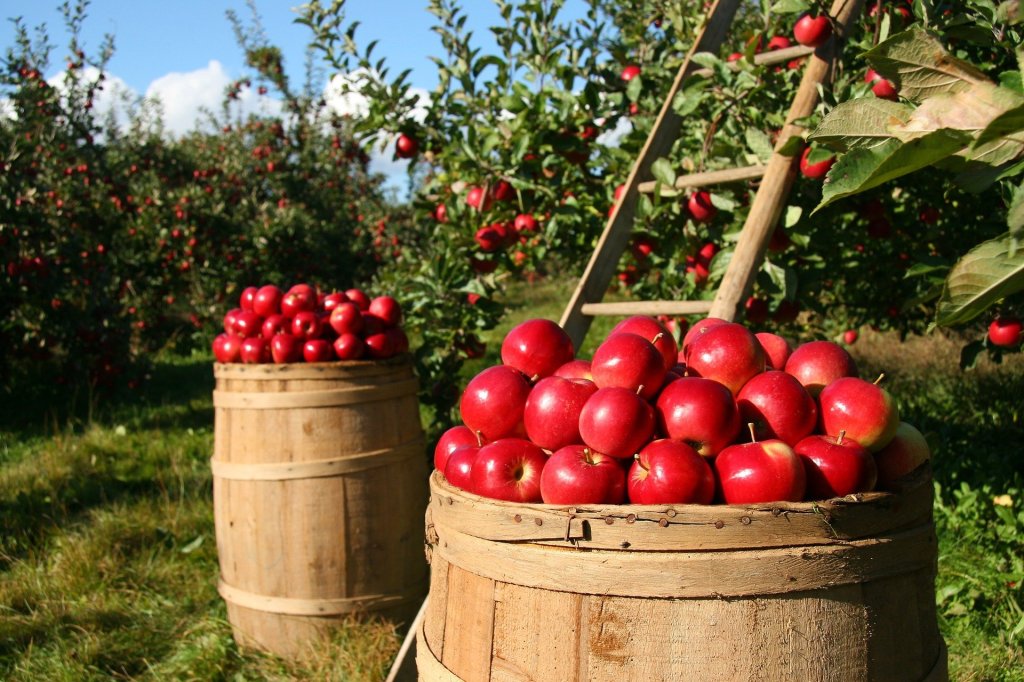
The Dutch love their tomatoes: it’s the most popular vegetable, making up of 10% of vegetables bought. The Dutch are eating a little more fruit and veg this year, compared to last year. The most popular fruit was the banana. Probably because fewer apples were harvested.

Credit: Lumix2004 via Pixabay


The poem Satsumas was published in my debut collection Another life, by Oversteps Books in 2016. I wrote it on a workshop where the tutor suggested that ‘half a sestina might be called a satsuma’. I’m always grateful for prompts!

Satsumas


The mandarin is also a clementine, or a seedless tangerine.
They must not be confused with the satsuma, first
exported from the province Satsuma in Japan.

The men and women of the Fruit-and-Veg Marketing Board
are introducing their successes: the Orkney, a type
of button mushroom, but a clear ice-white and stoic.
There is the Argyle, an improved form of celery with
lower water content, therefore less stringy and greener.
The Devon is already being exported to Japan:
a small, tasty apple, dark red, square and stackable.

No-one mentions the Wicklow with a taste like ratatouille
after a fortnight in the fridge, or the Sark, a long, sour,
brown hairy thing lying at the back in wooden crates.

2pm Appointment – a poem


The Safe Place or Special Place exercise is an essential part of the preparation phase of EMDR, before the client or patient starts the processing of the traumatic memory.

Today is World Mental Health Day. Below is my sonnet about EMDR (Eye Movement Desensitisation and Reprocessing). EMDR is a a proven trauma treatment which has been NICE-recommended in the UK since 2005. In 2013 it was also listed as a recommended trauma treatment on the website of the World Health Organisation (WHO).

The poem is included in my pamphlet A Stolen Hour, published by Grey Hen Press, 2020.

2 pm Appointment

Holding a fingertip to his right ear;
this is the worst part of the memory:
all bright, vivid. He is still forced to see
and feel the machete: cold steel, cold fear

Now he dreams, cannot sleep, was driven here
by his wife. Four or five men, he tells me,
balaclavas, jumped from a van. Now he
lies with a blanket of guilt, but it’s clear
to me that he wants to become the man
that he was. That he did the best he could.

As you’ve come through pain and grief in the past,
you can do that again. Sounds and sights can
go. We’ll create your Safe Place now. I’ll put
you in for next week. This stuff will go, fast.

Stonemason – writing prompt

Credit: Ray Miller via PIxabay

Here in Scheveningen, the seaside district of The Hague, it’s a wet Sunday. Tomorrow it’ll be World Animal Day. Here is a short poem with wet animals, inspired by seeing the peregrine falcons at Norwich Cathedral. It’s from my pamphlet A Stolen Hour, published by Grey Hen Press.

Prompt: What animal(s) did inspire you? Where did you first see it? What day was it?

Stonemason

I am the last stonemason.
Green water spouts from
the gargoyle to my left.
I am hidden up here
with the two peregrines,
sodden on their cathedral nest.

My apprentice didn’t come today.
Black sky, lightning and
the distant rumbling of armies
advancing, retreating.
I count hours on my arthritic fingers.

Uniforms – poem

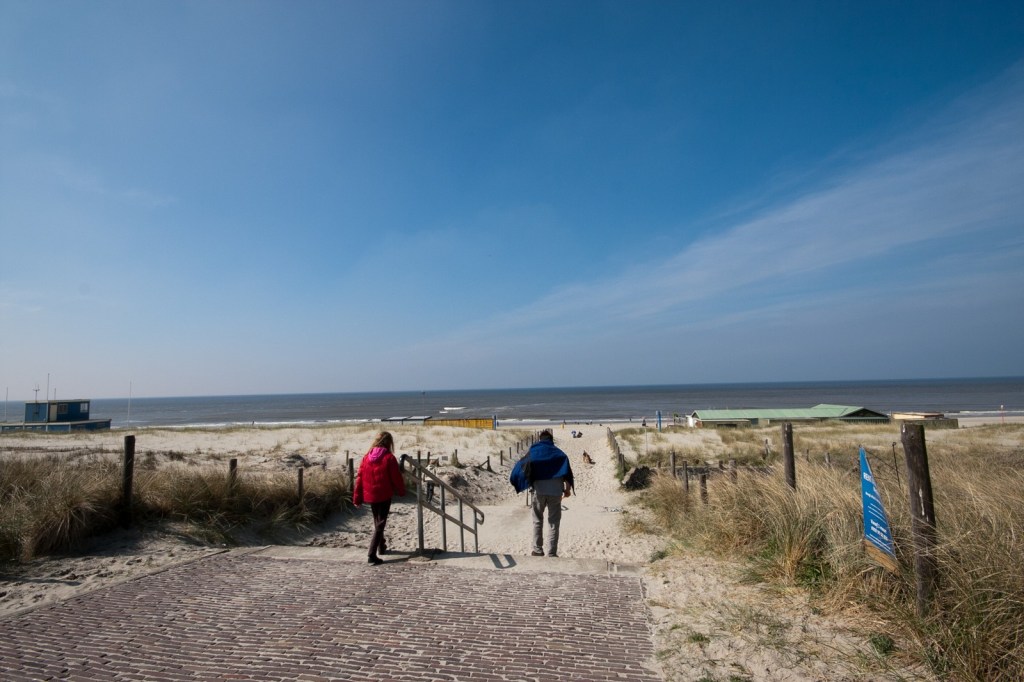
As you can see from the picture, I’m back in the Netherlands. The camp site closes 12 noon this Thursday, so I’m making the most of the good weather to work in the garden and plant bulbs.

On the last Sunday in September I’m posting this poem which is included in my second collection Nothing serious, nothing dangerous (with Indigo Dreams Publishing, 2019).


Uniforms

I saw the van turn and park
by the old oak tree
at the heart of our cul-de-sac.

It was early September and sunny.
It must have been afternoon,
because I worked part-time.

Our white cat was asleep upstairs.

Two men carried it, though
it wasn’t heavy. A metal
trunk, shiny in the sun.

The ship safely back in Southampton.

That sheen on the dark brown coffin
as it was helped from the limousine.
We had buried you in May,
a cemetery next to the Ford factory.

White and black uniforms.
Shirts, trousers, shorts.
Black shoes, white shoes,

cracked by too much cleaning,
and yellowing socks
in different stages of decay.

That stale ship’s smell still clings.

In the fields near Arnhem – poem

During this year I’ve been posting poems by my friend Kathleen Kummer. This is the last one. Kathleen lived and worked in the Netherlands after she married a Dutchman and taught German and French at an international school.

The battle of Arnhem took place during 17 – 26 September 1944. Operation Market Garden failed when the allied forces could not take the bridge over the Rhine.

In the fields near Arnhem

It falls like a petal from the last rose of summer:
a bus ticket, Arnhem Municipal Transport, flutters
from the faded pages of L’Art D’Etre Aimée.

Learning how to love and be loved, which was harder,
was what I had no idea I was doing that summer
of trains, boats and buses, all bound for Cythera.

It sounded so playful in French: Ecoutez-le,
(listen to him), passionnément. Ils adorent les cheveux,
so, wear your hair loose. But this was no game, we were serious.

Not so much so that we thought how, six years earlier,
they had floated down from the sky, white flowers
in their thousands in the fields near Arnhem.

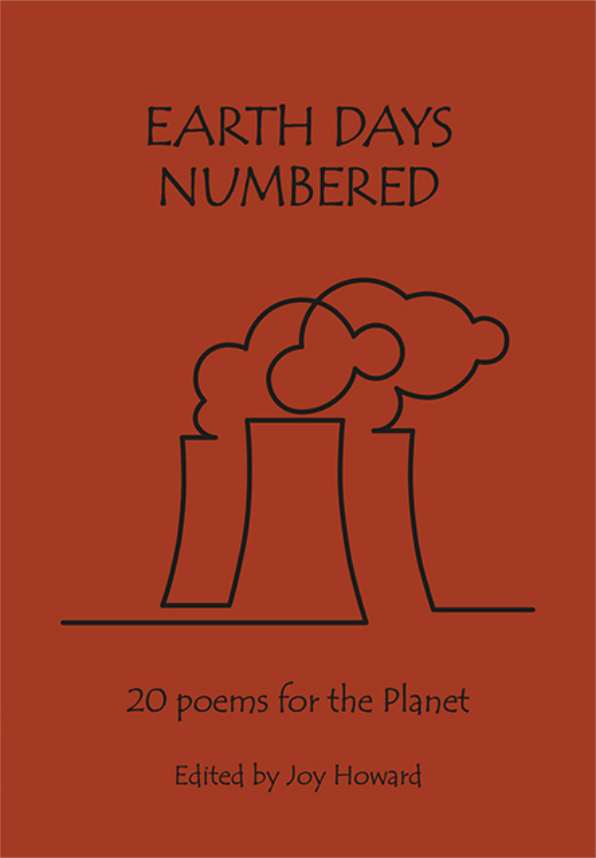
Earth Days Numbered – new anthology

I am very pleased to have a poem in this pamphlet which, along with its companion Counting Down the Days, has just been published by Grey Hen Press. Joy Howard, the editor, has done a great job of producing these two anthologies: allowing older women poets to show their support for the younger generation.

All proceeds from the sales of the two books will go to supporting the work of the UK Youth Climate Coalition. Below is my poem to give you a taster.

Paternoster

Some survivors live on the edge in cars,
dented, rusted ridges, blown tyres,
a towel drying on the steering wheel.
Much of life now is waiting and standing in line,
but Paternoster tells us it was often so in the Old Life.

Strong men searched among the rubble,
found saucepans, leather boots, shoulder bags.
Once a black wooden box called Schimmel
which Paternoster says means white horse.
Papaver grows inside that piano now.

Horses stand by the narrow river, kick sand.
One brown mare is with foal.
Our Friesian cows give us white gold most days.
We are waiting for rain, for a sign.
Men play a game of stone, paper, scissors.

I stroke the flute I made from bone.
I must be careful not to dream.
We trained the rats to smell landmines.
Paternoster remembers grapefruit,
a bitter yellow ball, the colour of sun.

A poem about my father …

Building prev. Middelaarkerk, Beverwijk, NL

My father was born on the 2nd of September. Here is a short prose poem about him. That so-called High Street was the Breestraat in the small Dutch town of Beverwijk, a few miles from the coast. In 1996 the building was last used as a church. When looking for a photo I came across a website offering accommodation. There is an apartment with a stained-glass window…

Hat

That Saturday afternoon my father had been drinking with the sales reps who had driven in to collect their bonus and, of course, being pleased with their bonus, they would have bought my father a drink. My father, being generous and liking his drink, anyway, would have bought them a drink. How the subject turned to hats, I don’t know, but around three, or three-thirty, my father came back home and picked up my mother’s hat, the one she would wear to church the following day: a large peach-shaped, red-wine-coloured, black-velvet-edged-bonbon-of-a-thing. I watched my father put on this hat and leave the house. I went out and followed him. The three sales reps stood outside the café at the end of our road. With the disdain of a Spanish matador, my father strode past them, heading for the High Street.

(published in Another LIfe, Oversteps Books, 2016)

Initiative, challenge and excitement …SPICE poem

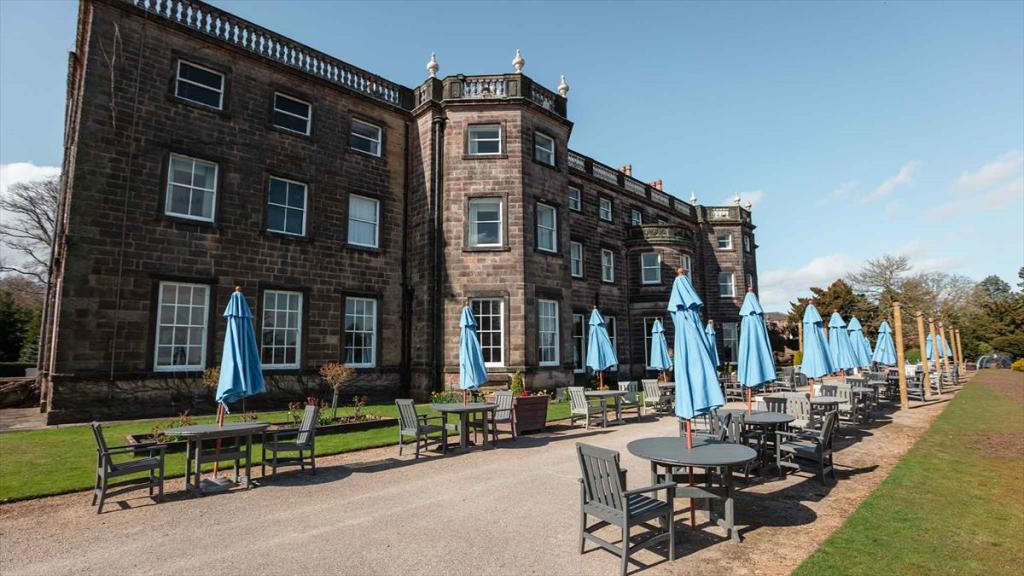
Nidd Hall, near Harrogate

I’m away this weekend on a reunion, staying at Nidd Hall Hotel, near Harrogate. Nidd Hall is a Grade II listed building with large gardens and a fishing lake. Many years ago, I went on a daytrip to the fabulous Turkish Baths in Harrogate. Dating back to 1897, it is full working order and historically complete: islamic arches, tiled brickwork, terrazzo flooring.


That outing was organised by Spice UK where Spice stands for ‘Special Programme of Interest, Challenge and Excitement’. Spice was started in the ‘80s on a part-time basis by Dave Smith, a police officer who held a sky-diving qualification. It grew into a national franchise organisation and still exists.

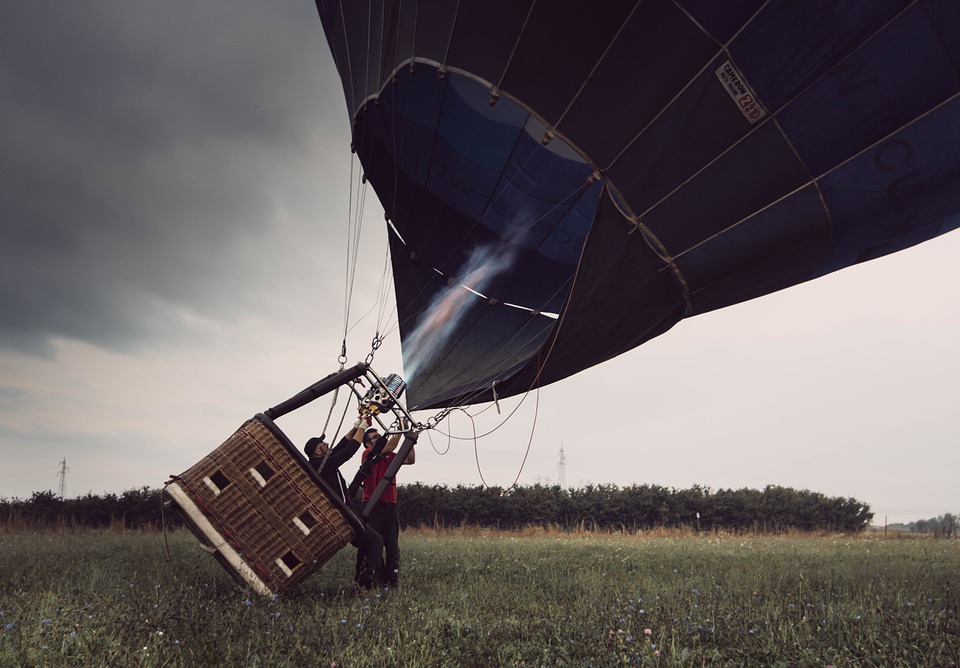
New to Manchester, I met lots of people at the social events, made friends and tried things I wouldn’t have done otherwise: abseiling, rock climbing, motorcycling, Formula Ford at Aintree. Here is a poem about one of those events. It’s from my first collection Another life. I hope you’re having a good weekend yourself!

Nicolae Baltatescu, via Pixabay

From Grassington, June
for Dave Smith

We had been following the Roman road:
Rita who was almost 80,
her bearded son, clutching champagne,
the pale daughter-in-law, and me
still gripping the metal frame.

Our shadow floated ahead of us,
scaring sheep and deer into running
towards the orange early evening.
The only sound creaking wicker
and the hissing of gas

We ducked as we rushed over
telephone lines, fences, tree tops.
The Land Rover – still keeping up –
with the bottle of whisky to placate
the farmer on whose field we hoped to land.

A walk in summer in Holland – poem

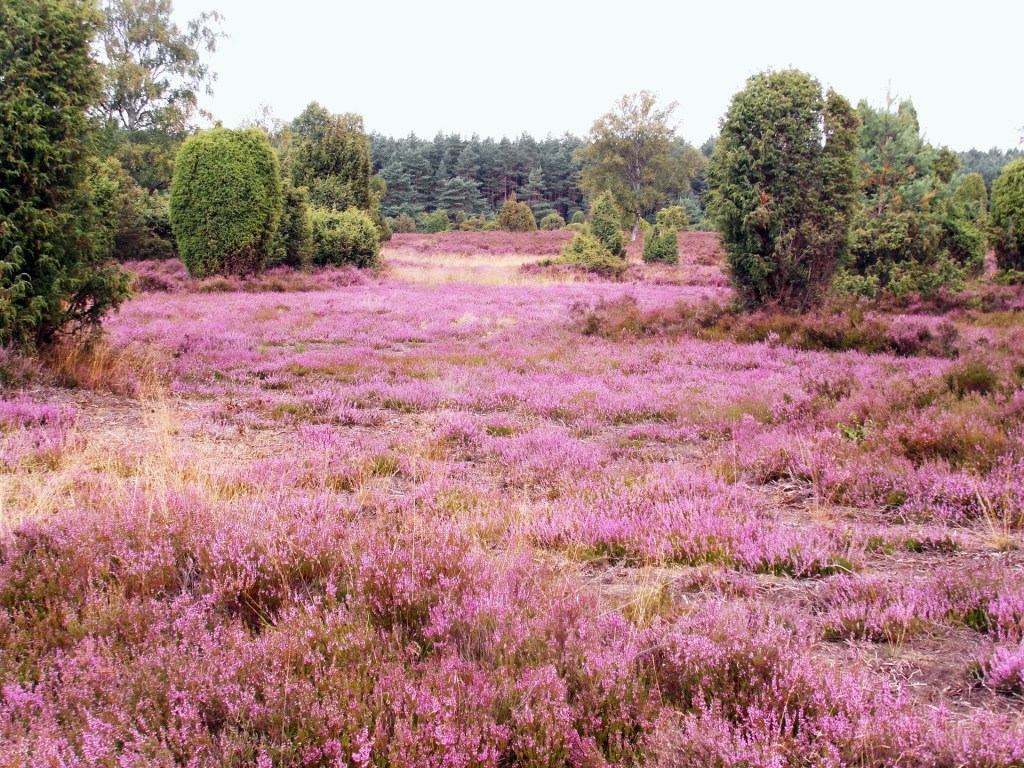
Heide by Steinchen via Pixabay

It’s only days since I returned to Manchester and I’m slowly getting back into the English language. It has been a great pleasure to feature poems here this year by my friend Kathleen Kummer. I hope you enjoy this one.

A walk in summer in Holland

No ditch, no canal, no river here,
no heron to remind me, as always, of Gandhi,
hunched up, as it studies the text of the water.
This landscape, the heat at Blaricum,
its sandy paths moist from yesterday’s rain,
never seem to be still. It moves with a gentle,
rocking rhythm. The mass of heather,
shrubs and trees, the tipsy ladders
of vapour the jets leave behind like litter,
the cirrus snagged on the sky, the flock
of sheep, horned flecked with brown,
expertly nibbling between each dainty,
filigree sprig – all of these
frolic round us: moving pictures
on a frieze like those in a child’s bedroom.

An illusion? Call van Gogh as a witness.
His olive groves writhe, his crops are waves,
cypresses rock on an ocean of fields
or boil with the stars in a fiery furnace.
But here, there is no such fever. Under
the huge Dutch sky, we are cradled, rocked
on a warm bed of purple heather.