Review: Contrapasso by Alexandra Foessinger

Credit: Kev via Pixabay


Contrapasso is the title of the debut collection of Alexandra Fössinger. She is of Italian origin and currently lives in Northern Germany. She writes mostly in English. Many of the poems included have been previously published in the UK and elsewhere, in magazines such as Tears in the Fence, The High Window, The Journal. The cover design – a black bird against a stark white background – is by Daniel Lambert, Art Director of Cephalopress, established in 2018, providing ‘a voice for the marginalised and the voiceless’.


I do not know the author, though I attended her online reading with Q&A. There she explained the background to the poems: her attempt at survival ‘after the imprisonment in the UK of someone dear to me’. This sudden loss may, in part, have coincided with the pandemic and its lockdowns: creating an incarceration for the poet too.


In Dante’s Divine Comedy, contrapasso is the punishment of souls by a process either resembling or contrasting with the sin itself. The collection is in two parts, both preceded by a quotation from Dante’s Inferno. Part 1 covers the period of imprisonment, while poems in Part 2 were written after the person’s release.


Birds for someone who cannot hear is the title of the opening poem and birds appear throughout the collection, as messengers, omens, and symbols: the blackbird frozen in shock, the thrushes in hiding, along with magpies, sparrows, sky larks, great tit, kingfishers, herons, seabirds. The second poem is titled Cell, giving us just the bare numbers:
1,
5,
3,
4,
7,
1,
and ending:
bad luck has brought
and kept you here,
and whether
you’ll walk out

or
be carried in a coffin

is also entirely
a matter of chance
.

The poems are the author’s response to the sudden loss, despair, darkness, pain. We have no life apart from life apart (Sentence); How can I find dreams of oarweed and eelgrass, / bring currents to glide on, as I must, when half / of my body is entangled / on the wrong side of the sea, / how will I know when time says to dive? (Velut luna).

Fössinger has said that she ‘is mostly interested in the spaces between things, the tiny shifts in time, the overlooked, the unsaid.’ Throughout the collection, we find astute observations and statements: la vita assurda: the middle-aged couple / pushing their dog in a pram. (July); that emptiness is best hidden / by a display of tame beauty. (Ambulant).

The strongest poems are those which describe a specific situation, or which have objects as ‘animate scaffold’. The poem Ambulant is in two parts:
I
The house with the Christmas decoration,
and the magnolia tree in bloom,
and the blackbird frozen in shock,
and an ambulance parked in the front garden,

all stand completely still.
People walk by, averting their gaze,
a stoop hammered into their skin –
How many lives will they have lost before,
without ever noticing.

The orange light is beating on the windows
like rain.

Here is Fössinger’s close attention to the overlooked, effective personification, interesting use of language. Not all the poems are so securely grounded, sometimes abstraction obscures their meaning. Other poems would have benefited from being tighter, shorter. The book is a short collection of 31 poems with quite a few blank pages. Some readers might want ‘more poems’ for their ‘pounds’.

While the poems reflect the poet’s emotional and psychological response to loss and separation, she manages to maintain a careful balance: hope is not abandoned. The recurrent bird theme also provides a framework, an underlying structure. This theme returns in the short closing poem, The robin redbreast. The loved one appears in a dream, as tiny as a bird, and:

Then you grew a beak
with which to pick and sing
and transport worms and roses.

Contrapasso is a confident and authentic debut by a perceptive, astute poet. Her personal tale finds echoes in the reader’s universal story. However long and painful the journey, there can be closure and transformation.

Easter Monday

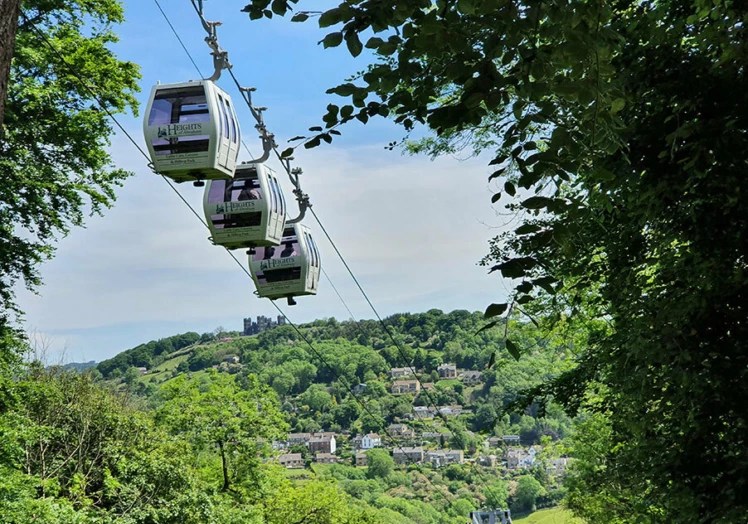
I’ve been sorting and clearing old photos and old poems. It reminded me of trips out into Derbyshire with friends: taking the cable car up to the Heights of Abraham, walking through the historic centre of Buxton. The Buxton Baths date back to Roman times. In the Georgian and Victorian period these were developed. Buxton is the highest market town in England. Easter can be early or late – walking through snow or sitting out in sunshine. Enjoy your Easter, wherever you are.

Buxton Centre

Buxton, 2pm

Here is Buxton Spa, Easter, green hills.
Not a credit card between us.

Good intentions: it’s the year of the Pig.

We’ve been to China, lugged back
soldiers from Xian, wrapped in towels.

Now they’re resting under the Red Cross.

For our next birthdays, we say,
we just want Prosecco, book tokens, no bric-a-brac,

but our hands are restless,
our fingers flick through a tray of rings.

Wassenaar via Lalibela

Priests at the Timket celebration, Lalibela

Yesterday, the camping where I have my static caravan opened for the season. This post explains how I ended up in the Netherlands via Ethiopia.

Marianne Carolan and I met through being students at the Open University. She had come across a young boy while on a study tour of Ethiopia. She started to sponsor him. Her friends, colleagues and neighbours followed suit. As the young people finished secondary education, the cost became too much for individuals. Therefore, Marianne set up the Lalibela Educational Trust (LET) in 2006 to raise funds which paid the fees for University and Nursing College.

With Marianne and several other sponsors I travelled to Ethiopia in January 2007, during Timket, the Ethiopian Orthodox Tewahedo Church celebration of Epiphany. I met my ‘son’ and his widowed mother. With its rock churches, Lalibela is a UNESCO World Heritage site.

Early this century Marianne had bought a second-hand static caravan in Wassenaar, the small town near The Hague which was her birthplace. At the time of her death in July 2008, the charity was sponsoring 26 young people. They are now doctors, engineers, nurses, IT professionals and entrepreneurs. She left her old caravan to me and I bought a new one a few years later.

Marianne Carolan (centre)

Night Flight, January 2007

Addis Ababa to Heathrow.
Us two, stretched out
across three seats
at the back of the plane.

Lalibela and the rock churches.
We wear the Shamma
they gave us for Timket:
The boys we sponsor.

Abolition

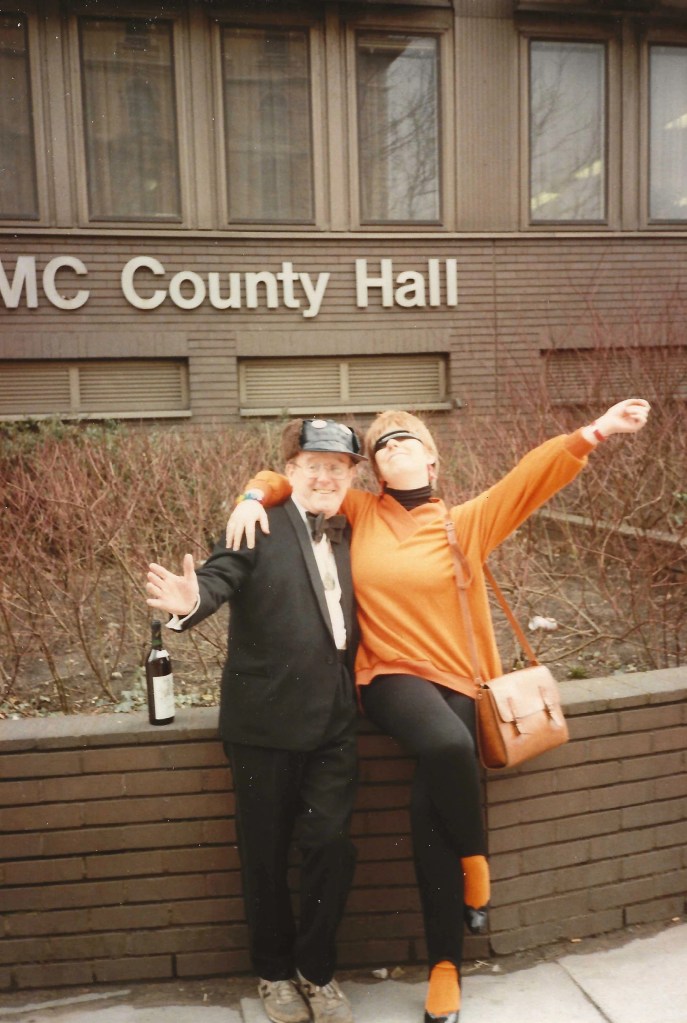
Lat month I was in Manchester, walking down Portland Street on my way to Piccadilly Station. It reminded me of my brief time (seven months) when I worked for the Greater Manchester Council (GMC). With my boss I ran workshops helping to prepare staff for job applications, CVs, interview techniques and salary negotiation. The GMC was the top tier local government administrative body. Its 106 members came from 10 district councils with which it shared power from 1/4/1974 until 30/3/86. Most of those district councils were Labour: not to the liking of Margaret Thatcher. Her Conservative Government abolished the GMC as well as the GLC (Greater London Council). Hence all that preparation for new jobs.

Abolition Greater Manchester Council, March 1986

That was the time I went as a dominatrix.
I wore my jodhpurs, riding boots,
carried a whip. I had my Cleopatra eyes,
and black bra under a side-less top.

Rebecca, my boss, had dyed her bob orange.
Tony, always modest, in dinner jacket,
bow tie, trainers, and baseball cap.
Black lace gloves for the HR woman in the wheelchair.

The young clerks were versions of cowboys and Indians.
We conga-ed across the zebra crossing onto Piccadilly Gardens.
Later we carried on drinking in the empty offices,
stroked and kissed the bricks of County Hall.

A Reader’s Guide To Time

It is a great pleasure to introduce this month’s guest poet Rebecca (Becky) Cullen. Her poem February appeared last month. Becky and I met on a poetry workshop where I bought A Reader’s Guide To Time. This was the winner of the 2021 Live Canon Collection Competition.

Here is Becky’s biography:
Rebecca Cullen has a PhD in Creative and Critical Writing. She was the second poet-in-residence at Newstead Abbey, ancestral home of George Gordon, Lord Byron. Director of the Writing, Reading and Pleasure (WRAP) extracurricular programme at Nottingham Trent University, Rebecca also curates and presents the Notts TV Book Club.

Photo credit: Fabrice Gagos


The collection is divided into eight sections, each representing a different kind of time. Becky ends her prologue with It’s time I love, winding as a cat wraps round an ankle. Here are four poems from Historical Time (n.b. timelines, clocks), Deep Time, Poetic Time (also ‘of Reading’) and Subjective Time (‘of our lives’), respectively.


Paris, Grands Passages

To enter requires trust: you can’t see the end
from the beginning. You can’t see the next beginning.

Shop names are the contents page; each entrance
is a diorama. Post yourself into the future.

At Hotel Chopin, climb the three red stairs.
Would you like to buy a sink? A model of a carousel?

The tiles are monochrome and harlequin.
The gates can keep you out, or keep you in.

In the window of the librarie, two wax children
read a book, sitting in a rowing boat.

Claim a tall-backed chair at the café draped in vines,
warm beneath the glass roofs pinched like fish spines.

The taxidermist stitches swans’ wings to a fox.
Come, watch the past play, hear your heels knock.

Night Fragment

He wakes her with a ball of sorry.
He wants her to hold it, keep it,
as brash and bold as the coin in her lungs.

His sob comes, warms her gut,
the flex of his young arm gone.

In the four o’clock light,
her face is crumpled, dirty.

Garden at Newstead Abbey

Peacocks at Byron’s Pile


I had a dream of Newstead Abbey,
that I was drifting through the garden
and the blowsy flowers were heavy on the walls.

The words are just ahead of me this morning,
the word for a large purple or white blowsy flower,
a climber, and a tree’s branches so they grow

outstretched in two dimensions. Espalier.
Both these things are in my head, somewhere,
but the sparrows roost near the monk’s pond,

which also has its own name,
and overlook the stump of oak on a lawn
where a raven has been adopted by two geese;

they are always in correspondence, everywhere
the remnants of a godforsaken kiss,
the three of them, like this. Clematis.

My Father and I

Sometimes we didn’t get on. The songs I sang
would please his ear. But I would over-act, embarrass him.

Now we go to appointments more often than we go for lunch.
After the last tests he couldn’t be left alone. I spread across one sofa,

he slouched on his, and we watched a documentary on Howard Hughes;
I didn’t know about the aviation or the Hollywood years.

So. We both kept turning up, not giving in.
Lately, I’ve taken to calling him daddy.

Irish men

As I have an Irish surname and it’ll be St. Patrick’s Day this coming week, I am sharing this short poem. Many thanks to the editors of The Madrigal for accepting it for an Áitiúil: an anthology, jointly with the Martello Journal. It was published in September 2022.

Books, books, books…

World Book Day is on the 23rd of April. In the UK it takes place on the 2nd of March to avoid clashes with spring school holidays and St. Georges’ Day.


A fellow poet introduced me to the American poet Ted Kooser, now in his early 80s. His style is accomplished, yet extremely simple. My current bedtime reading is his poetry collection Winter Morning Walks: one hundred postcards to Jim Harrison (Carnegie Mellon University Press, 2001).


In the late 90s Kooser developed cancer. He gave up his insurance job and writing. When he began to write again, it was to paste daily poems on postcards he sent to his friend and fellow writer Jim Harrison. In the preface, Kooser tells us ‘I began to take a two-mile walk each morning. I’d been told by my radiation oncologist to stay out of the sun for a year because of skin sensitivity, so I exercised before dawn, hiking the isolated country roads near where I live.’ These country roads are in Nebraska.


The poems cover a period from 9 November until 20 March. In the poems Kooser doesn’t directly talk about the illness. He does so through metaphor. All the poems include a brief description of the weather. The clear and precise observation gives them a haiku quality.


Here is his postcard for march 5:

Very windy and cold.


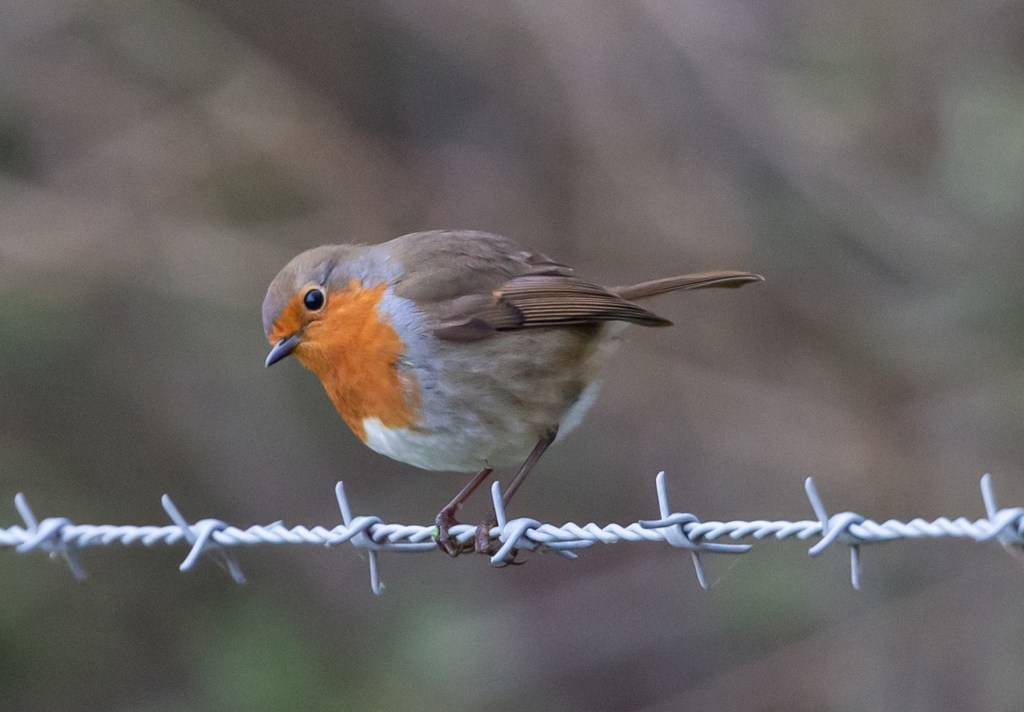
A flock of robins bobs in the top
of a wind-tossed tree,
with every robin facing north
and the sky flying into their faces.
But this is not straightforwardness,
nor is it courage, nor an example
of purpose and direction
against insurmountable odds.
They perch like this
to keep their feathers smooth.

The price of cauliflowers

Credit: Pixaline via Pixabay

I’m not keen on them, so I’m not buying now they’re 4 Euro each. Dutch growers have kept their glasshouses empty because of the cost of gas and electricity. I was lucky, though, to be accepted as a patient by a GP practice in the town I moved to. Lucky also that my journey to the implantologist involves two trams: there were strikes again on regional buses last week.


This poem, from a recent workshop, is a snapshot of life in The Netherlands.

Word jij onze nieuwe collega?

Outside every restaurant and café two blackboards:
one with a menu, the other asking for a sous-chef,
a washer-upper, or bar staff.
Freek van Os, the expensive plumbing business
is even renting lit-up space by the side
of a bus shelter. They need a planner,
and also have two technical vacancies.
Manda, my hairdresser, had found
a 42-year-old Afghan woman, single parent,
career-changer. When I came in a month later,
she’d changed her mind. Legal cases are abandoned,
judges are dead or retiring. As are many GP’s.
They’re not signing the new contracts, anyway.
Not much the government or the insurers can do.
People want to work fewer hours, it’s said, not more.

February

A seasonal poem and sampler by Rebecca Cullen who is our March guest poet. It’s from her collection A Reader’s Guide To Time. I very much enjoyed Rebecca’s take on February and hope you do too.

Valentine’s Day

Credit: Megan_Barling via Pixabay

This coming Tuesday it’s Valentine’s Day. Here is an early poem that hasn’t featured on the blog before. It was published in the Tees Valley Writer, Autumn 1995, and Highly Commended in their annual competition.

On the beach

Against the sinking sun gulls ride the waves.
Our dogs bark and chase their tails.
Try to run with a lone jogger who braves

the east wind whistling. Your son trails
in your wake, attempts big steps. Laughter peals:
a scene lifted straight from some fairy tale.

Heaped grey boulders mimic a colony of seals.
Not long before love winters in my heart.
I need to tell you how it feels

to be together, yet growing apart.
Your craggy face seems so much older
clouded in a bluish hue. I brace myself to start

as you place a hand on my shoulder
but all I can say is It’s getting colder.