Austere beauty

I was deeply saddened to learn of the death of Louise Glück. She is, perhaps, best known for her poetry collection The Wild Iris, which was published in 1992 and for which she received the Pulitzer Prize. The title poem opens the book: At the end of my suffering / there was a door.

Her 2014 collection Faithful and Virtuous Night, also from Carcanet, gave me both comfort and confidence as I was struggling to complete the manuscript of Remembering / Disease. ‘You enter the world of this spellbinding book through one of its many dreamlike portals, and each time you enter it’s the same place but it has been arranged differently.’ Each time I entered this world, I felt closer to home.

Glück was awarded the Nobel Prize in 2020 for her ‘unmistakable poetic voice that with austere beauty makes individual existence universal’.

The title poem Faithful and Virtuous Night is a long poem, over 10 pages, consisting of short stanzas. It ends:

I think here I will leave you. It has come to seem
there is no perfect ending.
Indeed, there are infinite endings.
Or, perhaps, once one begins,
there are only endings.

Hard Drive


It is a great privilege to share Paul Stephenson’s poems here. His debut collection was published by Carcanet in June this year. See the end of this post for Paul’s biography and details of his three poetry pamphlets.


When his partner suddenly died, life changed utterly for Paul Stephenson. In Hard Drive a prologue and epilogue hold six parts of almost equal length. These poems take the reader through the journey of grief: Signature, Officialdom, Clearing Shelves, Covered Reservoir, Intentions, Attachment.


‘A noted formalist, with a flair for experiment, pattern and the use of constraints’, Paul also has a talent for intriguing titles: Other people who died at 38; Better Verbs for Scattering; We weren’t married. He was my civil partner.


There is a great variety of form: erasure poems, use of indents and columns, haibun, prose poems, alongside the narrative poems which range in length from three lines to the five-page poem Your Brain. Unfortunately, WordPress can’t do justice to the poems which need formatting.


I have chosen four poems from four parts: What Jean saw, Battleships, On mailing a lock of his hair to America, belatedly, and Putting It Out There. Battleships is a particular favourite – precise and poignant.

What Jean Saw


Through the letterbox
the little bald patch of you
asleep on the floor

Battleships

I must sort his room, a room as full
of ships as any room could be, clear up
the battle waging on open seas.

I imagine them, christened one summer afternoon,
careering down their slipway
ironclad onto polished parquet.

Red and blue ships strewn – mile-long,
laden with guided missiles,
locked onto my feet, closing in on my knees.

Picking up a ship, I cup it, poor target,
slide a knife in the cracks
between floorboards to extricate others.

No mayday for these navies in trouble,
these heavily manned fleets,
their broadsides struck, hulls torn and listing.

For the scuttled and sunk, damaged
and wrecked, the ships reported missing,
I bag them up and think charity.

No more games here.
No more torpedoes in crossfire – hit!
His room a tidy horizon, the radar blank.

On mailing a lock of his hair to America, belatedly

Would his hair be worth it?
Would his hair provide comfort?
Would his hair cause upset?
Would his hair be an act of violence?
Would his hair destroy their day?

Would his hair survive the journey?
Would his hair have to declare itself?
Would his hair be seized?
Would his hair still shine?
Would his hair be hair after all this time?

Putting It Out There

So here I am worrying myself to death
about commodifying your death,
arranging and sequencing your death,
curating the left and right pages of your death,
deciding which parts of your death to leave out.

Here I am again, giving a title to your death,
choosing an attractive cover for your death,
(will your death have French flaps?)
writing intelligent-sounding blurb for your death,
thinking how we might best promote your death,
who might best be willing to endorse it.

Still me, waiting to be sent a proof of your death.
I’ll need an eye for detail to check your death for typos.
I’ve got to get it right – the finger-feel,
the texture of the paper of the pages of your death,
ensure a sharp jet black for your death’s ink.
(I’m wondering about the numbers in your death’s ISBN).

Before I sign off on your death – your death done,
and wait for a box with hard copies of your death
and organize things to launch your death – finally,
then wait, for reviews of your death (hopefully considered),
to be told how well your death has sold.

Biography

Paul Stephenson studied modern languages and linguistics, then European studies. He has published three pamphlets: Those People (Smith/Doorstop, 2015), which won the Poetry Business pamphlet competition; The Days that Followed Paris (HappenStance, 2016), written after the November 2015 terrorist attacks; and Selfie with Waterlilies (Paper Swans Press, 2017). He is a University teacher and researcher living between Cambridge and Brussels.

website: paulstep.com / Twitter: @stephenson_pj / Instagram: paulstep456

paper crown

This is my 300th blog post. Many thanks to all the blog’s followers, also for your likes and lovely comments. They are much appreciated. I’m taking a break from weekly blogging: I need to ‘fill the well’ – take myself out to find poems and art on the streets of The Hague, get inspired and fired up again. I’m celebrating the 300th post in the company of Cecile Bol – our August guest poet.


Cecile is also the organiser of the Poetry Society’s Groningen Stanza. When I moved back to The Netherlands , I was fortunate that their meetings were on Zoom due to the lockdown. It was great to meet Cecile and other members of the Stanza in person earlier this year. The hotel where I stayed is just a few houses down from the literary café De Graanrepubliek where they meet.


I have chosen three poems from Cecile’s chapbook Fold me a Fishtail. Read more about Cecile and the book below her poems.

yet you speak of resilience

there are things that make me sink back into the grave
(red on black, stardust freckles, knee socks, foxy wrists)
inside Plato’s cave, where moving shadows are safe

I saw a flowered brown tie turn into a snake
woke up crying, your shoulder blade stuck to my lip
there are things that make me sink back into the grave

same table, same cheap wine, same talk, another day
you pull me close as if you’re not pushing me in,
inside Plato’s cave, where moving shadows are safe

like the cute demon I asked how I should behave
– he said ‘always choose slyly between loud and still’ –
there are things that make me sink back into the grave

they nibble at my feet, ask if this time I’ll stay
(petrol candy, flawed magic, and plenty to kiss)
inside Plato’s cave, where moving shadows are safe

I seep through layers of earth, call out all their names
yet you speak of resilience as if we can win
there are things that make me sink back into the grave
inside Plato’s cave, where moving shadows are safe

paper crown

a cut-out crown is still a crown
for a girl on a stolen horse
I would have swapped our sanities
to see her hair become lost in
rose horizons, saddlebags filled
with boxes of chocolate sprinkles

I’d been chasing robber children
long before we met – and I will
stick with this selfish travelling
until or well beyond my death
but she – she bore whole galaxies
sprinkled into maps on her skin

in my inside pocket you’ll find
scissors, tape and golden paper
the day I borrowed her reindeer
I thought in time she’d ride my horse
instead I stop at roadside shrines
and eat chocolate sprinkles daily

robber child: arguably the most interesting character in H.C. Andersen’s story The Snow Queen is the unnamed little robber girl

Krasokouloura

I should have made them milk
and bread, while they were still in bed –
instead, I impulsively fired up
the electric oven – as always, procrastinating –
to bake twenty ring-shaped Greek cookies
with things lying around the cupboard.

Flour, sugar, baking powder, cinnamon,
salt, ground cloves, some olive oil
and another glass of white wine.

I should have written them a note,
but I’m that cat; as always, capitulating
to curiosity – I had to taste one, still warm,
curled up on the windowsill – new sun,
please, tell me what skills it would take
to achieve immaculate roundness.

Biography:
Cecile Bol is a Dutch writer with a small family and a big edible garden in the north of the Netherlands. She doesn’t have an MA in Creative Writing, because things like that don’t exist in her country. She does, however, earn her money as a self-employed copywriter. The somewhat well-known poet Helen Ivory describes Cecile’s work as ‘like finding snakes in your strawberry patch’. Cecile enjoys incorporating fairy tales and popular culture in her poetry, and her poems often have a slight erotic edge. Cooking (mostly Greek) food is her means of meditation. Cecile owns 57 different kinds of herbs and spices of which cumin and dill are her favourites.


Cecile’s debut chapbook Fold me a Fishtail was published by UK-based Selcouth Station Press in 2022 (Sadly, Selcouth Station Press ceased to be in 2023). So what’s Fold me a Fishtail about? Cecile: “I sometimes wonder whether Disney’s Ariel misses her mermaid tail, now that she’s the legged wife of prince Eric. Isn’t she way too curious and free-spirited for a conventional family life? Or is that just me? That feeling chained to a husband, toddler and suburban lifestyle was enough to drive me dangerously crazy? Fold me a Fishtail is a collection of mostly confessional poetry about a long journey into, through and out of (?) the dark.”

Favourite objects

Credit: geralt via Pixabay

A prose poem of mine was published in # 185 of orbis magazine. The inspiration may, in part, have come from reading the long prose poem 12 O’Clock News by Elizabeth Bishop.

It refers to eight items in her room, with a gooseneck lamp standing in for the moon. The first section ends ‘Visibility is poor. Nevertheless, we shall try to give you some idea of the lay of the land and the present situation.’

I love the humour in it. Here is the description of a pile of mss: ‘A slight landslide occurred in the northwest about an hour ago. The exposed soil appears to be of poor quality: almost white, calcareous and shaly. There are believed to have been no casualties.’

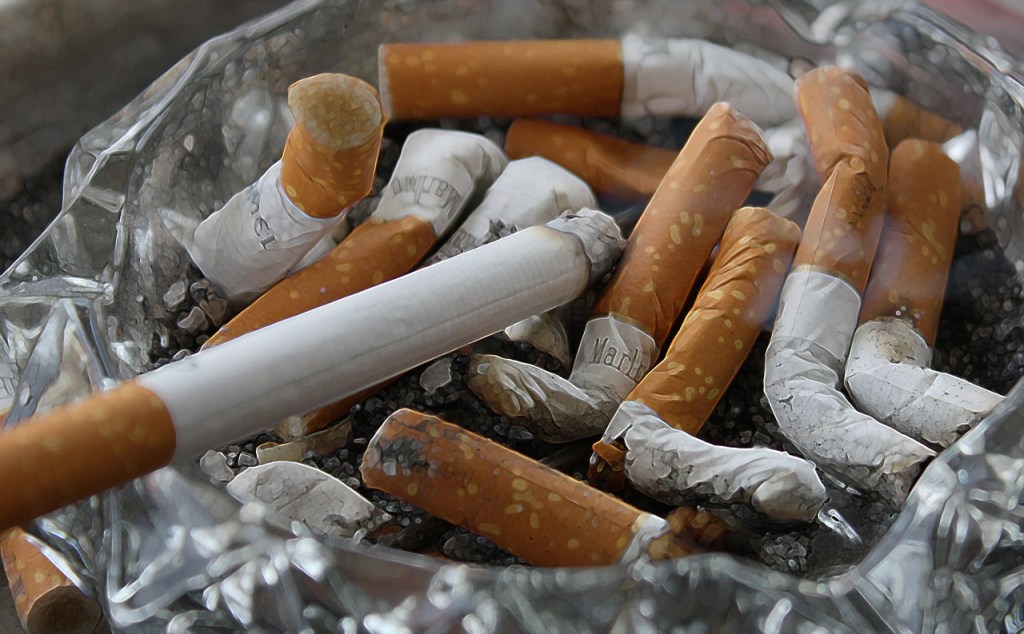
Bishop’s prose poem changes tone as it continues. With the final object, ashtray, we’re suddenly in a warzone; there are dead bodies, corrupt leaders are mentioned. It’s even more devastating because of the ordinariness of the object.

Animate and inanimate objects relating to J Abraham

The favourite mug

Waisted, Nile green, curved handle, fit for purpose: dishwasher proof; delicate gold lettering The Frog Prince, on both sides: black frog, gold crown. I admit to one shadow side: pangs of jealousy when on Sundays I see him take out the old cup-and-saucer. Mr Abraham is a bachelor, but tells visitors he has been married twice, to the same woman. In fact, he is an inspector of taxes.

The handkerchief

With a yellowing initial I do not get many outings. It was a proud moment last Friday, row H in the stalls, aisle seat. A Bruckner motet. That gentleman called ‘J’ keeps concert programmes in a special box file. Used to sing in a choir, but has given up on Him upstairs.

The ashtray

My life as a masochist, the short version. I am clean and I have barely any burn marks. To make matters worse, I was moved to the shed. Technically, it’s a Summer House, but no windows, so no tax is payable. He should be told that non-smokers too can die of lung cancer. I am praying for a relapse.

The moustache

Hegel, Kant, Wittgenstein, Hume, Locke, Rousseau, Voltaire. Cogito, ergo sum. Sum, ergo cogito. A butterfly can remember its life as a chrysalis, and I have full cognisance at cellular level of my previous manifestations. JA grows me specially, once a year, for a charitable purpose. This year I have a Teutonic shape. The flecks of grey soften my appearance. Mug, handkerchief, ashtray – they will end up in a grey bin, or at The Red Cross. I will have the last laugh.

The newspaper cutting

Protected by a plastic wallet, I’m a piece from The Guardian 08.05.12. How we made … Break Down: Artist Michael Landy on how he and his collaborator destroyed all 7,227 of his possessions. Need I say more?

Had I not been lonely …

Matthew Sweeney, 2006


When I saw a post by ‘Albert’ on Twitter with this quote by L S Lowry: Had I not been lonely I would not have seen what I did, it reminded me of this poem by Matthew Sweeney. A fine ekphrastic poem that moves beyond description, as it enters into dialogue with the artist about their work.

I have a few ekphrastic poems that need expanding in some way, so I’m going to do some research and explore how I could incorporate the artist’s own words into those poem. Is this something you might do with your own writing? If you’re a painter, photographer, sculptor, do poems inspire you?


Here are the two parts of Matthew Sweeney’s poem Dialogue with an Artist

Matthew died in 2018, his poems are still with us.

Dialogue with an Artist

THE LONELY
Incorporating the words of L.S. Lowry

I used to paint the sea, but never a shore,
and nobody was sailing on it. It wasn’t even
the sea, it was just my own loneliness.

It’s all there, you know. It’s all in the sea.
The battle is there, the inevitability of it all,
the purpose. When I switched to people

they were all lonely. Crowds are the
loneliest thing of all, I say. Every individual
in them is a stranger to everyone else.

I would stand for hours in one spot
and scores of little kids who hadn’t had
a wash for weeks would group round me.

Had I not been lonely, none of my work
would have happened. I should not have
done what I’ve done, or seen what I’ve seen.

There’s something grotesque in me and I
can’t help it. I’m drawn to others who are
like that. They’re very real people. It’s just

I’m attracted to sadness and there are some
very sad things. These people are ghostly
figures. They’re my mood, they’re myself.

Lately, I started a big self-portrait. I thought
I won’t want this thing, no one will, so
I went and turned it into a grotesque head.

MEMO TO LOWRY

You’re right, there are grotesques who shine
a dark light that lures us like how the sirens
tried to lure Odysseus, and yes, maybe we
ourselves are among the grotesques, but
there are also the beautiful who, if we’re
lucky, save us from ourselves, and validate
the sun’s light, and maybe also the moon’s.

as if thrown by a boy

Here is the second selection of poems by Judy Kendall, our June guest poet. She lived and worked in Japan for almost seven years. Cinnamon Press published four collections of her haiku and ‘mainstream’ poems. You can find her biography below her writing.

Poems:


The First Fountain Ever Placed In A Japanese Garden

for my mother

more than half
is the sound of it
as it splashes on the stone rim

this is the part
the thousands of photographs
will never reach

their takers stop
to make a frieze
and then move on

no chance of hearing
the other half
clapping its moving shadow in the trees

the shudder
when the leaves
follow the foam

which drops, unmoved
as if thrown by a boy
to fall through air

diluting
dissolving
into parts


Note:
The first fountain in a Japanese garden was built in Kenroku en, Kanazawa, in 1861


Driving To Noto

Men are better says Toshi I know
no they are not says I (I also know)
and so we argue to the tip of Noto

To Suzu where the wood huts slump in shock
plopped suddenly in frocks of snow
and the sea is whipped to icicles of frenzy

Over a nabe pot of fish and cabbage
(Toshi warns me not to call it cabbage
for it is the vastly superior hakusai)
our host asks me my age

Taken aback
(I`m older than he thought
more single), he inquires
don’t you like men?

So I assure him
only frequent country-moving
has prevented me from choosing
one of them

The returning road is white, wide as a field
the ditches spread themselves with frosting
and the windscreen blanks out like a blizzard

Toshi scrapes at the iced-up wipers singing
to himself, waving me in

Midwinter hangs in the boughs

The pine trees are bent nearly in two
laden with second helpings

(earlier version published in Ambit)

Short poem, haiku and tanka from The Drier The Brighter (Cinnamon Press, 2007):

Poem:

5 am

these cold skies
cheating the dawn,

these bits of tree,
blocks of houses too close to houses,
shrouded people, shrinking in the weather.

Haiku:

too much autumn
the reds are almost scorching now
a mouth brimming with leaves

tanka:

leaving.

not one stick of furniture
in the room.
in the heart,

no tears.

(previously published in Presence)

Biography:

Judy Kendall worked as an English lecturer at Kanazawa University in Japan for nearly seven years. When she first went to Japan she was a practicing playwright but she soon began to focus on poetry and haiku, kickstarted by an invitation to to participate in a collaborative translation of Miyaiki Eiko’s haiku. This became the bilingual publication Suiko /The Water Jar. Since then she has been writing haiku and haibun along with other poetic and prose forms. The haiku mode has informed her four Cinnamon Press poetry collections, particularly Joy Change – composed while she was in Japan. She has won several poetry awards, recently receiving a 2019 Genjuan International Haibun An Cottage prize, and is the essays and bilingual translations editor for Presence haiku journal. She has also run the Yorkshire/Lancashire haiku group.

She is Reader in English and Creative Writing at Salford University, and aside from haiku and haibun, works as a poet, poetry translator and visual text exponent. She has published several articles and books on the translation and creative process, including ‘Jo Ha Kyu and Fu Bi Xing; Reading|Viewing Haiku’ in Juxtapositions, 1 (2). She is currently putting the finishing touches to a monograph for Edinburgh University Press on Where Language Thickens (focusing on the threshold between articulation and inarticulation in language – a threshold in which haiku itself is surely situated).

The special table cloth

Credit: Bismillah via Pixabay

The day before my birthday storm Poly (Beaufort 11) raged at speeds of 140 kms an hour: overhead lines and trees came down. The day after my birthday the Dutch government fell.

On my birthday I treated family to lunch. It was a joyous occasion. My uncle (born 17 years after my mother) turned 85 in June. He has only recently given up playing volleyball: too much for his shoulders. He’s taken up Jeu de Boules instead.

Here are two verses from an extended sequence titled Briefly a small brown eye.

Primary school demolished,
protestant church a community centre.
Our old house extended.
Forty years on no reason to visit
this town other than the old uncle.

Lunchtime, my aunt brings out
the special table cloth.
She has embroidered signatures,
some in Arabic, some in Cyrillic.
I’m looking for mine.

St. Agatha’s

The day after my birthday I travelled back home and saw St. Agatha’s church from the train. That brought back memories of the poem – a competition winner some years ago.

This too is art

Mondays, washing days.
Heaving sheets from one tub
through the mangle into
another tub on a wooden stand.
Hands placing them, spacing
them on a plastic line.
This is street art
where the westerly wind
coming in from the beach
takes the plumes from the iron
works’ chimneys,
lets them pass through
this small town – a station,
hospital, three churches.
Tiny spots mounted on white sheets,
black dots like bugs, the yellow
eggs of unknown insects.
This is smoke art, chimney stack art
landing on roofs, window sills
and the steps of St Agatha.

Birthday

This coming week it’s my birthday. I’m taking family out to lunch near where I was born: a lovely bistro near the water. Here is a poem that I wrote on an excellent workshop with the poet Kei Miller.

My name

Even in the Netherlands my name is rare.
It comes from the Northern provinces,
a bleak windy place near the sea, near Germany.

People of the North grow tall to stand up to gales
that whistle, across bare fields, into your face.
A name so rare it’s not in the book of names.

I inherited this name from a grandmother
who was often ill to spite her husband.
I heard him shout behind the shop in a town

named after the beaver. Beavers on the façade
of the vegetable canning factory, the foundry roof.
My name means strong like the teeth of a beaver.

No, it doesn’t. I wish it did. Most children born
just after the war had bad teeth because
of the hunger winter: eating tulip bulbs to survive.

I wish I was named after the beaver, or the giraffe,
an animal strong enough to shatter a lion’s skull
with a single blow of its hooves.

In Dutch my name means people, folk or even
battle folk. My grandmother died at 55.
I’m beyond that age. I am an animal after all.

Photograph with a Very Small Moon

A year ago this month, Gina Wilson died. The two of us met just over a decade ago on the Writing School run by Ann and Peter Sansom of The Poetry Business. We were both psychotherapists, working in private practice.

Gina was published first as a children’s writer – novels (Faber), poetry (Cape), picture books (Walker Books). Her adult poems are ‘complex, though deceptively simple’ and ‘tough and compelling, no verbiage, no sentimentality’ (Kate Clanchy).


Gina’s poems ‘lure you into thinking you’re on safe, possibly domestic territory. Then they catch you unawares, taking off at an unexpected, often surreal tangent.’


I am grateful to her family for permission to share three poems from Gina’s poetry pamphlets (Scissors Paper Stone, HappenStance, 2010; It Was And It Wasn’t, Mariscat Press, 2017.

First Shoes

I must label, swaddle, cradle them
at just the right temperature.
Their linings are cracking already.

The step of childhood ought to be
weightless, all skipping and dancing
but they look haggard, misshapen

as if old age has worn them.
Polish can’t cover their knocks.

I showed them once at a meeting.
Bring something you’ve kept we were told,
a sign, maybe something you’ve made.

I took the shoes. Nobody spoke.
Because of the way you looked someone said.
As if you were bringing a grief, not a pride.

Photograph with a Very Small Moon

It was still day, the end of a summer one
that people had been happy in;
I wanted its tiny white moon, not quite spherical or certain
to stay.

I wanted to catch it, lacy, fine, almost dissolving
in almond-blossom clouds, so I tilted the camera
upward. Otherwise I might have filmed

little barefoot girls setting up their lantern
with the glass door and tealight,
friends round the warped table, wine;

not the moon, but moths, and slugs
oiling the flagstones. I might have caught
a wind getting up, or the edge in low voices that moment
when darkness plummets.

Still Horses

He said he heard her
one night, about a week
after she died,
her Scots ‘r’
and no-nonsense tone
that carried without being
a shout.

He got out of bed,
found his balance in the dark
and took his time,
checking upstairs first (once a hayloft),
then down stone steps
to where it seemed
there were still horses
and a night-time smell
of straw and soft new dung.

She wasn’t there. Just a shawl
left draped because it was winter.
He opened the door to stars
and mild small moon
in a blur of frost.
Cold held him fast.