Today It’s Mothering Sunday in the UK and Ireland, and Summer Time begins. I want to thank Hilary Robinson for letting me share her poem, a gentle homeward journey with rich detail. It also shows how a strong title pulls the reader in. Hilary is the guest poet next month with more poems from her poetry debut Revelation.
Things I Say to my Mum in the Nursing Home
Let’s go to Verdon’s for a quarter of sweets— American Cream Soda, Rainbow Crystals. Let me taste the Sarsaparilla Drops, Fruit Salads, Flying saucers, Cherry Lips.
Walk me up to Marsden’s — I’ll sink my fingers into dried peas, watch as butter’s cut and patted into shape; sugar’s wrapped in rough blue bags.
Take me to the monkey-nut shop after an hour in Northmoor Library, breathing in the leather, old-book smell, where the men scour papers for good news.
Hold my hand, take me to the park so I can swing high, standing up, or roly-poly down the slopes, risk roundabouts, the Wedding Cake.
Take me back to our backyard, to the tin bath hung on an outside wall, to my stiff, hard dolls, my teddy bear. Pass me my square of pink flannelette.
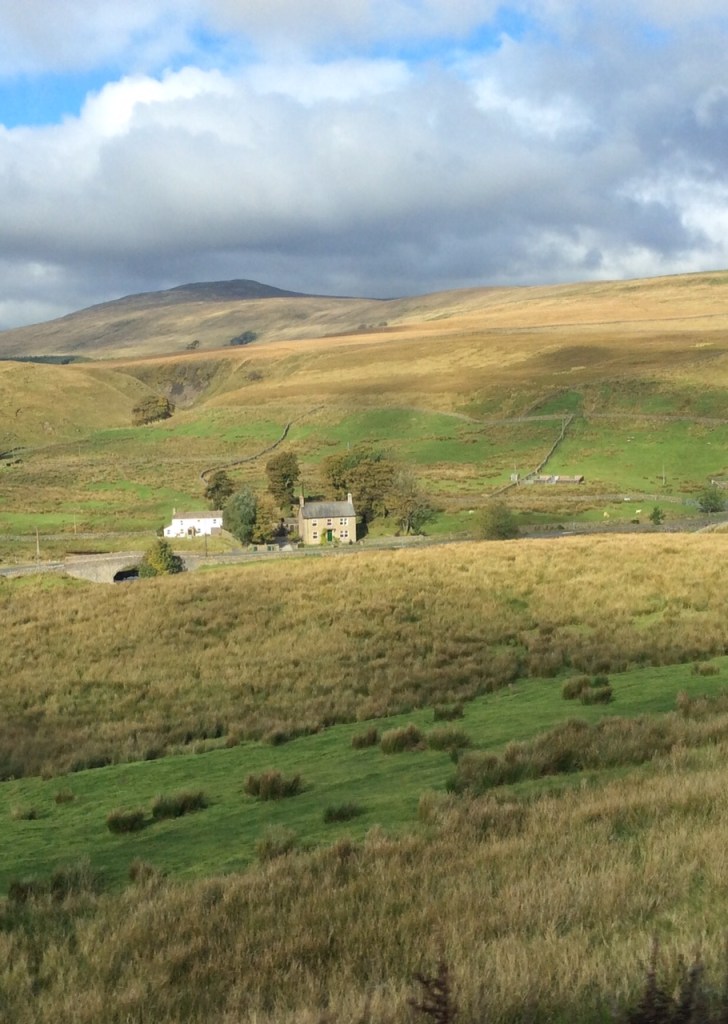
It is a huge pleasure to introduce this month’s guest poet: Hamish Wilson whom I met four years ago when I attended a workshop at Garsdale.
Having taught in schools for 31 years, Hamish moved to Cumbria in 2016 to set up and run The Garsdale Retreat, http://www.thegarsdaleretreat.co.uk, a residential creative writing centre. This has allowed him the time and space to develop his own writing career.
The Garsdale Retreat
He has had poetry published in two anthologies: This Place I Know – A New Anthology ofCumbrian Poetry (Ed. Darbishire, Moore, Nuttall/Handstand Press, 2018) and Play (Ed. Taylor, Williams/PaperDart Press, 2018) and was shortlisted for the following competitions: WoLF poetry competition in 2017 and 2018 and Write Out Loud’s Beyond the Storm (Poems From the Covid Era) in 2020. He has also had poems in Culture Matters and The Morning Star.
In 2019 he performed Parallel Lives, (a sonnet sequence with live music, film and photography, exploring the creative lives of John Lennon and Dylan Thomas) at The Brewery Arts Centre, Kendal.
Written in 2020, Lockdown Journal is a sonnet sequence which explores his experience of the pandemic between 28 March and 21 April, reflecting on daily life in Garsdale as well as the wider world.
I asked Hamish to select three sonnets from Lockdown Journal as a way of marking the second anniversary of the pandemic.
Saturday, 28 March, 2020
The road is quiet. The weekend bikers who came back with the curlews, have not returned. This first weekend of Covid lockdown’s like a languid bank holiday without the burn
of off-comers. Spring greens on regardless, daffs trumpet; lambs skip, suckle; horned Highland cattle shadow on the fell; lapwings test their stuntman wings, plummet to earth (as planned).
At home, virtual visitors ease the time with supportive texts, puzzles, You Tube vids; parodies of songs, coronavirus rhymes, zoom-conferencing and Happy Hour bids.
The News At Six brings contact nationwide, a thousand UK people now have died.
Friday, 10 April, 2020
Days which bleed to other days still make their mark, Good Friday’s on regardless and they fear we’ll enjoy it with dangerous outdoor larks. We’re shown deserted beaches, seaside piers
which forecast what they hope the weekend brings; ‘Your front door’s safer than a protective mask…..’ cut to bench taped like a crime scene, chained up swings: stay-at-home’s fine-enforced now not an ask.
Up here, where social distancing’s the norm, our walk on Blea Moor fell is not policed – the only drone, a distant train, informs we’re not alone and breaks the blanket peace.
A sky lark ascends, arpeggios on high, coal-black speck of dust in the empty sky.
Tuesday, 21 April, 2020
Larks, invisibly high, white noise the sky, we climb the tussocked sea towards the cairn, the railway shrinks to Hornby, lapwings cry like broken squeaky toys. Spring warmth returns.
In shirt-sleeves, we zig-zag slow to summit, pause to watch a matchbox car surprise the Coal Road, before we reach the sunlit limestone and meet a ram skull’s hollow eyes.
The news is billed as good as we’re prepared with twenty thousand beds to match the needs of future patients in intensive care. The experts tell us now we can succeed
to break the rise in deaths, to turn the tide. Up here, we see our house, our tiny, tiny lives.
Yesterday I talked with friends about Cambridge. That brought back memories of a one-week workshop at Madingley Hall with the poet Lawrence Sail. Madingley Hall is a 16th Century building just a few miles from Cambridge. It is set in seven acres of splendid gardens and grounds, designed by the famous Capability Brown in the 18th Century.The weather was good the week I was there and we would all find a quiet corner outside and get writing.
Credit: Pasja1000 via Pixabay
Writing prompt
One of the exercises was about personification. We mentally went through the alphabet and stopped at a letter that resonated with us. What kind of life does that letter have? What do they want and what is difficult for them?
The poem Trying was published in my debut Another life (Oversteps Books Ltd, 2016).
Trying
Trying not to be like one who has gone before. Allocated a slot at the back of the queue: a circle dancer with a club foot.
Striving to become the symbol of perfection. Dragging a tail, leaving tiny furrows on the rough terrain.
Trying then to hide in foreign places. Archaic words spoken with a twang: Qua, quorum, quota, quasi.
Tomorrow is the first Monday of the month when the 4,000+ alarms through the Netherlands are tested. This alarm-and-warning system was set up after the Second World War. The monthly test stopped after the fall of the Berlin Wall in 1989, and for a period the sirens were only tested once a year. The government wanted to introduce a warning system by mobile telephone, but this did not prove effective. So, from September 2003 the monthly sounds can be heard for exactly 1 minute and 26 seconds.
The alarms aren’t rung if the first Monday falls on a religious or national public holiday, or on the national Remembrance Day of 4 May. This month, the Dutch people will be reminded beforehand that the sound is just a test.
On Monday I am sending the final manuscript of my collection Remembering / Disease to Aaron Kent at Broken Sleep Books. I have chosen a poem from the new book that includes a siren and want to thank Isabelle Kenyon of Fly on the Wall Press for first selecting it.
Credit: TBIT via Pixabay
Voice
I’m scared of the voice that tells me to let go of the wheel it’s an old man’s harsh gritty cold pushing me that time Monday sunny A487 heading for Porthmadog
black figures carry bags home whatever home might mean
silence only sirens calling the dog-end of the year
falling is kind of doing something you can fall sideways head-first backwards I have worked all these years to stay upright running like a rabbit on a metal track
If the United Kingdom was still in the EU, I could have carried on driving on my British licence for another five years here in NL. I discovered recently I only have a few weeks left to convert the UK licence into a Dutch one!
Because of my age, I need a medical. Getting booked in with a local GP would have taken too long. Online I found ‘Rijbewijsdokter.nl’ and I and got myself an appointment for yesterday morning at a hotel in Leiden. The regional bus from The Hague stops right in front. The hotel has a great location: by the side of the Old Rhine river, close to Leiden station.
Eyes ok, blood pressure ok, urine ok. The medic did the form online after I left. It’s an automated process, a few hours later the confirmation came that I’m fit to drive. I’ve put in a request with the Town Hall for an urgent appointment to sort out the paperwork.
Totem
Three years since I gave away the blue hatchback for a pile of dirty £20 notes.
I made sure I removed it from its space behind the handbrake where it had kept me safe on motorways, on narrow lanes in Cornwall, Devon, Suffolk, on roundabouts in Holland with their shark’s teeth. Kept me safe for almost thirty years.
A bunny from Liberty’s in King Street (long since gone). Fluffy ears, tiny brown boots, denim trousers.
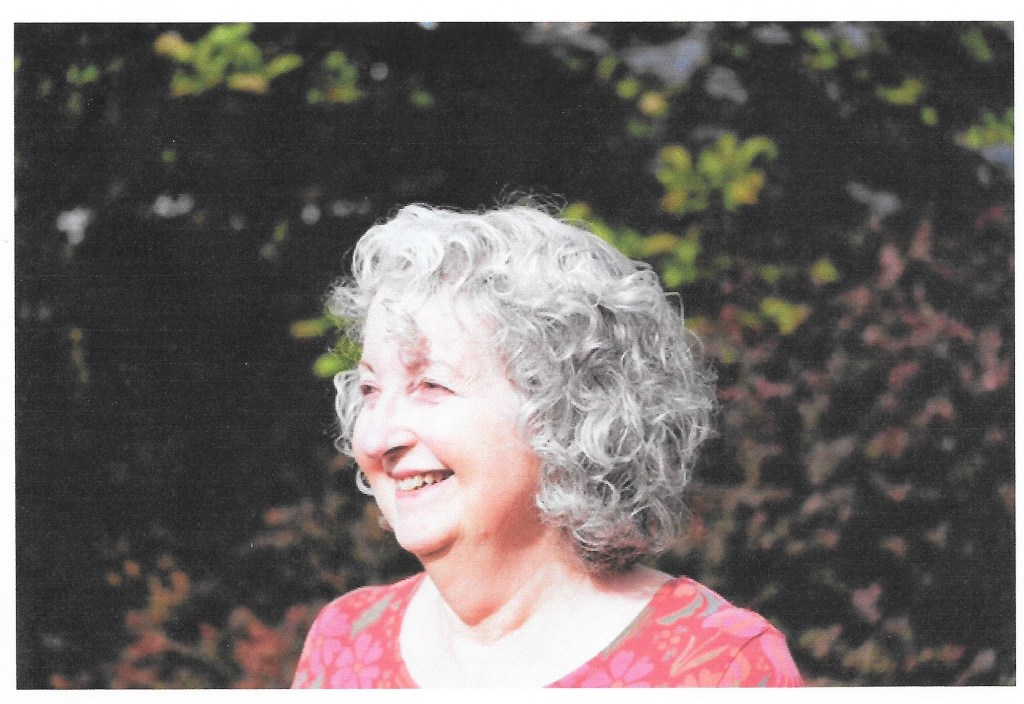
I am delighted to introduce this month’s guest poet Sue Kindon. We met on Zoom during lockdown 1, through a mutual poet friend.
Sue Kindon lives and writes in the French Pyrenees. An enthusiastic member of the local slam team, her greatest achievement to date is an award for a poem in French.
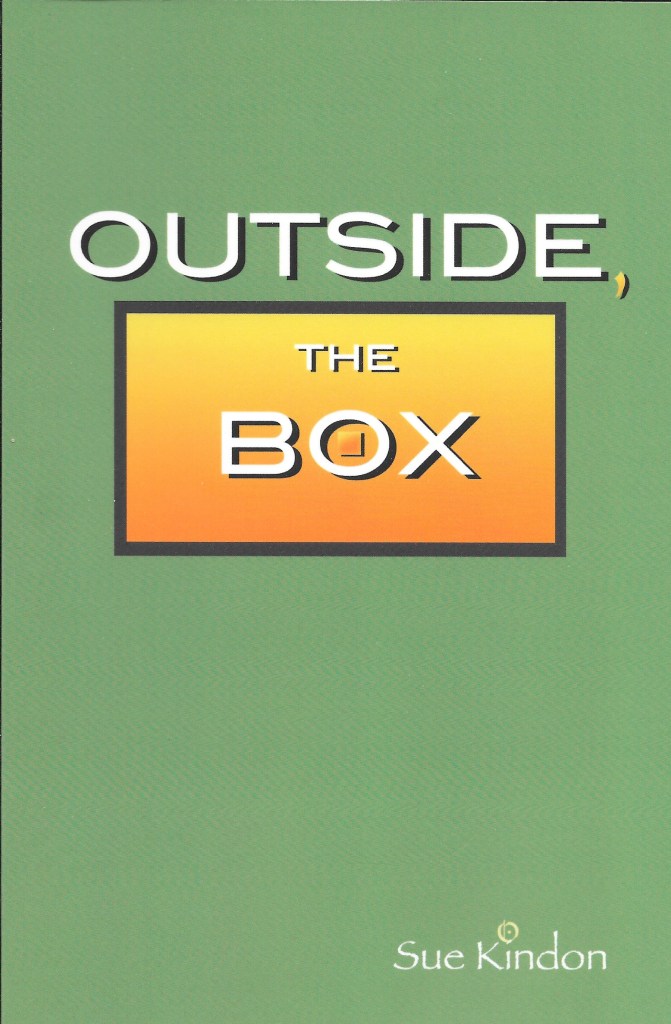
Kindon was Runner Up in the 2021 Ginkgo Prize (for Eco-poetry); and has two pamphlets to her name – She who pays the piper (Three Drops Press, 2017) and Outside, the Box (4Word Press, 2019). The poems in the latter were sparked by the box moth plague that devastated the landscape a few years ago.
I’ve selected five poems from Outside, the Box, to give you a taste of the range and humanity of Sue’s poems.
Box Moth (Cydalima perspectalis)
white moths haunt each hedge all summer their larvae gorge on our ancient ways
The House of Running Water
We’re so far off the mains, I cross myself, or is it my reflection? Our drinking water isn’t purified, sobbing in glugs from a faery underworld just beyond the spring line. Boils, frogs, plagues of grass snakes are there none. The kitchen tap dispenses an incessant stream in spite of some newly-converted saint bottled up in supermarket plastic. Every day an elven-prince strikes rock with his divining rod and sets loose unchlorinated magic: we drink deep, until our inner walls cascade with the stuff.
I could never return, now my mind is clean as the washing on the line. Townsfolk have forgotten how the old world flows. It must be something in the water.
Bernadette
I thought of you as a sister from the start. You were the one who insisted I worked in the shade, you saw that my fair skin reddened in the southern sun trap of the presbytery walls. Your straight larkspur back bent for hours as you laboured to remove chiendent and petty spurge.
You would go missing for a quick smoke outside the tall grey gates of our temporary eden, and I felt the loss, sure as the last petals falling from the climbing rose. Then you’d be back, tending the last geranium and offering a kind word I might not understand.
So much more I wanted to say: and now I’m gaining confidence with the language, it’s already winter, and the gates are shut.
On Safari
Death came to me as a zebra crossing my path. I’m not ready yet, I said, and he stepped aside.
As I passed by, I admired the pull of perfect stripes, the kiss of dark mane
and I was nearly fooled by his op-art trompe-l’oeil invitation to step into his black-and-white-wash skin
and set down my bright sorrow. I was dazzled by the glow of skeletal zebra ribs
until I saw the shadow of famished lion at the tunnel mouth and smelt the jitter of my blood on parted lips.
Jardin de Curé – Damage Limitation
Our prayers have kept the moth at bay – and careful spraying – chemicals have underplayed their part.
The volunteers have withered up or died. A few stalwarts welcome late summer visitors but when it comes to weeding, they pull the flax and leave the nipplewort.
Nettles flourish by the chapel wall. Self-seeded marjoram annexes the cabbage plot.
At least the box hedge is intact. Our prayers have kept the moth at bay.
A big ‘thank you’ to Ramona Herdman for today’s poem. It’s from her wonderful pamphlet A Warm and Snouting Thing published in 2019 by Emma Press. Ramona will be guest poet later this year, after her collection with Nine Arches Press has appeared in print.
Two cats on a Valentine’s card
For one bribed instant, they sat in a heart shape: double-tail-curled rumps the heart’s bumps, heads close enough to bite. You can see they don’t fool each other an inch, don’t try.
This is one split-second’s flicker in a ticker tape of sniff, cuff, hiss, hysterical arching, pantomime affront, huff off, real pinching hate, play-fight, indignant alliance.
Everyone in on this – the animal-handler, photographer, graphic artist, printer, shop assistant – knows it as cheap con, nothing like the on and on of coupledom.
If you buy it, fool, do it knowingly. Write I am the cat who walks by himself. Some nights I choose to curl close. That’s it. You want my heart? OK. My heart’s like that.
The 10th edition of Poëzieweek (Poetry Week) has just ended. Over 120 activities happened in The Netherlands and Vlaanderen (the Northern, Dutch-speaking part of Belgium). Some of these will continue during the year.
The theme this time was Nature. During any year there are a several ‘book’ weeks in The Netherlands and readers can claim a free book when they purchase up to a given amount. As poetry books are expensive here, the sum of Euro 12,50 was easily reached!
The Dutch-Palestinian author and actor Ramsey Nasr was commissioned to write the poetry gift this year. He is well-known, as he was the Dichter des Vaderlands (the unofficial title for poet laureate) during 2009 – 2012.
The pamphlet with 10 poems is well produced on quality paper. It’s based on the hundreds of letters Van Gogh wrote from his youth until his death in 1890. Under the motto Blossoming and Abundance, the poet has selected and re-arranged Van Gogh’s words. The two blue horizontal lines on the cover indicate caesuras. These return in the text as thin blue vertical lines, showing where Nasr has deleted a word or several phrases from the original text.
I love how Ramsey Nasr has distilled the essence of Van Gogh. It is a very interesting way of using found material. Here are my translations of a few parts of some of his poems.
(3) let us | find a task that forces us to quietly | sit busy with work that is simpler than | tasks that | are useful
(4)
i am no better than another | am not like a street pump | from stone | or iron |
(6)
i send you | the night | the moon | cypresses |
(5)
it cannot | remain like it is now | burn rather than choke | a door must be open or closed something in-between i do not understand
(10)
the mediterranean has a colour like | mackerel | you don’t know | if it is green or purple you don’t know | if it is blue for a second later the constantly changing reflection has taken on a pink or grey tinge |
On Wednesday this week King Willem-Alexander opened the Zeesluis Ijmuiden. These new sea locks, built alongside the existing locks, are the largest in the world: 500 metres long, 70 metres wide and 18 metres deep. The existing locks were nearing the end of their life and becoming too small for the huge vessels heading for Amsterdam.
A major design fault was discovered. This resulted in excess cost of almost three million Euro and the grand opening almost three years overdue. Now ships can pass independently from the tides. But, with the cruise ships entering the locks, so does a lot more salt water… and are those towering liners still wanted?
A splendid view of it all can be had a little further out. The last time I had lunch there was, probably, in 2011 – that Icelandic volcano had closed air space. I managed to get a shared cabin on the ferry to Newcastle and treated my friend to lunch as a thank-you.
De Kop van de Haven, Ijmuiden for Trieneke
It’s not a pub, it’s not in the UK. It’s right by the tall chimneys of the steel works, once Royal Dutch, now Tata. The canal to Amsterdam was dug by unemployed men and now there’s a gleaming ferry terminal: Christmas shopping in Newcastle.
Fish is fish is fresh is fresh with a view of water and waves and smoke and boats and barges and ships and liners and the wind. Outside on the head of the harbour the bronze fisherman holding a storm lantern in his right hand.
I am delighted to introduce this month’s guest poet Steven Waling. I first met Steven over 30 years ago after I’d moved to Manchester and joined the local poet’s group. Manchester Poets is the successor to South Manchester Poetry Group, started in 1978 by Dave Tarrant and still going strong!
His brief biography says ‘Steven Waling lives in Manchester and is apparently a stalwart of the Manchester poetry scene. His latest books are Disparate Measures 1: Spuds in History, and Lockdown Latitudes.’
From his most recent book Lockdown Latitudes I have chosen three different poems. Steven ‘writes overlooked life into vibrant presence’ says Scott Thurston. It is this quality I particularly admire and love in Steven’s writing.
Photo Credit: Steven Waling
Jesus Strolls Down Market Street
All he wants is new underwear and a coffee in Starbucks, time to himself to phone his dad and see he’s looking after himself during the lockdown. He sees they’re back again on the corner of Piccadilly Gardens and Market Street, shouting his name like a weapon at random strangers. He sneaks past, hand in front of his face. He’d like to shout in their faces, ask them what the hell they thought they were doing. Not that they’d recognise who he was, and anyway, these days he just gets embarrassed, avoiding the hassle of conflict that won’t get anywhere. Everyone ignores these men in old-fashioned suits sweating in the heat, lifting holy books like clubs to beat the sinful air away. So he goes to buy his pants, dashes into Primark before they clock him. People don’t, he thinks, realise how shy he is. He’d much prefer they found him by accident, when they needed him. Like later in the coffee shop: some old lady confused because they don’t take cash for drinks any more. Someone pays with his own card and when she looks up, they’re gone
Back to his bench to sleep with the pigeons
Snow Moon
Night stands at the tram stop over head the moon a
soluble aspirin slowly dissolves into the big black night goes
nowhere the spider in my right eye is flashing again I walk
past the street they’re planting non-aggressive trees spindly roots
spring flowers berries in autumn that won’t disrupt the neighbourhood
kids kick the moon down the road i wait for light rapid transit late
due to police incident keep my distance from the moon its snow
face bending over the quick brown cat crossing the tracks quick quick