Tag Archives: religion

Spoilt for choice…

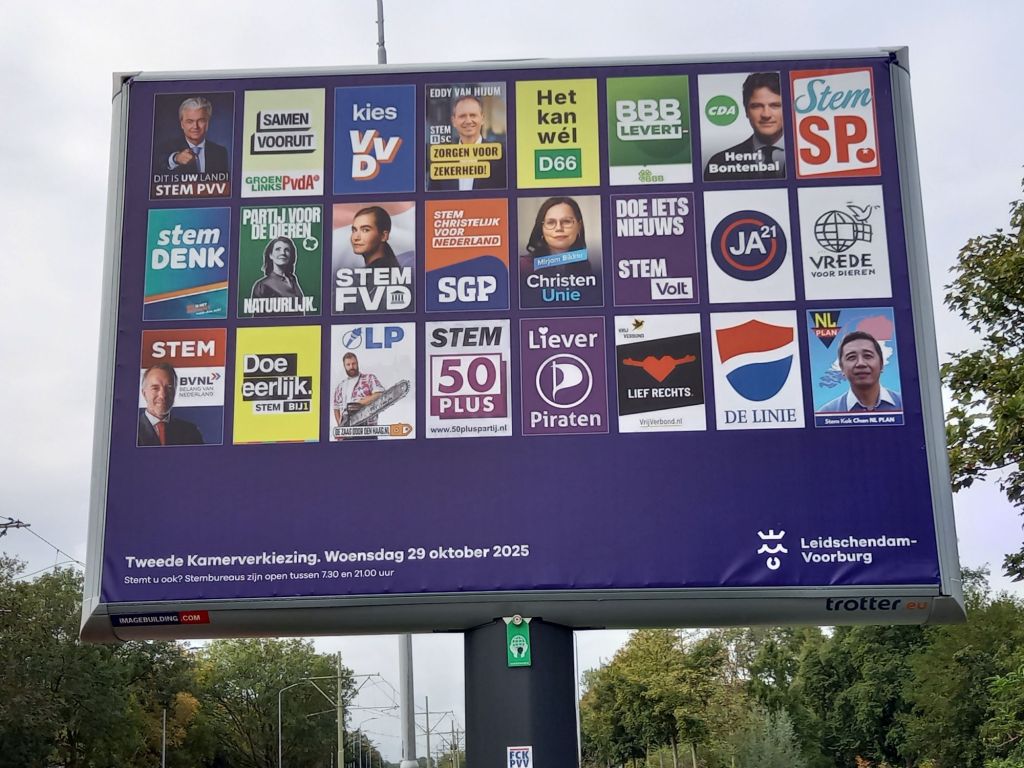
This coming Wednesday are the elections for the ‘Tweede Kamer van de Staten Generaal’ – the lower house of parliament.

All over the country, boards have appeared with the 24 political parties. In large cities and towns each party has its own board. In small towns, like mine, the one shown.

On Friday, a pale grey sheet of A1-sized paper arrived by post: names of candidates for the 25 parties. So much detail: it’s essential to orient yourself beforehand. Otherwise, you’d spend too much time in your cubicle on the day, and there will be queues. When I voted in the last elections (November 2023), I couldn’t fold the paper back into its original roadmap shape…

The Dutch are famed for their tolerance. I find that puzzling, but then I spent most of my life outside The Netherlands.

A few months ago, a new political party ‘Vrede voor Dieren’ (Peace for Animals) was established. They split from the original ‘Partij van de Dieren’ (Party of the Animals) because the leader of the PvdD (initially pacifist) changed their views and now supports re-armament. The new VvD rejects re-armament in principle.
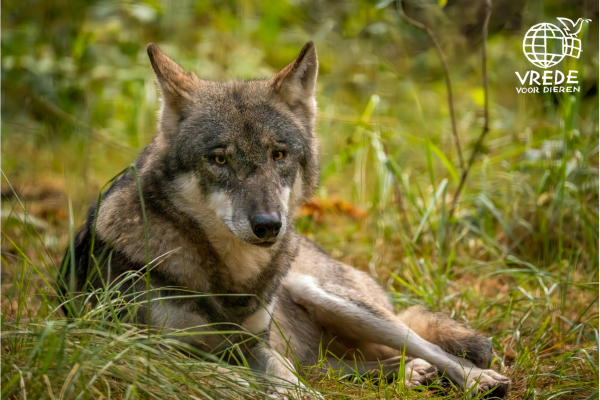
You don’t need to have read Animal Farm to think that an animal’s view of pacifism is probably Will I be eaten or not? (paraphrasing a Dutch novelist).

Confidence in politics and politicans

Confidence in politics is at an all-time low. In the August 2025 polls it ranged from 4% – 9%. Some 25% of those polled were floating voters. There are several reasons for that.

Photo credit: MabelAmber via Pixabay

Time lost in the polder…

  1. The ‘polder’ model is the pragmatic recognition of pluriformity. Time is needed to achieve consensus: people will need to polder. However, this verb has a negative connotation in relation to politics. An election will be followed by months of sitting and talking, walking and talking. A ‘formateur’ will facilitate the process. Meanwhile, the previous coalition is just ‘care taking’ and keeps things ticking over.

It also takes several months to organise an election, typically four to five.

The coalition Rutte II was the first cabinet that completed its full four-year term since 1998. Its starting date was 5 November 2021. Since then, just over two years were spent on forming the next three coalitions.

Not lasting the course

Rutte III – the full cabinet resigned over the child benefit scandal. A parliamentary enquiry had found that officials had knowingly and systematically deprived people who were legitimate claimants. Thousands of people have still not been compensated.

Rutte IV – resigned over fundamental disagreements regarding immigration measures.

Schoof – An unstable coalition from the start: two parties (the Boer Burger Beweging or BBB) and the NSC (Nieuw Sociaal Contract) both new to government and both struggling to get enough credible candidates for their seats. With Wilders of the PVV (Partij voor de Vrijheid) who’d walked out of an earlier coalition government. Seen as a ‘bunch of amateurs bickering amongst themselves.’

Not tackling the crucial issues

The Hague is a long way from the northern province of Groningen where thousands of people have been waiting for over a decade for compensation. (The subsidence caused to properties caused by fracking. Another parliamentary enquiry.) Just an example.

This time I’m a floating voter. So, I’ll go and have another coffee, inspect that grey form a little closer!

When Sunday is not a day of rest

Photo Anton van Daal

A poem that has two fathers in it, with a photo of the actual building.

When Sunday is not a day of rest

Two narrow wooden benches form the arena.
Both gladiators enter through the main left door.
The one with the brown perm has an entourage:
three boys (one with red hair), a girl with braces,
and the eldest son with glasses, the creepy smile
inherited from his father, a businessman with butter
in his mouth who happens to be our uncle.
As church elder, he’ll collect in the interval,
holds out a long wooden pole with black velvet bag.
Both gladiators buy at Stoutebeek,
the town’s upmarket department store.

Our gladiator has better legs, better posture,
a striking hat, which makes up for just three of us.
She is a semi-professional singer.
Our gladiator chose to marry the controller
of church proceedings – the organist.
Outside, afterwards, the light ammunition
of smiles, air kisses and compliments.

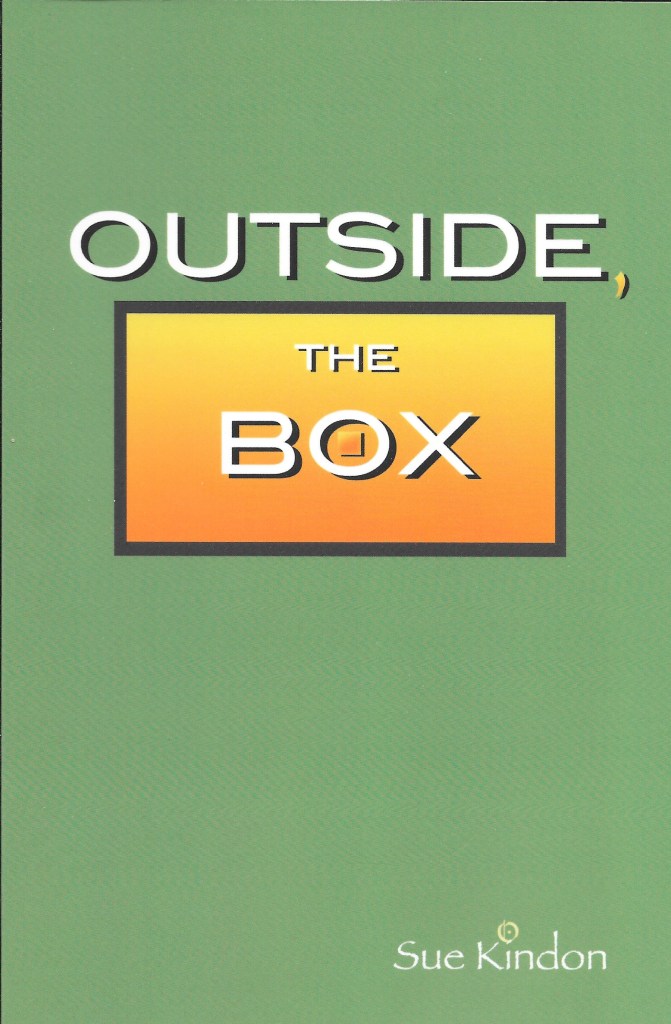
Outside, the Box – poems

I am delighted to introduce this month’s guest poet Sue Kindon. We met on Zoom during lockdown 1, through a mutual poet friend.


Sue Kindon lives and writes in the French Pyrenees. An enthusiastic member of the local slam team, her greatest achievement to date is an award for a poem in French. 


Kindon was Runner Up in the 2021 Ginkgo Prize (for Eco-poetry); and has two pamphlets to her name – She who pays the piper (Three Drops Press, 2017) and Outside, the Box (4Word Press, 2019). The poems in the latter were sparked by the box moth plague that devastated the landscape a few years ago.


I’ve selected five poems from Outside, the Box, to give you a taste of the range and humanity of Sue’s poems.

Box Moth (Cydalima perspectalis)

white moths haunt each hedge
all summer their larvae gorge
on our ancient ways

The House of Running Water

We’re so far off the mains, I cross myself,
or is it my reflection? Our drinking water
isn’t purified, sobbing in glugs
from a faery underworld
just beyond the spring line.
Boils, frogs, plagues of grass snakes
are there none. The kitchen tap
dispenses an incessant stream
in spite of some newly-converted saint
bottled up in supermarket plastic.
Every day an elven-prince
strikes rock with his divining rod
and sets loose unchlorinated magic:
we drink deep, until our inner walls
cascade with the stuff.

I could never return, now my mind
is clean as the washing on the line.
Townsfolk have forgotten
how the old world flows.
It must be something in the water.

Bernadette

I thought of you as a sister
from the start.
You were the one who insisted
I worked in the shade, you saw
that my fair skin reddened
in the southern sun trap
of the presbytery walls.
Your straight larkspur back
bent for hours as you laboured
to remove chiendent and petty spurge.

You would go missing
for a quick smoke
outside the tall grey gates
of our temporary eden, and I felt
the loss, sure as the last petals
falling from the climbing rose.
Then you’d be back,
tending the last geranium
and offering a kind word
I might not understand.

So much more I wanted to say:
and now I’m gaining confidence
with the language, it’s already
winter, and the gates are shut.

On Safari

Death came to me as a zebra
crossing my path. I’m not ready yet,
I said, and he stepped aside.

As I passed by, I admired
the pull of perfect stripes,
the kiss of dark mane

and I was nearly fooled
by his op-art trompe-l’oeil invitation
to step into his black-and-white-wash skin

and set down my bright sorrow.
I was dazzled by the glow
of skeletal zebra ribs

until I saw the shadow
of famished lion at the tunnel mouth
and smelt the jitter of my blood on parted lips.

Jardin de Curé – Damage Limitation

Our prayers have kept the moth at bay –
and careful spraying – chemicals
have underplayed their part.

The volunteers have withered up
or died. A few stalwarts
welcome late summer visitors
but when it comes to weeding,
they pull the flax
and leave the nipplewort.

Nettles flourish by the chapel wall.
Self-seeded marjoram
annexes the cabbage plot.

At least the box hedge is intact.
Our prayers have kept the moth at bay.

A poem about my father …

Building prev. Middelaarkerk, Beverwijk, NL

My father was born on the 2nd of September. Here is a short prose poem about him. That so-called High Street was the Breestraat in the small Dutch town of Beverwijk, a few miles from the coast. In 1996 the building was last used as a church. When looking for a photo I came across a website offering accommodation. There is an apartment with a stained-glass window…

Hat

That Saturday afternoon my father had been drinking with the sales reps who had driven in to collect their bonus and, of course, being pleased with their bonus, they would have bought my father a drink. My father, being generous and liking his drink, anyway, would have bought them a drink. How the subject turned to hats, I don’t know, but around three, or three-thirty, my father came back home and picked up my mother’s hat, the one she would wear to church the following day: a large peach-shaped, red-wine-coloured, black-velvet-edged-bonbon-of-a-thing. I watched my father put on this hat and leave the house. I went out and followed him. The three sales reps stood outside the café at the end of our road. With the disdain of a Spanish matador, my father strode past them, heading for the High Street.

(published in Another LIfe, Oversteps Books, 2016)

Joan

To honour International Women’s Day I’m posting this poem about a woman.  It was first published in The Best of Manchester Poets, vol. 2, published by Puppywolf (2011).  I aimed to give the reader enough clues (the Gauloises cigarettes, the stubborn streak) for them to be able to guess the identity of this woman before they read the final lines.

It’s a good prompt: with which historical figure (famous or infamous) could you have gone to school, college, university with?  Did you even sit next to them in the classroom?  What were they like then?

Joan

One of the girls I went to college with

was Joan who’d left home early.

She smoked Gauloises, had a stubborn

streak, wanted to study philosophy.

We thought she was depressed; she cut

herself and once put out a cigarette on her arm.

I wish I’d asked her why.  I can see her now

with that hair cropped short, staring straight ahead.

People shouting, the smoke, the crackling fire.

Too hot, I need to step back.