Tag Archives: nature

Lockdown Sonnets

It is a huge pleasure to introduce this month’s guest poet: Hamish Wilson whom I met four years ago when I attended a workshop at Garsdale.

Having taught in schools for 31 years, Hamish moved to Cumbria in 2016 to set up and run The Garsdale Retreat, http://www.thegarsdaleretreat.co.uk, a residential creative writing centre. This has allowed him the time and space to develop his own writing career.
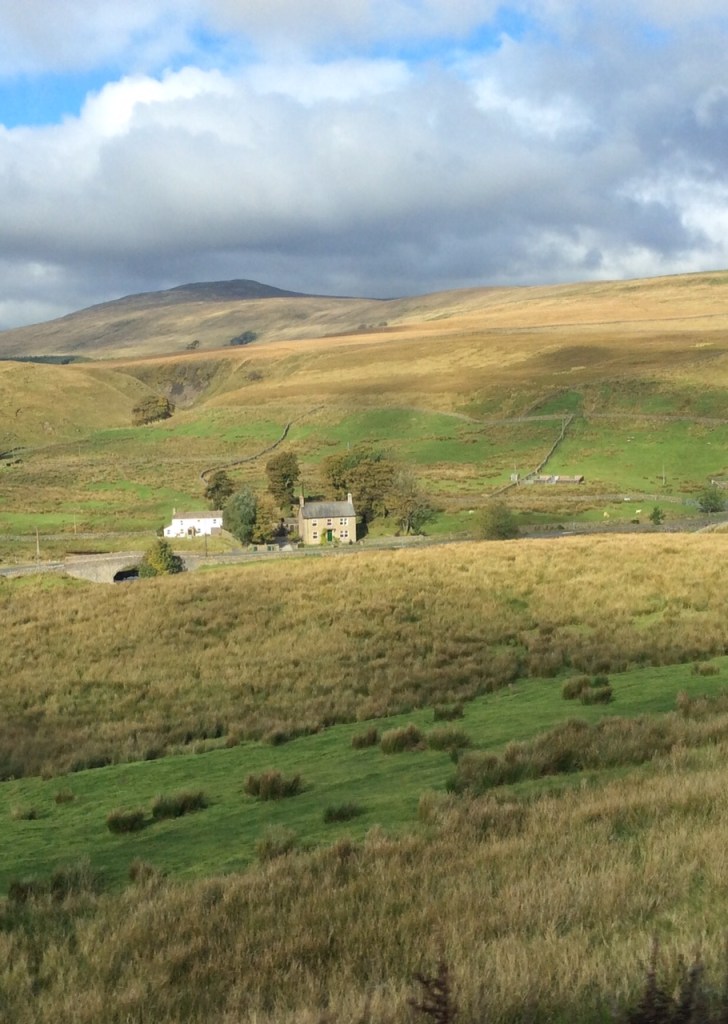
The Garsdale Retreat

He has had poetry published in two anthologies: This Place I Know – A New Anthology of Cumbrian Poetry (Ed. Darbishire, Moore, Nuttall/Handstand Press, 2018) and Play (Ed. Taylor, Williams/PaperDart Press, 2018) and was shortlisted for the following competitions: WoLF poetry competition in 2017 and 2018 and Write Out Loud’s Beyond the Storm (Poems From the Covid Era) in 2020. He has also had poems in Culture Matters and The Morning Star.

In 2019 he performed Parallel Lives, (a sonnet sequence with live music, film and photography, exploring the creative lives of John Lennon and Dylan Thomas) at The Brewery Arts Centre, Kendal.

Written in 2020, Lockdown Journal is a sonnet sequence which explores his experience of the pandemic between 28 March and 21 April, reflecting on daily life in Garsdale as well as the wider world.

I asked Hamish to select three sonnets from Lockdown Journal as a way of marking the second anniversary of the pandemic.

Saturday, 28 March, 2020

The road is quiet. The weekend bikers
who came back with the curlews, have not returned.
This first weekend of Covid lockdown’s like a
languid bank holiday without the burn

of off-comers. Spring greens on regardless,
daffs trumpet; lambs skip, suckle; horned Highland
cattle shadow on the fell; lapwings test
their stuntman wings, plummet to earth (as planned).

At home, virtual visitors ease the time
with supportive texts, puzzles, You Tube vids;
parodies of songs, coronavirus rhymes,
zoom-conferencing and Happy Hour bids.

The News At Six brings contact nationwide,
a thousand UK people now have died.

Friday, 10 April, 2020

Days which bleed to other days still make their mark,
Good Friday’s on regardless and they fear
we’ll enjoy it with dangerous outdoor larks.
We’re shown deserted beaches, seaside piers

which forecast what they hope the weekend brings;
‘Your front door’s safer than a protective mask…..’
cut to bench taped like a crime scene, chained up swings:
stay-at-home’s fine-enforced now not an ask.

Up here, where social distancing’s the norm,
our walk on Blea Moor fell is not policed –
the only drone, a distant train, informs
we’re not alone and breaks the blanket peace.

A sky lark ascends, arpeggios on high,
coal-black speck of dust in the empty sky.

Tuesday, 21 April, 2020

Larks, invisibly high, white noise the sky,
we climb the tussocked sea towards the cairn,
the railway shrinks to Hornby, lapwings cry
like broken squeaky toys. Spring warmth returns.

In shirt-sleeves, we zig-zag slow to summit,
pause to watch a matchbox car surprise
the Coal Road, before we reach the sunlit
limestone and meet a ram skull’s hollow eyes.

The news is billed as good as we’re prepared
with twenty thousand beds to match the needs
of future patients in intensive care.
The experts tell us now we can succeed

to break the rise in deaths, to turn the tide.
Up here, we see our house, our tiny, tiny lives.

Trying – writing prompt

Madingley Hall, near Cambridge

Yesterday I talked with friends about Cambridge. That brought back memories of a one-week workshop at Madingley Hall with the poet Lawrence Sail. Madingley Hall is a 16th Century building just a few miles from Cambridge. It is set in seven acres of splendid gardens and grounds, designed by the famous Capability Brown in the 18th Century.The weather was good the week I was there and we would all find a quiet corner outside and get writing.

Credit: Pasja1000 via Pixabay

Writing prompt

One of the exercises was about personification. We mentally went through the alphabet and stopped at a letter that resonated with us. What kind of life does that letter have? What do they want and what is difficult for them?

The poem Trying was published in my debut Another life (Oversteps Books Ltd, 2016).

Trying

Trying not to be like
one who has gone before.
Allocated a slot
at the back of the queue:
a circle dancer with a club foot.

Striving to become
the symbol of perfection.
Dragging a tail,
leaving tiny furrows
on the rough terrain.

Trying then to hide
in foreign places.
Archaic words spoken with a twang:
Qua, quorum, quota, quasi.

A cold place they tell me.
Quebec.

A walk in summer in Holland – poem

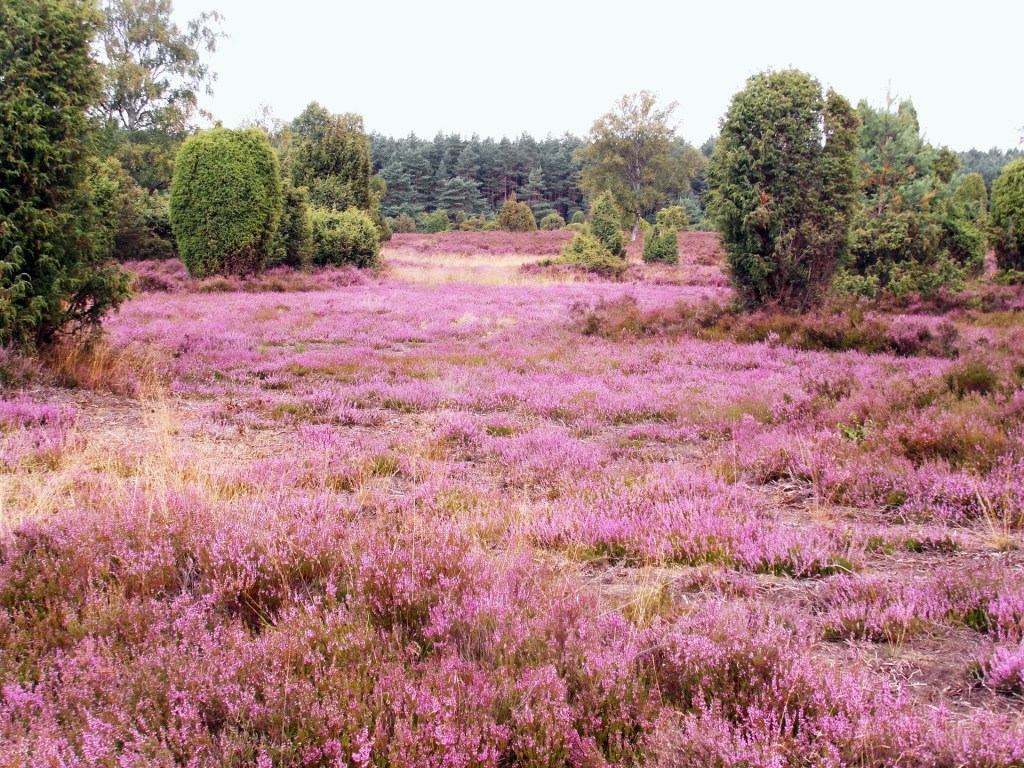
Heide by Steinchen via Pixabay

It’s only days since I returned to Manchester and I’m slowly getting back into the English language. It has been a great pleasure to feature poems here this year by my friend Kathleen Kummer. I hope you enjoy this one.

A walk in summer in Holland

No ditch, no canal, no river here,
no heron to remind me, as always, of Gandhi,
hunched up, as it studies the text of the water.
This landscape, the heat at Blaricum,
its sandy paths moist from yesterday’s rain,
never seem to be still. It moves with a gentle,
rocking rhythm. The mass of heather,
shrubs and trees, the tipsy ladders
of vapour the jets leave behind like litter,
the cirrus snagged on the sky, the flock
of sheep, horned flecked with brown,
expertly nibbling between each dainty,
filigree sprig – all of these
frolic round us: moving pictures
on a frieze like those in a child’s bedroom.

An illusion? Call van Gogh as a witness.
His olive groves writhe, his crops are waves,
cypresses rock on an ocean of fields
or boil with the stars in a fiery furnace.
But here, there is no such fever. Under
the huge Dutch sky, we are cradled, rocked
on a warm bed of purple heather.

The Nettlebed – guest poet

Matthew Paul June 2020 (002)


I feel that I have known this month’s poet for many years. But, I don’t think we have ever met. Like me, Matthew Paul has been a participant on The Poetry Business Writing School. We both had work published in an excellent haiku journal. I very much enjoy his blog posts and am pleased that I can introduce you to his work: grounded in actual place and rich in vivid detail.

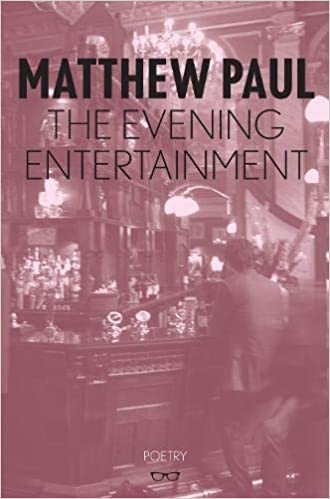
Matthew was born in New Malden, Surrey, in 1966, has worked for 30 years as an education officer for local authorities in south-west London, and lives in Thames Ditton. Matthew’s first collection, The Evening Entertainment, was published by Eyewear Publishing in 2017.

He is also the author of two collections of haiku – The Regulars (2006) and The Lammas Lands (2015) – and co-writer/editor (with John Barlow) of Wing Beats: British Birds in Haiku (2008), all published by Snapshot Press. He co-edited Presence haiku journal, and has contributed to the Guardian’s ‘Country Diary’ column.

 
THE TOXTON TORCHERS

Still their identities are secret. Let’s call them Gary and Glyn,
names which are popular then, at the Sixties’ fag-end.
This nit-locked pair of toe-rags, seeking alms box and plate,
enter St Joe’s via its sacristy, find nothing of value
and burn down the sanctuary like proper East End heavies.

They’re not discerning: any place of worship will do-
in the next few weeks, Our Lady Star of the Sea, St Anne’s,
the Kingdom Hall and the new St Margaret’s all go up in flames.
It’s when they smash collection boxes in All Souls that it ends:
old Reverend Carew and his nimble curate get straight on the blower
to the Law, who tip up in Black Marias at Z-Cars speed.

Gary blames it all on gormless Glyn. Brought before the Bench,
their eyes light up like matches as they detail every deed:
how in the new church they hadn’t the heart to torch the tapestries
as so much effort had been put into them, most by Gary’s nan.

 
THE KITCHEN GARDEN

On Capability Brown’s last visit
to this well-temperèd chalkland estate,
he plumped for action instead of advice:
training espaliers of local pears,

which would otherwise have become extinct,
against ev’ry venerable wall of brick—
‘for market opportunities’, he said,
and focused eyes on an artichoke head

whose outer bracts formed interlaced patterns
around the heart’s delirious embrace,
aubergine-veined chroma of grey–jade green.
He claimed it resembled ‘a scarecrow’s brain’.

Unaccountably, he bricked up the arch,
to dead-end our last remaining path;
so now unscalable walls enclose us,
in God’s own country’s Hortus conclusus.
(Both from The Evening Entertainment)


TEE (002)


THE NETTLEBED

One September afternoon in August, a water vole
beavers through reeds. I feel the slap
of rain on my father’s umbrella. Mercy
and I compare families: I can’t compete
with her memory of travelling,
as one of five kids, with her moody
half-sister in the boot of their dad’s Datsun Bluebird,
without a torch. The teasel-lined tributary disappears,
reappears. Moorhen chicks stumble off lily pads,
to spatter at pace upstream, their parents
flicking tail feathers and squeaking alarm.

We reach beyond toddler-high nettles and burdock—
seedheads packed like the yellowest sunflowers—
to pluck the last few blackberries, sugaring
from ruby to plum. Mercy says the wide outdoors
keeps her well; that nothing else,
neither booze nor love in any of its myriad forms,
quite does the job. We sit on a log to wait and watch.

The moorhens tiptoe over stepping stones fording
back-water channels, to vanish like mumbled
anecdotes. I shake the rain from the brolly
into the river. Day’s end brightens
as an afterthought muttered out loud; becomes
a crumbling hurrah of loneliness. Dusk
spotlights parakeets sidling, like circus budgies,
along the railing of a tower-block balcony.
We realise, then, our arms are stung to fuck.

(Previously published, in a different form, in Fire.)


PLOUGH POND

Tiptoeing through them to the Co-op
would be impossible, this ragtag army

of marsh frogs. They block the alley
from our cul-de-sac’s cul, pairing up

to belly down within the water’s grease:
tansy eyes, camouflage-trousered legs

and lime-striped backs, clamped
in the fumble of joyful amplexus.

(Published in Poetry Salzburg Review 34, summer 2019)