Tag Archives: immigration

Spoilt for choice…

This coming Wednesday are the elections for the ‘Tweede Kamer van de Staten Generaal’ – the lower house of parliament.

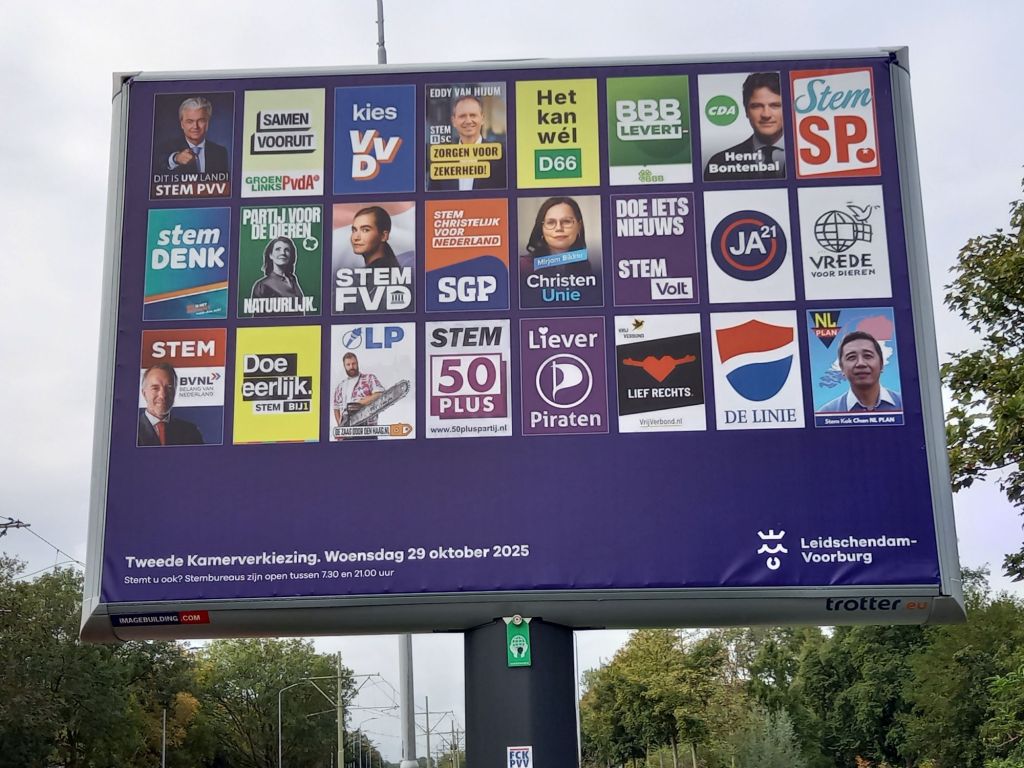
All over the country, boards have appeared with the 24 political parties. In large cities and towns each party has its own board. In small towns, like mine, the one shown.

On Friday, a pale grey sheet of A1-sized paper arrived by post: names of candidates for the 25 parties. So much detail: it’s essential to orient yourself beforehand. Otherwise, you’d spend too much time in your cubicle on the day, and there will be queues. When I voted in the last elections (November 2023), I couldn’t fold the paper back into its original roadmap shape…

The Dutch are famed for their tolerance. I find that puzzling, but then I spent most of my life outside The Netherlands.

A few months ago, a new political party ‘Vrede voor Dieren’ (Peace for Animals) was established. They split from the original ‘Partij van de Dieren’ (Party of the Animals) because the leader of the PvdD (initially pacifist) changed their views and now supports re-armament. The new VvD rejects re-armament in principle.
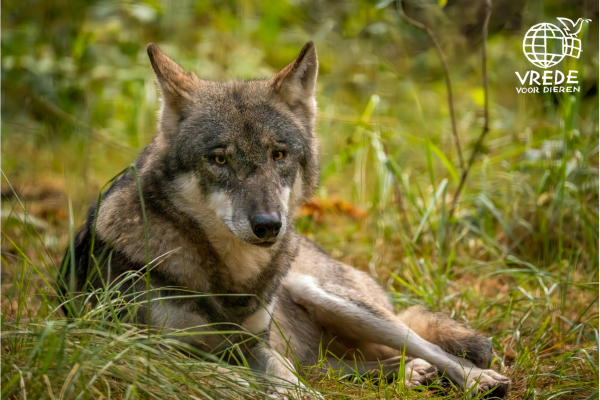
You don’t need to have read Animal Farm to think that an animal’s view of pacifism is probably Will I be eaten or not? (paraphrasing a Dutch novelist).

Confidence in politics and politicans

Confidence in politics is at an all-time low. In the August 2025 polls it ranged from 4% – 9%. Some 25% of those polled were floating voters. There are several reasons for that.

Photo credit: MabelAmber via Pixabay

Time lost in the polder…

  1. The ‘polder’ model is the pragmatic recognition of pluriformity. Time is needed to achieve consensus: people will need to polder. However, this verb has a negative connotation in relation to politics. An election will be followed by months of sitting and talking, walking and talking. A ‘formateur’ will facilitate the process. Meanwhile, the previous coalition is just ‘care taking’ and keeps things ticking over.

It also takes several months to organise an election, typically four to five.

The coalition Rutte II was the first cabinet that completed its full four-year term since 1998. Its starting date was 5 November 2021. Since then, just over two years were spent on forming the next three coalitions.

Not lasting the course

Rutte III – the full cabinet resigned over the child benefit scandal. A parliamentary enquiry had found that officials had knowingly and systematically deprived people who were legitimate claimants. Thousands of people have still not been compensated.

Rutte IV – resigned over fundamental disagreements regarding immigration measures.

Schoof – An unstable coalition from the start: two parties (the Boer Burger Beweging or BBB) and the NSC (Nieuw Sociaal Contract) both new to government and both struggling to get enough credible candidates for their seats. With Wilders of the PVV (Partij voor de Vrijheid) who’d walked out of an earlier coalition government. Seen as a ‘bunch of amateurs bickering amongst themselves.’

Not tackling the crucial issues

The Hague is a long way from the northern province of Groningen where thousands of people have been waiting for over a decade for compensation. (The subsidence caused to properties caused by fracking. Another parliamentary enquiry.) Just an example.

This time I’m a floating voter. So, I’ll go and have another coffee, inspect that grey form a little closer!
Travels with my daughter – poem

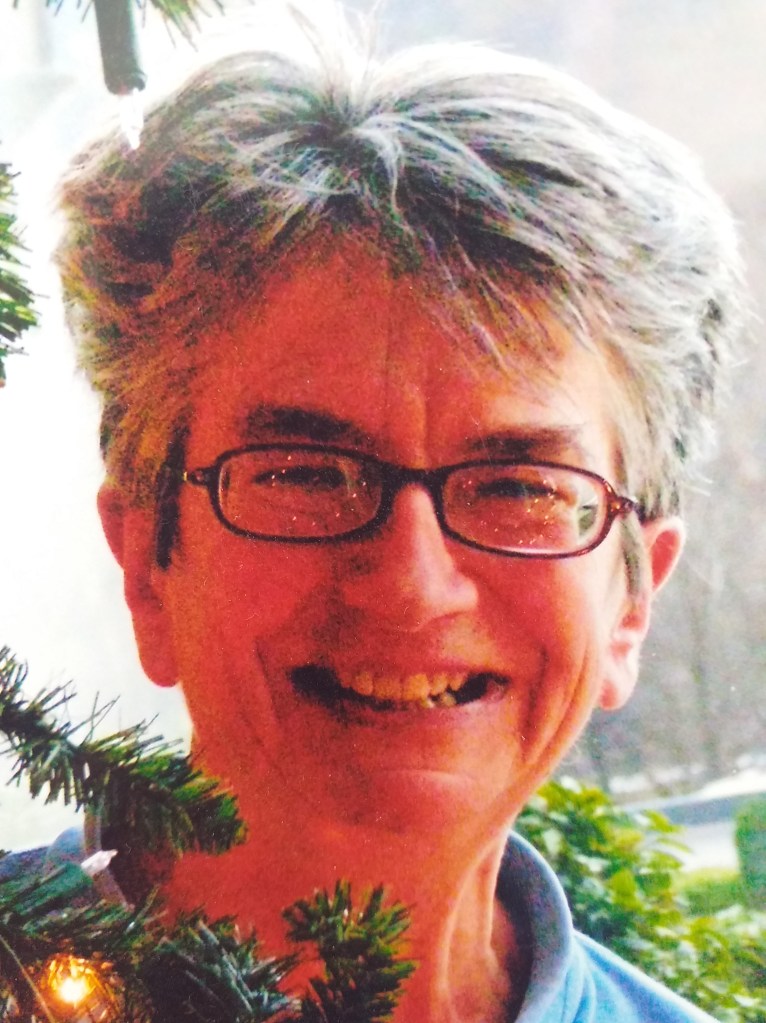
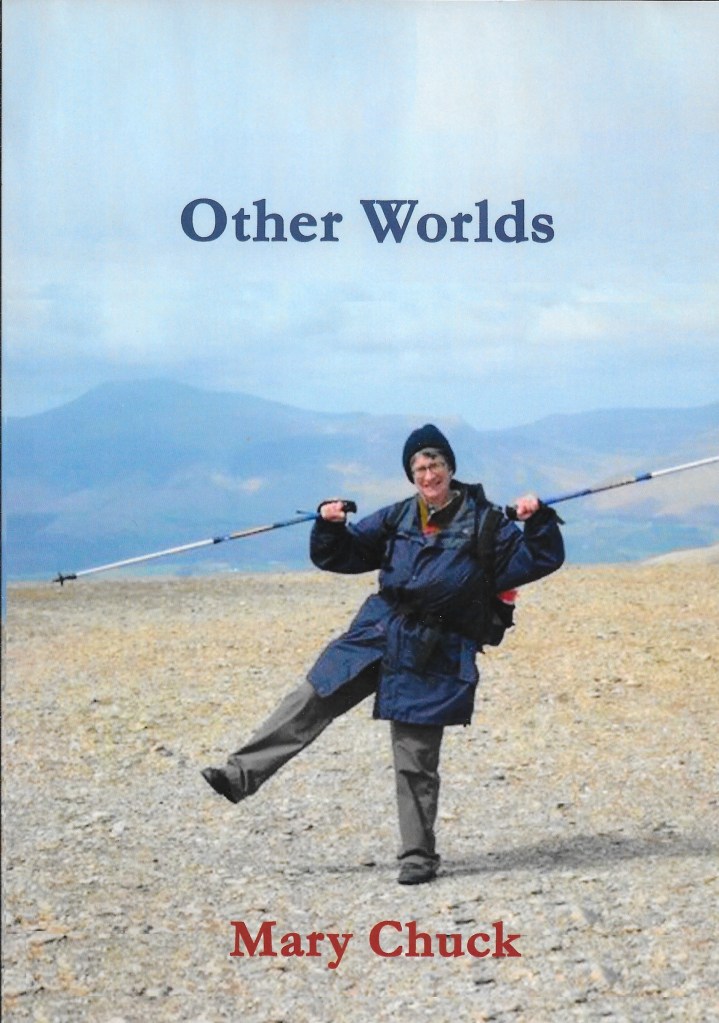
It’s a great pleasure to introduce this month’s guest poet Mary Chuck. Mary and I first met on a poetry workshop in Manchester and we have met on such workshops many times since, including a splendid one at the Almassera Vella, Spain.

Mary Chuck started writing poetry when she retired after 30 years working in Secondary Schools, starting by teaching chemistry.  While she was working her need to escape and let some-one else do the organising took her on many walking holidays in different parts of the world. She is still an active governor at a local primary school and has just completed twelve years as a Trustee of the Wordsworth Trust. She has been writing poetry with several groups, attending workshops and going on residentials with a variety of poets, but most often with Peter and Ann Sansom at the Poetry Business.

I’ve chosen four poems from Mary’s debut collection Other Worlds (Dempsey & Windle, 2021). Mary will have a belated Zoom launch with two poet friends on Tuesday 23 August. Contact Dempsey & Windle for a link.

Migration

His people came from Russia and Lithuania,
their passports always changing, not because they moved
but because their countries became other countries.

His people were Jews, Ashkenazy Jews.
They came from the East,
driven south and west over centuries
until finally they fled from the Pale.

Long after my grandfather settled in England,
and long before he was naturalised,
he was able, once again, to be Lithuanian.
His mother’s people were White Russians
or maybe they had ten white horses?

My father married out.
Her people were not Jews.

They came from Shropshire,
farmers, and one was a stationmaster.
They were not the chosen people.
Her people were not so interesting.

Jammu-Kashmir

He tells me that his father was Kashmiri
but now he can’t go back and I describe
to him what Srinagar was like
before unrest made it unsafe to go;

I tell him how we only went because
the flight to Leh was cancelled due to clouds,
and how luxurious it was,
staying on house boats on Dal Lake;

how we were shown around the lake and lay
with curtains to protect us from the sun,
on cushions on a wooden boat, a shikara,
and saw the floating gardens there;

tell him how pink the lotus flowers were
and how the Mughal gardens, full of scents
I didn’t recognise, were
different from the spice stalls in the street;

how the couple in one garden, keen to speak
in English, asked me about my life,
how they were sad my family
had not arranged a marriage – then I stopped.

I knew I’d gone on far too long. His eyes
glazed over as he looked beyond me, said
I never knew my dad
I never really wanted to.

Travels with my Daughter

I’m not really sure
when the balance altered,
when I knew for certain
our relationship had changed.

Perhaps somewhere north of Peshawar
after we drove up the Khyber Pass
with an escort carrying a Kalashnikov,
arrogant, in the front seat of the car

and after we bought an alcohol licence
in the hotel, and she flirted
in the swimming pool, with a young man
who claimed he was the brother of Imran Khan

but maybe before the landslide
which closed the road, when she carried
a tiny baby across the rubble, impossible
for its mother wearing a burkha.

We crossed a bridge over a ravine at night,
before the house of the drunken engineer.
She had been talking easily in Urdu to the driver;
we turned and reversed, then advanced

more slowly, about nothing she said
as we jolted across – then on the other side –
He had heard that the bridge was rotten,
but I told him it would be fine.

A well-worn track on Kerridge Ridge

Another glorious Saturday morning
needing to be out, needing to be walking
to be moving rhythmically across the hillside
up to White Nancy, through the kissing gate,
ignoring the brambles, skirting the quarry,
following the well-worn track on the back of Kerridge Ridge
head down muttering to myself long before anyone
might have thought I was phoning
going over and over conversations I have had
or might have had
over and over thinking if only

until, hearing the hint of a cough
I feel warm breath on my face
and lift my head to find myself looking
at a moist, brown, eye
above a large, brass, ring
in the nose of an enormous bull.

I breathe, slowly.
I look around.
It is a glorious Saturday morning.