Category Archives: Travel

What a waste!

hardys-well-2-e1529961469867.jpeg

Hardy’s Well is a pub at the end of Manchester’s famous Curry Mile. The building is 200 years old. As a bet with the landlord in 1994 Lemm Sissay wrote the poem that is on the side wall: a rebellious shout. The pub closed in 2016 and is at risk of being demolished. A planning application has been submitted for a block of 26 flats with shops. The wall with the poem will be retained inside the new building. Below is my reply to Lemm Sissay.

What a waste!

What a waste of wise, witty words, wholly wild, worldwide; wicked, wanton, willful, witless wickedness.
When the watering hole Hardy’s Well is without water, wine, whiskey, whisky,
without Wienerwurst, Wi-Fi, whitebait, wontons, wedges, waffles;
without waiters, white witches, widows, widowers in wellingtons,
women, wheeler dealers, wastrels, wino’s, woodworkers in winklepickers,
white wicket keepers, weightlifter with whippets whining at the window;
Welsh welders in woollen woven wetsuits.

Wretched, wretched, wretched! Wrong, wrong, wrong!

We who wave at weddings, whisper at wakes, we wish to wave wands,
write wry words as ways to wound those wealthy windbags with their weasel words.
When we wander away towards Withington, walk against whipping wind
we weep, watching weeds, wear and tear on wooden wheelbarrows
in a wasteland, we who wage war against wrongs, let’s have a whip round.

Poet Lemm Sissay is philosophical about the development: Things change, and new poems emerge. It’s all part of the march of time. (Manchester Evening News).


Annoying Utterances

Christopher North has said: To me the ten most annoying utterances from the lectern at a poetry reading are:
1. Have I got time to squeeze in a short one?
2. Now let me see if I can find it…
3. Now if I can just get this thing to work…
4. This is one I wrote on the way here…
5. We were asked to write a villanelle…
6. I know it’s here somewhere…yes. Oh no erm let me see…
7. How long have I got?
8. It’s a load of rubbish but I read it anyway.
9. So all you need to know is that a ‘squawk bogger’ is a New Zealand newt, and that ‘ramping in the dolditts’ is an expression used by Romany folk from the Upper Silesia referring to their annual bean throwing festival, and that Durnstadt-terminum is a Village in Bavaria where they make clay pipes – well you’ll see what I mean when I…
10. (Already 15 minutes over allotted time) – ‘…and here’s one that I have to read. It came about after my son’s first session in Rehab – he’s out now and all seems Ok, Hooray! Hooray! And it’s an important poem for me because it was like a coming to terms emotionally with …blah blah blah.
(in an interview with William Oxley in Summer 2014, published in Acumen, September 2014)

I can tick all of these of on my list of readings that I have attended!

CN

Christopher, who owns the Old Olive Press (Almàssera Vella) in Relleu, Spain is a published and prize-winning poet. His first pamphlet A Mesh of Wires (Smith/Doorstop) was shortlisted for the 1999 Forward Prize. Oversteps Books Ltd published two collections Explaining the Circumstances (2010), The Night Surveyor (2014) as well as a joint bilingual collection with Terry Gifford: Al Otro Lado del Aguilar (2011). His pamphlet Wolves Recently Sighted was published by Templar in 2014.

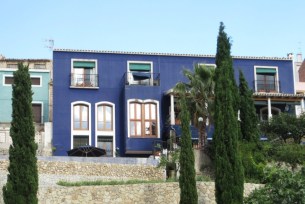
blue house back view

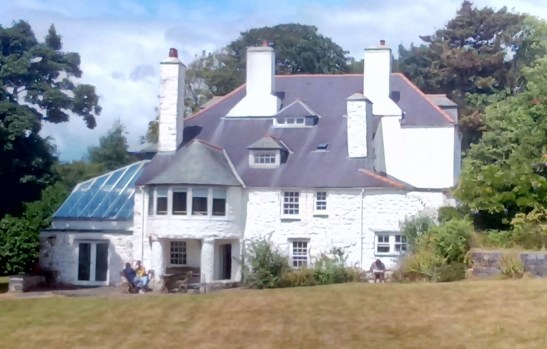
The Old Olive Press (Almassera Vella)

It does add a special quality to being on a writing week at the Old Olive Press when your host is himself a poet. We were delighted to learn that Christopher is one of the four winners of the annual Poetry Business pamphlet competition. His collection The Topiary of Passchendaele will be launched at the Wordsworth Trust on 22 September this year. The title poem has just been awarded the 3rd prize in the 2018 Poetry on the Lake competition. With Christopher’s permission I’m publishing three poems of the new book below:

Last Word

In 1997 it was calculated that that there are fifty languages on the planet with only one speaker still alive. By 2015 there were just eight.

Lost in distant steppes
of somewhere to the East

there is a bank of evening primrose
beside a mud road with

a centre strip of mayweed,
hardheads smelling of pineapple.

The man at the window
has no word for pineapples.

He has a word for the ‘Via Lactea’,
that nightly glows above his roof.

It is similar to his word
for the blur caused by a stone or rain

hitting a puddle of clear water.
He had a word for evening primrose

but has forgotten it;
now they are nothing more

than his word for ‘flowers’.
The flowers have no words.

They only know their mechanisms:
their stretching upwards

their brief flare
and then a falling back to earth.

Sometimes a jet roars across the sky
leaving a tracer line that fades slowly.

He has never had a word for that.


From an Armchair

Beyond the range of the King’s photographer
the forest of the meteorite
and its star of blasted pines;

beyond the islands of the Gulag
and the road of bones through endless forest
where winter is norm, lives pass unrecorded,

epics unfold their progress in silence,
towns work through unknown narratives —
all outside the great conversation;

beneath sky-scapes lashed with stars
and the unfolding green of borealis;
through Sakha, Yakutsk and ice crushed bridges

lies Omyakon between frozen mountains,
where they say in winter words freeze
as they leave your mouth to fall forgotten in the snow.

They make a tundra littered with gossip,
cries of love, argument and greeting,
speeches and shouts petrified in depths of ice

until one midday when larch are greening
and golden root makes a brief smile at the low sun,
words fall into air as if from a door flung open

to fill the town like birdsong and running water


(From an idea of John Catanach – originally a story from Colin Thubron)


Trestles

Wise is knowing how much
you don’t know, have no conception of.

Unravel ignorance. Cover a trestle
with all those things not known.

The trestle groans, add another,
then more, fill a hall, then an annexe,

spread into the street,
become a neighbourhood,

grow to a city, a region,
a country with unmarked frontiers.

Maintain in a corner, dimly lit,
a timid altar of things you think you know.


The Old Olive Press

Below is a picture of that olive press. Christopher and Marisa North opened The Old Olive Press, which is their house, as well as a cultural centre, in 2002. The press is located on the ground floor which has a sitting area and a large table seating a dozen. The first floor is at street level and houses the library of close to 4,000 books. Writing retreats are available and the Almàssera Vella is also listed in Alisdair Sawdays’s Spain (Special Places to Stay).

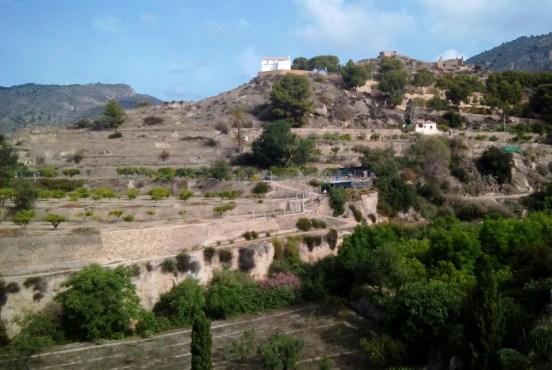
The blue house is at the edge of Relleu, a village in the mountainous area of Alicante province, known as ‘Marina Baixa’. It is the perfect location for a writing retreat, just one hour from Alicante Airport, half an hour from Villajoyosa on the coast; the village is large enough to have a bank, pharmacy, several bars and local shops. The Romans established the village on its existing site at the end of the 1st century B.C.

olive presspool JL

bancal

The olive press, the pool, the terraces (bancals) with olive trees.

I’ve just come back from my seventh visit. I’ve attended workshops with poets Mimi Khalvati, Matthew Sweeney and, in recent years, with the incomparable Ann Sansom. A week there is a winning combination of writing in the morning, a buffet lunch, and plenty of free time to write, read, relax, swim in the pool, or walk. Below is a poem from last year.

Relleu, 2017

The church bells do not have twins.
Bells ring twice, so the men working
in the campo can count the second time.

We’re at Pepe’s on the village square,
seated in two long rows at a narrow table.
Down the cobbled street is the blue house
where a white dog barks into the valley.

Maggie is moving along the table reading
aloud lines from a poem written by all
of us on the edge of the paper cloths.

A little Navarra rosé is left in my glass.
The twins of that paper poem are ahead of us.

Refusal of a visit visa (3)

suleman 3

What Dreams May Come (2015) placed between After All It’s Always Somebody Else Who Dies (2017).

Adeela Suleman writes: My work is profoundly shaped by the way in which violence is performed, experienced and remembered. The more heinous the violence, the more beautiful its memorial.  In contemporary Pakistan death surrounds us, nameless, faceless and countless. In Karachi up to 12 people a day die in gangland and politically motivated murders.

The birds are dead. They make a pattern, a simple pattern that silently repeats itself. Silence haunts you, silence is disturbing. The delicate sparrow is a symbol and their shadow on the wall a reminder of the fragility of life.

After all it’s always somebody else who dies

The headless warrior still stands strong, holds his shield,
grips the tall lance, two narrow ribbons flutter.
Reeds, flowers and grasses part for his feet.
A memorial captured in carved wood stained green,
the colour that pleases the prophet.

Hand beaten and hand beaten from behind, through
chasing and repoussé, the stainless steel sparrows
that tumbled to their death. On the left 420 sparrows,
their beaks and feet touching, all held together.
On the right the same number of sparrows,
a shiny, shiny stillness.

My poem was a response to Suleman’s sculptures. It appeared in Building Bridges, an international anthology edited by Bob Beagrie and Andy Willoughby, published by Ek Zuban in 2017.


Refusal of a visit visa (2)

Recent Poetry School workshops have been held in the Manchester Art Gallery. So, we have been inspired by sample poems as well as the works on display. On the second floor there have been several interesting exhibitions of modern art. Dashing back downstairs I missed the display on the foyer wall – an enlarged copy of Home Office form OV51 Visit (NRA). On the first page the staff have given another reason for the refusal. They doubt that the artist has control over her bank account (the application was accompanied by bank statements, as required).

visa 2

Some personal details have been blacked out prior to posting, but the applicant is born in Pakistan and the work in the gallery is by Adeela Suleman, a sculptor and artist and Associate Professor and Head of the Fine Art Department of the Indus Valley School of Art and Architecture in Karachi.

My short “found” poem:

Refusal of a visit visa

Date of refusal decision: 13 September 2017

Furthermore, you have stated that you are single
with no dependents.

I am not satisfied that you have demonstrated ties
to Pakistan that would give you reason to return
there.

a simple pattern that silently repeats itself
               silence haunts you
                                       silence is disturbing


Text in italics by Adeela Suleman.


Refusal of a visit visa (1)

I’m flying out on Saturday, so can’t take part in one of the women’s processions that are being held in the four political capitals: London, Cardiff, Belfast and Edinburgh on Sunday. Those taking part will be given a sash in one of the suffragette’s colours – white (purity), green (hope) and violet/purple (loyalty and dignity). Manchester is the birthplace of the suffragette movement. The Pankhurst Centre is just a few miles from where I live.

processions-2018_-courtesy-of-artichoke

Suffragette Procession, courtesy of Artichoke

Yesterday I realised that this top, bought in Holland, is in the suffragette colours! Okay, the green is turquoise.

Pankhurst jacket

The Pankhurst Centre published a booklet – essays, memories – to celebrate its tenth anniversary in 1997. The one poem included was mine: a sonnet of sorts.

A line to Mrs Pankhurst

Leaving space for dreams between
the cooking and the dressing of the tree
Purple White and Green

Counting wrinkles on baubles I flee
to caress the turkey and knock
about the choice: dead or free.

Skimming fat off steaming stock
to start afresh, to say seems equal folly
Purple White and Green I fill my sock.

With another drink I might feel jolly.
Outside fairy lights among a flurry of snow.
I shudder when he pulls me under the holly

and Purple White and Green I know
that maybe next year I will go.


Tulips

During my recent trip to the Netherlands I joined my sister and brother-in-law for a visit to the Keukenhof. It was a clear dry day, with a slight breeze and a some sun in the afternoon.

The Keukenhof is one of the world’s largest flower gardens incorporating different gardens and styles on a 79-acre site. It’s situated on 15th century hunting grounds and there are beech trees which are centuries old. The original park was designed in the 1830s and the Keukenhof (Kitchen garden) first opened in 1949. Each year some seven million bulbs are planted up.

17 purple tulips

I vaguely recalled the Sylvia Plath poem about tulips, so I looked it up. It was written in 1961 and consists of nine 7-line stanzas. It starts: The tulips are too excitable, it is winter here. The poem is based on Plath’s experience of recovering in hospital from an operation: I am learning peacefulness, I am lying by myself quietly/ In the following stanzas the tulips are not experienced as benign: The tulips are too red in the first place, they hurt me. The vivid tulips eat my oxygen. The tulips should be behind bars like dangerous animals;

I have one poem about tulips (in the Building Bridges anthology published by Ek Zuban last year). It has a very different feel from the fabulous Keukenhof tulips and is more at the Sylvia Plath end of the continuum. The title of the poem is the title of a watercolour painting donated by the (anonymous) artist to Manchester Art Gallery.

Extraordinary Popular Delusions and the Madness of Crowds

They’ve not yet reached one of the tulips,
the central one of this display.
You can imagine a window, if you like.
Five parrot tulips lean towards the light.
Degrees of purpling. The ants appear
half-way up the bulb-shaped vase.
I’ve left the thin pencil lines
indicating a flat surface.
Look closely and you’ll see this vase
should tumble, fall or slip.
Three fingers’ width, water level
in the glass. Greying water extracted.
The tulips were a present.
You can count the ants, if you like.


Light After Light

In Halifax last night my friend Victoria Gatehouse read at the Corner Bookshop to launch her debut pamphlet published by Valley Press. Their representative made us all welcome. It was a packed house. Vicky read alongside Wendy Pratt and Jo Brandon.

Vicky is a clinical researcher by day and in this “beautifully balanced and sure-footed debut” there are poems about science, such as Recording the Phlebotomist, Burning Mouth Syndrome, Phosphorescence, as well as poems set firmly in their locale (The Geese of Sowerby Bridge, In Praise of Pylons) and some which are, like folk tales “on the threshold of mystery”. I particularly enjoyed these and the poems which are inspired by art work made by Susie MacMurray: Pillion, Velvet Shells, Widow.

The bookshop is based in the Piece Hall, which recently has been renovated to a very high standard. I walked across this large open space to the sound of trickling water, marvelling at the lights against the last light of the day.

Vicky’s book is now on the shelves, between Rosie Garland and Kahlil Gibran. She keeps very good company, that’s for sure!


World Poetry Day

I ran away to sea many years ago.  In 1969 I arrived in London as an economic migrant and went to register with the “Aliens Office”.  P&O Lines Ltd had offered me a job as a WAP (Woman Assistant Purser) and I joined my first ship, the Arcadia.  The small flags on my blue uniform jacket and white dresses showed that I could speak Dutch, French and German to all the European passengers who were going to start a new life in Australia and New Zealand.

The haiku below was first published in the 2004 Members’ Anthology of the British Haiku Society.  The theme that year was “Other”.

down on the quayside

the band playing; their faces

already smaller

Happy World Poetry Day!


Joan – writing prompt

To honour International Women’s Day I’m posting this poem about a woman.  It was first published in The Best of Manchester Poets, vol. 2, published by Puppywolf (2011).  I aimed to give the reader enough clues (the Gauloises cigarettes, the stubborn streak) for them to be able to guess the identity of this woman before they read the final lines.

Writing prompt

It’s a good prompt: with which historical figure (famous or infamous) could you have gone to school, college, university with?  Did you even sit next to them in the classroom?  What were they like then?

Joan
One of the girls I went to college with
was Joan who’d left home early.
She smoked Gauloises, had a stubborn
streak, wanted to study philosophy.
We thought she was depressed; she cut
herself and once put out a cigarette on her arm.
I wish I’d asked her why.  I can see her now
with that hair cropped short, staring straight ahead.
People shouting, the smoke, the crackling fire.
Too hot, I need to step back.