Paterson

During the Christmas holidays I went to see Paterson, the delightful film about a bus driver who writes poems.  The poems in the film are by the New York poet Ron Padgett.  Back home I found his work in the New York Poets II Anthology, including the Love Poem that Paterson writes in the film.  The first line is: We have plenty of matches in our house. 

Paterson is also the title of a long poem by William Carlos Williams, so I re-read him.  Seeing Paterson sit in his bus scribbling away each morning before he drives off for the day reminded me of another American poet, William Stafford.  He wrote a poem each day, starting with a brief description of the weather, then a short aphorism, then a poem.  I believe his “hit rate” for acceptances was 1 : 7, or 1: 8.  I’ll settle for that!

May you have a healthy, happy and creative year.  If you’re short on inspiration, you can always write about the matches in your house.  Over Christmas I used up a couple of boxes of good old “Svalan” from Sweden.  Now I’ m on “Flix” from the Netherlands.  The packaging is modern, but the tips are brown…

Another life

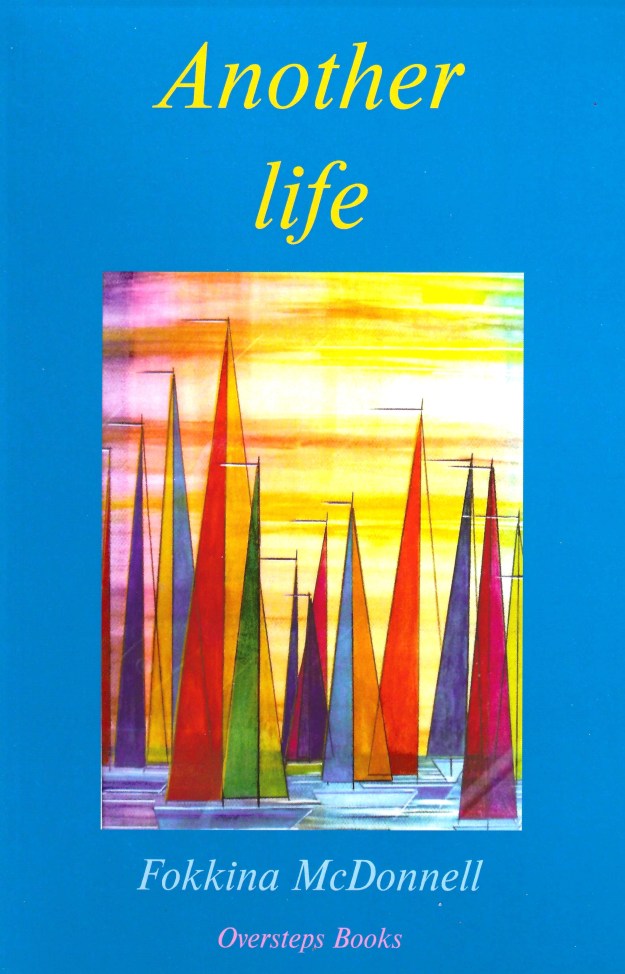
Here are piles of blue books with the colourful cover image – a painting by my brother-in-law – and glowing endorsements.  Publication of Another life is perfectly timed: I’ll be giving my debut collection as Christmas presents.  Some friends and family members have already ordered additional copies too.  Manchester city centre is heaving with the crowds attracted by the Christmas markets, so the launch is postponed till early 2017.

I sold my first copy last Saturday to Pansy Maurer-Alvarez who’d flown in from Strasbourg to read at Barlow’s Cigarette.  She’s published by KFS – knivesforksandspoonspress.co.uk.  I very much liked her work. And the invite to read got me to brush up and polish some more experimental work and “found” poems.  It was fun to include German and Dutch words and phrases and my performance was well received.


Covent Garden tube station


Covent Garden tube station and Manchester Cathedral is where you could have heard my poems this month.  My poem This too is art was one of six winners in the quarterly competition for members of the Poetry Society.  I gave permission for it to be printed and handed out to people passing their stand.  Along with some of the other winning poems on the theme of ‘Messages’ it was recorded by staff and played all day on National Poetry Day (6 October) in Covent Garden tube station – ticket office, lift, platforms – just like any other announcement.  One feels for the staff in the ticket office!

I always enter the annual Manchester Cathedral Poetry Competition.  It’s local and any money left goes to charity.  This year one of the three I sent was Highly Commended by Jo Bell.  She read after Michael Symmons Roberts delivered his talk on Poetry and Religion. It’s a slightly daunting venue, but the poet-in-residence Rachel Mann put everyone at ease and it was a great experience.

My lucky streak in competitions has ended: nothing in the Torbay and Buxton.  But the collection is definitely being published this year!  It’s all done; just waiting for two poets to send some kind words for the back cover…

The Snail

I’m planning to get the 10.41 to Liverpool Lime Street. I’m on the single-decker blue Magic bus, with the bright orange bars and handles inside. We’re crawling through the Curry Mile – with the newly completed cycle lanes and a few badly parked cars, the buses have to manoeuvre; even the walkers are catching up with us.

white petals float
towards the shisha bar
sleeveless cyclists

The Liver birds are shimmering, a salt tang, ice cream sellers and flocks of French pupils draped around the dock. The Tate opened late this morning. A friendly guide – grey curly hair, faded lilac shirt – directs me to the first floor.

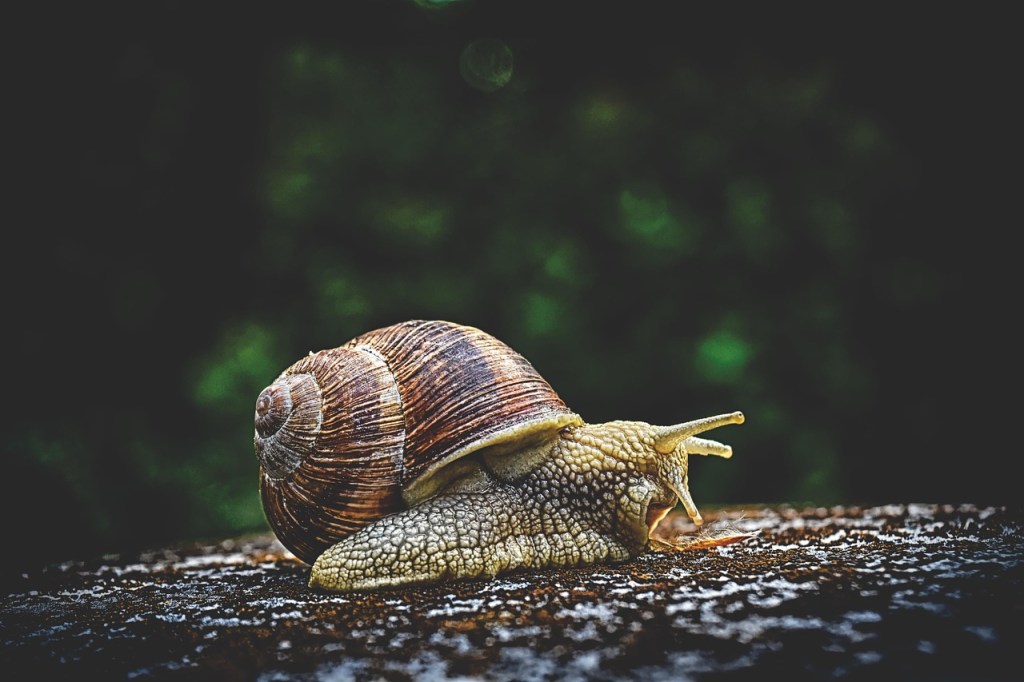
On one side of The Snail four bronzes: a backbone has become an “abstracted plait”. In fuzzy black-and-white film Matisse points with a walking stick to where the next piece of cut-out should be attached. The Snail’s alternative title is Chromatic Composition. Apparently it was planned as part of a triptych, this “purified sign for a shell”. The pin holes are visible in the brightly coloured paper.

In a traditional saijiki (list of kigo, or season words) the snail is linked to summer and that fits with these colours: orange, lilac, greens, blue. My own saijiki is Haiku World: an International Poetry Almanac compiled by the late William Higginson. It’s a unique anthology: over a thousand haiku, from more than six hundred poets, living in fifty countries, writing in twenty-five languages. At 400 yellowing pages it’s too heavy to carry around.

The snail is caracol in Spanish, slak in Dutch/Afrikaans and katatsumuri in Japanese. The Spanish word sounds like the shape of the protective shell and katatsumuri is, perhaps, the non-moving or slow moving, the snail stuck to the window. Many years ago I had a Korean manager lodge with me at Norwood Rd. He and his colleagues were learning English at the Business School. Smoking he paced through the rear garden, saw me sprinkle blue pellets…Miss Fokkina, you nourish the snails?

P is for Pliers

Well, P is for Procrastination and for Performance Anxiety. But we want a concrete noun for a poem. Just the other week I bought a copy of 52 Write a poem a week Start Now Keep going. I was going to start that week and then the first poem Everything is going to be amazing by Lauren Zuniga made me chuckle, and I was lying in bed and I don’t ever write poems in bed, so it was best to turn the page and read another poem. Now it’s Easter Monday and I’m shortly off to Holland, to the Netherlands. While I can read English poems over in Holland, I cannot write them as I’m back speaking Dutch. Therefore, it makes sense to postpone.

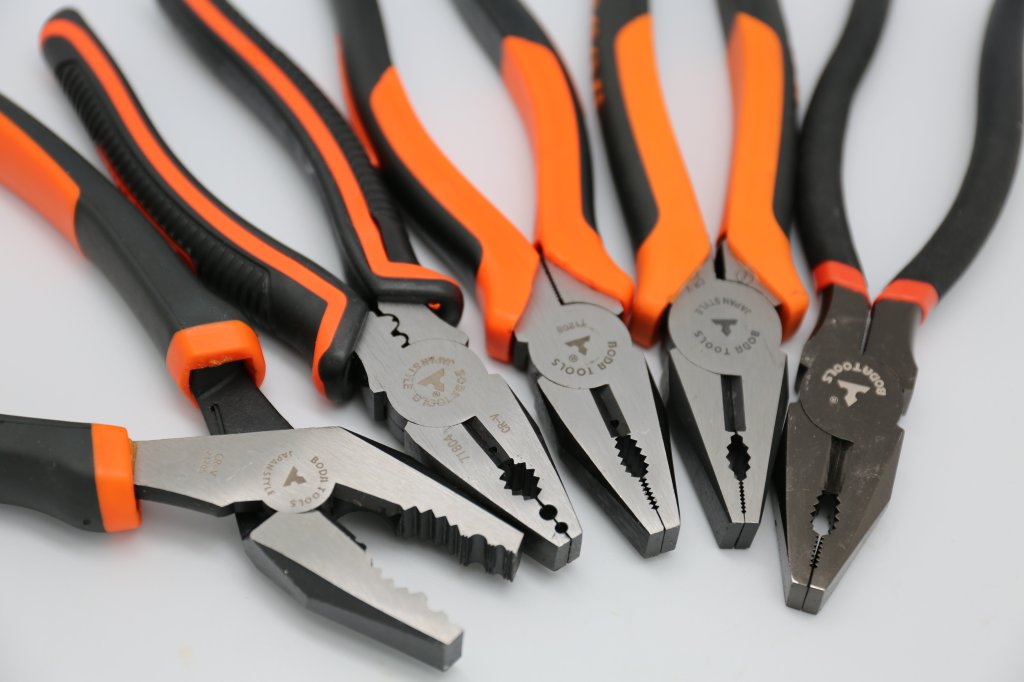
I can tell you about the pliers, though. The prompt must have come from Matthew Sweeney who was the tutor that week. We were just to sit quietly, clearing the head from clutter and then to slowly run through the letters of the alphabet until one letter gave some energy, or sound or resistance. I remember that I was sitting on the loggia, looking out over the terraced fields and the small white chapel in the distance. That may explain why the previous 15 letters were silent. Once we got the letter, we were to run through some nouns until one noun spoke….potato, parsley, parchment. Below is the poem Pliers that I wrote that day.

Pliers

A museum dedicated to pliers
opened last month in the old part of town.
Pliers, collected from five continents,
are displayed in rows on walls and in glass cases.
Most are made from metal, shiny or a rusty red;
their handles green, blue, grey or black.
The curator, a small Belgian, Jan de Smets, exiled
from the Congo thirty years before, found
the earliest exhibits on his expeditions
to empty houses, garages, sheds and shacks.
Pliers have also been donated to him by retired
plumbers, old builders, and master carpenters.
Six toy pliers are on permanent loan.
So far, de Smets has catalogued 1491.
Where pliers are missing from a boxed set,
the white outline of their shape remains.