Tag Archives: poem

The Vienna of Sigmund Freud


image_gallery


In November 1994 my friend Wendy and I flew to Vienna, with Niki Lauder’s airline. She had asked me to come for moral support, as she wanted to look at the houses where her parents had been born and lived. They were Jewish and had both left Vienna before the war, meeting in Manchester where they married and changed their name from Grünewald to Greenwood.

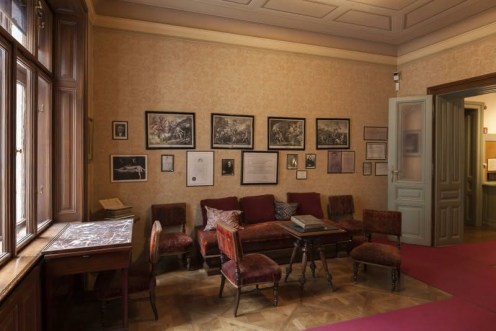
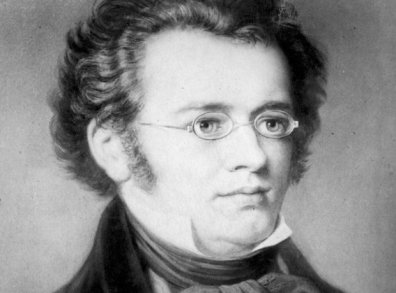
Wendy and I visited the Freud Museum together. My poem The Vienna of Sigmund Freud was awarded the second prize in the 2012 Marple International Poetry Competition. On the Saturday morning my friend went back to one of the houses and I went to the birthplace of the composer Franz Schubert. I expected crowds, but I was alone with a protective attendant.

Scan0018

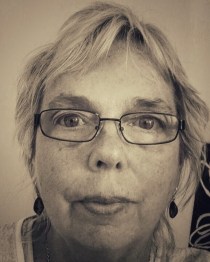
Wendy being awarded first prize in the 2000 Sale Photographic Society


During his short career, less than 20 years, Schubert composed a vast amount of music: over 600 vocal works, seven symphonies, piano and chamber music. He died in 1828, aged 31. My friend Wendy died in April 2000, aged 52. Litany for All Soul’s Day is one of Schubert’s best-known songs: Alle Seelen Ruhn in Frieden! All souls rest in peace!


franz-schubert-1372938064-view-1


The Vienna of Sigmund Freud
(after Miroslav Holub)
This is where they rein in Lippizaner horses
and Schnitzler and Klimt shocked
and Hitler studied art.

And here an emporium reflects the cathedral.
Here they debate the merits of Sachertorte
and mature women wear hats with feathers.

This is where Freud analysed the disturbed
and the distressed sat in his red waiting room,
this museum with a clean flag and frosted glass.

And here the U-Bahn stations are without graffiti.
Here the shoppers whisper silently
and pain starts when sounds die.


Nussdorferstrasse 54

Red geraniums in window boxes
brighten the wooden balcony.
Scattered leaves around the statue
of a shy, naked girl, perched on the edge.

I’d planned a rain-soaked pilgrimage:
wind howling in the chimney. Imagined
creaking stairs, the shadows of birds,
old beggars in swirling fog.

On polished floorboards I glide past
a clear and orderly arrangement of
manuscripts, paintings and prints.
The shiny keyboard waits.

Now the sun lights up his portrait.
Elbow resting on books, he holds a quill.
Franz Schubert smiles past me
at this trim, suburban scene.

White-faced capuchin

Penny

It is a pleasure to introduce this month’s poet Penny Sharman. We met many years ago on writing workshops organised and run by the late Linda Chase.

Penny is a Poet, Photographer , Artist and Therapist. She is inspired by wild open spaces and coastal paths. Penny uses metaphor to create deep emotional landscapes for personal and universal themes. She has an MA in Creative Writing from Edge Hill University and has been published in many magazines and anthologies such as The Interpreters House, Strix, Finished Creatures and Obsessed with Pipework. Penny’s pamphlet Fair Ground was published by Yaffle Press in 2019 and her first collection Swim With Me In Deep Water was published by Cerasus in 2019. Both books are available from her website: pennysharman.co.uk

I have chosen three poems from Fair Ground to show the range and the deep humanity of Penny’s poems.


White-faced capuchin

In my dream state I keep my monkey in a violin case.
Every daybreak I unclip the clasp and let the inquisitor out.
She greets me with a pale face, jumps onto my hand
with a chitter-chatter and pisses over my skin.

I feed one morsel at a time into her small mouth: fruits, nuts,
ants, tree-rat tails, squirrel tongues, or any titbit from a bird.
She stares into my eyes in a trance, hand-sniffs and licks
my fingers for comfort.

I ask her about dreams and fears, about past arboreal fields,
how she learnt to use sticks to beat away tree boas. How she
rubbed plants and ants into her fur as a medicine, how she played
with her tribe and trembled when jaguars stalked her path.

I calm her when she sobs with thoughts of humans hunting
her for food. In another life she is an automaton holding out
her hand with a beggar’s cup for the organ grinder when
vagabonds cranked away from dawn to dusk.

She tells me how her face resembles a Capuchin friar’s cowl,
how it resembles a cappuccino in the hands of barista boy.
In my dream state I keep my monkey safe in a violin case.
Every daybreak I unclip the clasp and let the inquisitor out.

Fair ground
Bella

All night incoming waves roll pebbles on the storm beach
as the girl struggles with her fear, sweat, lack of breath,
the drums in her heart and screaming mind.

All night the incoming waves pummel the oyster shells
on Llandona sands where emptiness echoes in the girl’s ears,
not one giving an answer to her plea for peace.

All night she searches for just one pearl to hold in her hand,
to calm her in the driving seat, to be the passenger,
to leave control under a gravestone at St. Dona’s Church.

All night the witches rumble spells through the glazed glass
And washed floor boards inside Gorphwysfa, a place of rest
where each window sees Red Wharf Bay.

All night she walks down the hill in dreams: it’s easy to paddle
in the shallow ocean, it’s easy to place worries in a paper boat,
to sail them to somewhere out of her white room.

 
Cutting rice

Let me hold your hand, heal the howl of blue-eyes.
Look at you, down on your knees, how you cut
the smallest white grain, your hunger in the meadows.

Let me stroke your hair, calm your thin-moon of stone,
your rock strangers that run through a corridor of minds.
Here’s a lemon balm to smooth out your wrinkles.

Let me hear your earthquakes, leopard-spotted appetites
for belonging. Bury them in my palm. Let me bring blossoms,
the white-white of petals in your earthly hours.

Garment of Healing

garment

Here is another poem about healing. It comes from working with a male client over a period of a few years. He had been diagnosed with chronic PTSD, following serious trauma at an early age. He was doing well, back into doing creative work, and he came up with the notion of the “garment of healing” – which was woven in strong materials and wonderful colours, but just needed a decent seam …

 
The poem is in the form of a sestina. This is not an easy form to use. There are 39 lines (six six-line stanzas with an envoy) in which each stanza repeats the end word of the lines of the first stanza, but in a different order. Then the envoy uses the six words again, three in the middle of the lines and three at the end of the lines. So, the length and the sequence of repetition make it a challenging poem to write.

 
The famous sestina by Elizabeth Bishop A miracle at Breakfast was written during the Great Depression and, with the use of coffee, crumb and miracle, hints strongly at the biblical tale of loaves and fishes. The other three words she used are: river, sun and balcony. It is a marvellous poem.

 
My poem, like the Bishop poem, tells a story. You’ll see that I have chosen some words that can be a noun or a verb, to help with that repetition. Part of the poem came in a dream and I shared the poem with my client.


Garment of Healing

She checks the neat empty card in the window.
The mannequin is naked. No garment
covers her body, breasts the colour of old moon.
The shop is closed, the street the usual exchange:
grey fumes, smells, hoarse shouts, sirens, a kind
of whirlpool for those who don’t have a butterfly.

Some words come: naked, emperor, butterfly.
She walks in step with them, widow, window,
left, right; tries to make the voice kind
and soft, but it sneers garment?
Last week she told her counsellor in exchange
for a tissue that became a crumpled moon.

Told him about dreaming under a sickle moon,
about her right shoulder turning into a butterfly.
Sometimes she doubts the session is a fair exchange
and that voice hisses your soul a window?
She should tell the man about the missing garment.
He might not believe her. A man who’s kind

may turn. Her father had been a turncoat, a kind
man outside… Ah, see the pale moon
above the office block. She’ll google garment
if she can’t find the dictionary, choose a butterfly
for her 46th birthday from the window
of the tattoo parlour. Right first time, no exchange.

She buys bananas in the market, exchanges
a few how-are-yous, smiles, gives a kind
wave, goes to the shopper’s service, a window
of silence. Praying is no good and that moon
is starting to sink behind the building. A butterfly
flutters in her stomach: garment        garment

Her heels turn. She needs to check, the garment
must be waiting, the window dresser mid-exchange.
He said It’s a good sign dreaming of a butterfly.
He said It’s never too late to grow that kind
voice inside. Waxing and waning like the moon.
Slightly out of breath she’s back at that window.

There is the garment of healing in the window
and a butterfly opens its wings of creamy moon.
These exchanges are priceless and the only kind.

Leaving Czechoslovakia, 1964

Image


I was invited to read at a European Language Day, held at the Instituto Cervantes here in Manchester. I selected poems that all had a European connection, including the poem below.  It was a joy to take part in the evening event. And I very much enjoyed watching and listening to Hungarian dancers in traditional costume, and a young woman singing melancholy songs from the Balkans and Romany songs.

The next morning I did a bit of clearing through photo albums and found a black-and white photo of that red Trabant! The young woman leaning on the driver’s door had only just passed her driving test and advertised for someone to go with her.  In the event her father drove us to Munich from Amsterdam, and after that we were on our own.  Her mother was Czech, so we met a lot of family out there.  The poem was included in Songs for the Unsung anthology, published by Grey Hen. It will be included in my second collection Nothing serious, nothing dangerous which will be published shortly by Indigo Dreams Publishing.


Leaving Czechoslovakia, 1964

When we reached the border
in her small red Trabant
our cases were lighter: the pleated dresses,
jeans we’d given to aunts and nieces;
our footsteps behind us on the mountain
where we walked with her family
up towards the border with Poland,
our plimsolls wet, our hair lank from drizzle;
sweet and savoury Knedlicky we’d eaten;
songs we’d sung, drunk on vodka,
already flown, small skittering birds;
the yellow Objizdka sign in Prague diverting us
into the path of a funeral, black plumed horses.
The border guards with their guns gather
around us as we try again to open the boot,
our stiff smiles telling us not to think
of the airmail letters for America
hidden under the back seat.

Rembrandt van Rijn

Johnnes W

Rembrandt is always big business in the Netherlands, and especially this year: it is the 350th anniversary of his death. Everywhere there are items of merchandise for sale with Rembrandt’s paintings and etchings. I treated myself to a folder and bought birthday presents for friends. One of those was a birthday calendar. The Dutch have a tradition of hanging these inside the toilet, on the door!

I was raised a Protestant and for much of my childhood we lived down the road from the church where my father was the organist. Rembrandt was beginning to make a name for himself as a portrait painter when he did the portrait of Johannes Wtenbogaert. He was the founder and leader of the Remonstrant Brotherhood and preached religious tolerance. The poem was published in my debut collection Another life.

 
Portrait of Johannes Wtenbogaert, Remonstrant Preacher, aged 76

He stands there and we wonder what he thinks.
His head, resting like a deserted swan
in a nest of fine lace pleats. Did he shrink
even once from God’s black skull cap plan?

In a corner, placed to catch the light,
the book we expect is his bible. No,
those pages curling away from top right
are not yet half full, and only we know

this preacher would live till nearly ninety.
Too tired to protest, he faces Rembrandt
who paints a life-like sketch where we can see
the frayed edge of the limp cloth in his hand.


Liberation Day

Bourdon

Bourdon bell, Waalsdorpervlakte

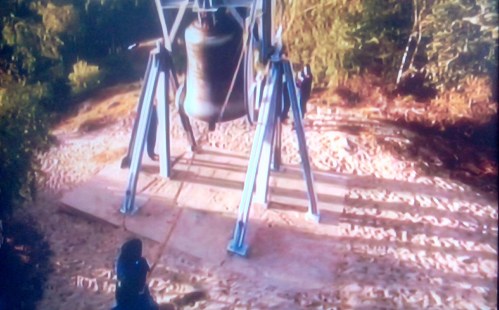
Even inside my caravan I could hear the dark sound of the Bourdon bell, just over a mile away in the dunes. The Waalsdorpervlakte is one of the major Second World War memorials in the Netherlands. On the evening of the 4th of May, there are formal gatherings everywhere in the Netherlands. The King and Queen will be on the main square in Amsterdam with other dignitaries, taking turns to lay wreaths.

However, there is something deeply moving about the gathering in the dunes. It is the location where around 250 people were executed during the war, many of whom had been active in the resistance. The area is part of a protected nature reserve, close to Scheveningen where those about to be killed were kept in prison (locally called the Oranjehotel), and close to the beach.

The first formal commemoration was here in May 1946 when there were just four wooden crosses. Later they were replaced with four bronze crosses. Local volunteers will have placed rows of flowers in the colours of the Dutch flag (red, white and blue) in front of those crosses. They also ring that large Bourdon bell and stop it just before 20:00. After two minutes’ silence and the national anthem, they start ringing the bell again. People can then walk past and leave a wreath, a bouquet, or just a single flower. The bell is rung until the last person has walked past and paid their respect. That may be close to midnight.

Liberation Day is celebrated annually on the 5th of May, with major celebrations every five years.

This poem will be included in my second collection, due out early autumn.

Here I am walking …

Here I am walking with a small horse.
I found it on the path to the supermarket
where it stood, eyes closed, by yellow gorse.

All this happened a long time ago,
before I was born, before the war,
and the rope in my hand smells of horse.

We can turn to the right, walk over
the dual carriageway, head for the dunes,
four bronze crosses to remember

the war dead and we’ll arrive,
place our feet on the beach
where it’ll soon be night.

Is it a competition?


11

Virtues of Unity, by Halima Cassell

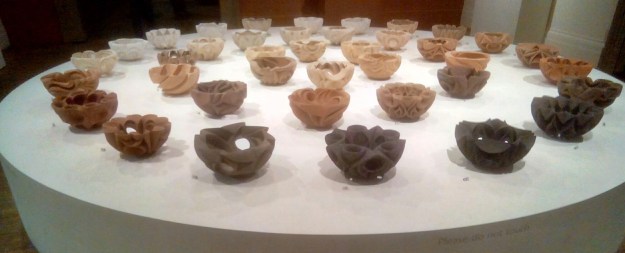
Is it a competition? the woman with dark hair and glasses asked. I stood writing in a small notebook.  On the contrary, I said. I told her this installation is a major and ongoing project. The artist Halima Cassell was born in Kashmir, then raised in the UK. In England she is called a “foreigner” or “second generation migrant”, so she has always been aware of issues of identity. However, when she visited Pakistan as an adult in 2009, she was called “British Asian” or more frequently “a foreigner from England”.

This sense of double dislocation was the trigger for Virtues of Unity. Different countries produce different colours and textures of clay. Each sculpture has its own design. Superficially, we seem dissimilar, but we share DNA. We all come from the clay of the earth and will return to that same elemental clay. The shape of the sculpture resembles the earth, the holes remind us of the womb and the birth canal. Halima was pregnant with her first child when she conceived the project.

So far, Halima has made 39 vessels. Her aim is to make 195, one for each of the countries in the world today. It will be a life-long journey. Each of the sculptures has been made from the clay of that country. The designs of each vessel and the titles represents a positive quality of that country, eg the Netherlands is called Harmony.

I was on a writing workshop at Manchester Art Gallery and we were to imagine a public superhero with a piece of art in the Gallery. I have been pleased to read that the under 35’s are streaming the composer J S Bach. He has been one of my superheroes for many years.

2 (2)


Virtues of Unity

He seemed invisible to visitors,
though he was dressed in a costume
of the period, and his wig resembled
curved waves of a waterfall.

In truth, I thought he was part
of the installation: thirty-nine spheres,
each one representing a country and
made from the clay of this country.

He moved slowly anticlockwise,
stopped at the small ceramic vessel,
a creamy white called Faith.
The positive quality of Germany.

A slow smile grew on his face
when he saw there were no openings,
that the vessel seemed restful,
flowering into a solid cathedral.

Russet, tan, black, brown, beige, taupe,
grey, creamy-white, white. Eyes fixed
on his native country, he started humming
Jesu, joy of man’s desiring, and I was glad.


John and Mary meet …


2 romance

A romantic display at the 2018 Keukenhof, the Netherlands

A poem for Valentine’s Day:


John and Mary meet

John and Mary meet.
John and Mary greet.

The Film and Reels.
The Cog and Wheels.

John falls first.
Therefore, he kneels.

Mary thinks she knows
what John feels.

So, Mary falls as well,
as far as John can tell.

The sorcerer, a spell.
The Bell and Peals.

John and Mary greet.
John and Mary eat,

more sour than sweet.
Their eyes no longer meet.

A Golden Shovel poem about Brexit…

40.jpg

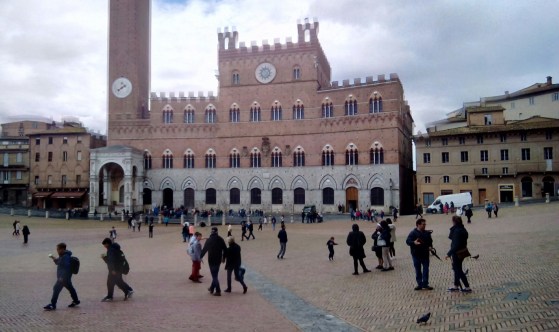
The Campo, Siena, Italy.

The Golden Shovel form was invented by Terrance Hayes. His poem Golden Shovel is a tribute to the poem We Real Cool by another US poet Gwendolyn Brooks. It is a poem about a group of young black men playing pool in the Golden Shovel. Terrance Hayes’ poem stays close to the subject of the original poem. You can find it on the Poetry Foundation site.

A Golden Shovel poem takes a line from another poem and places the words at the end of the lines of the new poem. So, Terrance Hayes’ poem starts:

When I am so small Da’s sock covers my arm, we
cruise at twilight until we find the place the real

men lean, bloodshot and translucent with cool.
The UK is inching closer and closer to the 29 March deadline for leaving Europe. I’ve had chronic “Brexit Anxiety Disorder” for over two years now, so was glad to escape for three weeks to Lanzarote – warmth, sun, walks by the sea, good books, company of family and friends.

Here is my first attempt at a Golden Shovel poem. It is inspired by a line from Nine Allegories of Power, by John Siddique: The accumulation of seconds in which empires are born, gather their height and become broken statues and friezes in museums far away.

In Blighty

So much here in Blighty has been lost, replaced or deleted: in the
grey city centre European Christmas markets confront an accumulation
of dirty duvets in doorways of offices and hotels. I hear the faint ticking of
clocks, hold memories of closed libraries, swimming pools. No seconds
are offered in foodbanks. Minutes after my friend put tinned rice in
a cardboard box in Sainsbury’s, she tripped on the cracked pavement which
has an outline in white paint. The people, many of them, dream of empires
returning. The past was always another country and pipe dreams are
made of clay. One man’s dream is another woman’s nightmare. I was born
in a land below the sea, the North Sea, a country where politicians gather
around tables, walk the corridors in The Hague to arrive, eventually, at their
destination: consensus, compromise, through polderen. I cry at the height
of hypocrisy when Britannia rules the waves, Jerusalem, and
other iconic symbols are stolen by those moneyed men who have now become
European citizens simply through buying in. The UK, my home for 45 years, is broken
but the chimneys of empty factories will outlive the stately statues
of proud admirals on horseback. They are already covered in pigeon shit and
some wear a fluorescent yellow jacket. High up in the Gallery are Victorian friezes
and dusty glass cases display the relics of civilisation, while upstairs in
the Elgin Room a silent queue shuffles, some people are crying. These museums,
(yes, every town or city has its Museum of Lost Marbles), have at the far
end the emergency exit, a green man running, running, running away.

Refrigerator, 1957

To help me get back into writing, I got out 52. Write a poem a week. Start now. Keep going. The book originated in the 52 Project by Jo Bell and guest poets. I opened it at random and got to Prompt No. 15 titled Bell, Book and Candle. This is a prompt on writing about the unnoticed object.

The second sample poem Refrigerator, 1957 is by the American poet Thomas Lux. As synchronicity would have it, today is the first anniversary of his death. He was born in 1946 on the dairy farm his father owned. On poets.org, the website of the Academy of American Poets, I watched a short video In Memoriam 2017 which had a picture and a short quote by each of the US poets who died last year.

Adding that date to an ordinary object already makes it less ordinary. It tells us the perspective is that of an eleven-year old boy. More like a vaultyou pull the handle out it starts. There is humour: not a place to go in hope or hunger. Then the poem zooms in, heart red, sexual red, neon red, on that jar of Maraschino cherries. The same jar there through a childhood of dull dinners… Then we go down the timeline to grandparents, pig farm in Bohemia. The poem ends and because you do not eat/ that which rips your heart with joy.