Author Archives: acaciapublications

The Old Olive Press

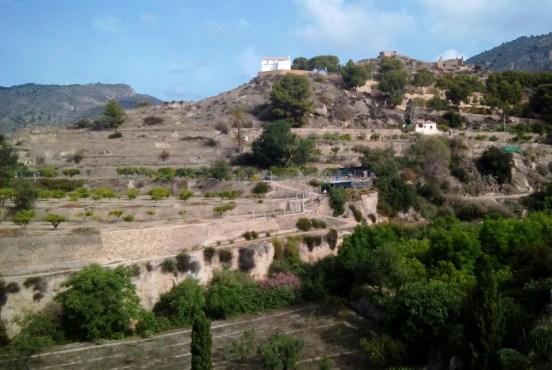
Below is a picture of that olive press. Christopher and Marisa North opened The Old Olive Press, which is their house, as well as a cultural centre, in 2002. The press is located on the ground floor which has a sitting area and a large table seating a dozen. The first floor is at street level and houses the library of close to 4,000 books. Writing retreats are available and the Almàssera Vella is also listed in Alisdair Sawdays’s Spain (Special Places to Stay).

The blue house is at the edge of Relleu, a village in the mountainous area of Alicante province, known as ‘Marina Baixa’. It is the perfect location for a writing retreat, just one hour from Alicante Airport, half an hour from Villajoyosa on the coast; the village is large enough to have a bank, pharmacy, several bars and local shops. The Romans established the village on its existing site at the end of the 1st century B.C.

olive presspool JL

bancal

The olive press, the pool, the terraces (bancals) with olive trees.

I’ve just come back from my seventh visit. I’ve attended workshops with poets Mimi Khalvati, Matthew Sweeney and, in recent years, with the incomparable Ann Sansom. A week there is a winning combination of writing in the morning, a buffet lunch, and plenty of free time to write, read, relax, swim in the pool, or walk. Below is a poem from last year.

Relleu, 2017

The church bells do not have twins.
Bells ring twice, so the men working
in the campo can count the second time.

We’re at Pepe’s on the village square,
seated in two long rows at a narrow table.
Down the cobbled street is the blue house
where a white dog barks into the valley.

Maggie is moving along the table reading
aloud lines from a poem written by all
of us on the edge of the paper cloths.

A little Navarra rosé is left in my glass.
The twins of that paper poem are ahead of us.

Poetry as Survival

Last week on a writing workshop with Ann Sansom I read Poetry as Survival during my free afternoons.  In this book Gregory Orr, the author of many highly praised poetry collections, explores how writing, reading and listening to lyric poetry has enabled people to confront, survive, and transcend suffering.

In the introduction, Orr writes: When I was twelve years old I was responsible for a hunting accident in which my younger brother died.  Two years after this accident, Orr’s mother died suddenly, aged thirty-six, after a “routine” hospital procedure. A few years later, he experienced further trauma as a volunteer for the Civil Rights movement, including being abducted at gun-point and being held in solitary confinement for eight days. Orr then discovered poetry: I knew that if I was to survive in this life, it would only be through the help of poetry.

I gained a great deal from the book, especially the first part. Here Orr uses examples from around the world and from all ages to illuminate how lyric poetry helps us to find solace. Theodore Roethke’s poem My Papa’s Waltz was written in the late 1940s, a child’s encounter with violence. Below is my own poem along these lines, dedicated to my father who died in 1990:

Propulsion

When I was a child I was scared
of him – the biting voice,
the it’s never good enough look.

I saw the crack in the cupboard door,
the oak dining chair with kelim seat
that he threw with his right hand.

Over breakfast my parents
flung cutlery at each other,
then the metal teapot.
Wall-paper stained brown.

Tonight, I sift photos in my head,
see a scared young man
alongside the mother
who preferred his dead sister.


Refusal of a visit visa (3)

suleman 3

What Dreams May Come (2015) placed between After All It’s Always Somebody Else Who Dies (2017).

Adeela Suleman writes: My work is profoundly shaped by the way in which violence is performed, experienced and remembered. The more heinous the violence, the more beautiful its memorial.  In contemporary Pakistan death surrounds us, nameless, faceless and countless. In Karachi up to 12 people a day die in gangland and politically motivated murders.

The birds are dead. They make a pattern, a simple pattern that silently repeats itself. Silence haunts you, silence is disturbing. The delicate sparrow is a symbol and their shadow on the wall a reminder of the fragility of life.

After all it’s always somebody else who dies

The headless warrior still stands strong, holds his shield,
grips the tall lance, two narrow ribbons flutter.
Reeds, flowers and grasses part for his feet.
A memorial captured in carved wood stained green,
the colour that pleases the prophet.

Hand beaten and hand beaten from behind, through
chasing and repoussé, the stainless steel sparrows
that tumbled to their death. On the left 420 sparrows,
their beaks and feet touching, all held together.
On the right the same number of sparrows,
a shiny, shiny stillness.

My poem was a response to Suleman’s sculptures. It appeared in Building Bridges, an international anthology edited by Bob Beagrie and Andy Willoughby, published by Ek Zuban in 2017.


Refusal of a visit visa (2)

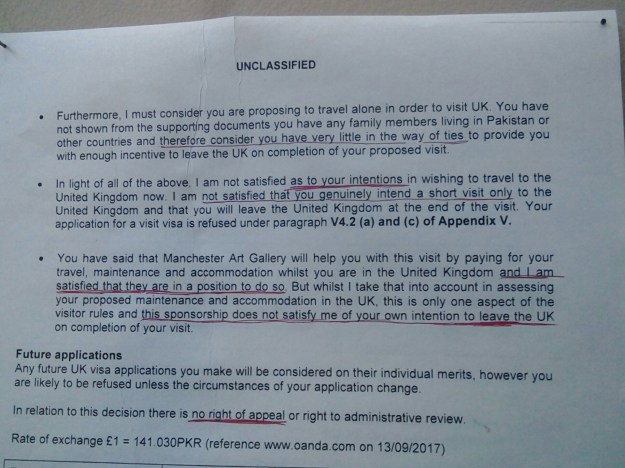
Recent Poetry School workshops have been held in the Manchester Art Gallery. So, we have been inspired by sample poems as well as the works on display. On the second floor there have been several interesting exhibitions of modern art. Dashing back downstairs I missed the display on the foyer wall – an enlarged copy of Home Office form OV51 Visit (NRA). On the first page the staff have given another reason for the refusal. They doubt that the artist has control over her bank account (the application was accompanied by bank statements, as required).

visa 2

Some personal details have been blacked out prior to posting, but the applicant is born in Pakistan and the work in the gallery is by Adeela Suleman, a sculptor and artist and Associate Professor and Head of the Fine Art Department of the Indus Valley School of Art and Architecture in Karachi.

My short “found” poem:

Refusal of a visit visa

Date of refusal decision: 13 September 2017

Furthermore, you have stated that you are single
with no dependents.

I am not satisfied that you have demonstrated ties
to Pakistan that would give you reason to return
there.

a simple pattern that silently repeats itself
               silence haunts you
                                       silence is disturbing


Text in italics by Adeela Suleman.


Refusal of a visit visa (1)

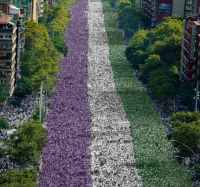
I’m flying out on Saturday, so can’t take part in one of the women’s processions that are being held in the four political capitals: London, Cardiff, Belfast and Edinburgh on Sunday. Those taking part will be given a sash in one of the suffragette’s colours – white (purity), green (hope) and violet/purple (loyalty and dignity). Manchester is the birthplace of the suffragette movement. The Pankhurst Centre is just a few miles from where I live.

processions-2018_-courtesy-of-artichoke

Suffragette Procession, courtesy of Artichoke

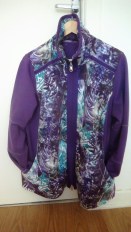
Yesterday I realised that this top, bought in Holland, is in the suffragette colours! Okay, the green is turquoise.

Pankhurst jacket

The Pankhurst Centre published a booklet – essays, memories – to celebrate its tenth anniversary in 1997. The one poem included was mine: a sonnet of sorts.

A line to Mrs Pankhurst

Leaving space for dreams between
the cooking and the dressing of the tree
Purple White and Green

Counting wrinkles on baubles I flee
to caress the turkey and knock
about the choice: dead or free.

Skimming fat off steaming stock
to start afresh, to say seems equal folly
Purple White and Green I fill my sock.

With another drink I might feel jolly.
Outside fairy lights among a flurry of snow.
I shudder when he pulls me under the holly

and Purple White and Green I know
that maybe next year I will go.


New poetic form: 821 – a competition

The 821 is an 11-line, 3-stanza poem created in 2018 to celebrate the 50th anniversary of the Northern Poetry Library. This is based in Morpeth, Northumberland and has the largest collection of post-WWII poetry in England outside London: over 15,000 volumes.

Why 821? It is the number allocated to English poetry in the Dewey Decimal Classification (DDC) System. The form also uses the “volta”, the turn, a concept traditionally associated with sonnets, and this is used to create a subtly interconnected series of stanzas that turn, or riff of one another.

The poem consists of an opening octet (8 lines), line break, a couplet (2 lines), line break, followed by a single line. There is no set meter. It could use a rhyme scheme or be free verse.

The Northern Poetry Library is sponsoring a competition for 821 poems. International entries are welcome. The poem needs to have a connection to the “North”; how you interpret this is up to you. The judges will select a total of 50 poems: during a five-month’ period 10 poems will be picked each month to form a canto which will be published on-line.

Include with the submission a statement (max 100 words) about your connection to the North. The closing date is 17 June 2018. Some sample poems are on https://poemsofthenorth.co.uk

I am grateful to poet Pam Thompson for introducing me to the form. I am definitely going to submit: I have been in the North West for almost 40 years so I have the connection, but I don’t yet have the poem – I’m not finding it easy to get a balance between the opening octet and those final three lines…


Optimism

Any writer is an optimist. Why? Number one: they think they’ll finish their book. Number two: they think somebody will publish it. Number three: they think somebody will read it. That’s a lot of optimism.       (Margaret Attwood in a recent interview.)

I was about to give up on Animate and inanimate objects relating to J Abraham. It has been sent to at least a dozen magazines and competitions in the last few years. I know one or two editors who don’t like prose poems and don’t publish them. But I like the piece, it’s quirky and I have grown attached to it, so I sent it along with three poems to Carole Baldock, editor of Orbis – a quality UK poetry magazine. I had two poems accepted in 2014, but not submitted since. Just had an email acceptance!

The piece consists of short monologues by, respectively, the favourite mug, the handkerchief, the ashtray, the moustache, and the newspaper cutting. It came out my decluttering before I downsized a few years ago.

There are echoes of Elizabeth Bishop’s poem 12 O’ Clock News. This prose poem is in the form of a report of an alien territory: the gooseneck lamp becomes the full moon, the typewriter is an escarpment, a pile of manuscripts is a landslide, and so on. I fancy that Bishop wrote the poem when she was having a bout of writer’s block. It is a witty, humorous piece that must have been hiding in my subconscious for a long time. Here is part of Bishop’s report:

From our superior vantage point, we can clearly see into a sort of dugout, possibly a shell crater, a “nest” of soldiers. They lie heaped together, wearing the camouflage “battle dress” intended for “winter warfare”. They are in hideously contorted positions, all dead. We can make out at least eight bodies.

That’s the ashtray again…


Beneath the Earth

I’ve just finished reading Beneath the Earth by the Irish writer John Boyne. It’s his first collection of short stories. Boyne is better known as a novelist: he has published nine novels and five novels for younger readers. One of these The Boy in the Striped Pyjamas sounded familiar: in 2008 a film was made in the UK based on the book.

I’d taken the book with me when I went to Italy recently. I can’t settle into a novel when I travel – plane, train, hanging around at airports. The blurb calls them “dark, unerring and surprising” and you can tell from the opening sentences below that they are dark. Boy, 19 opens the collection and Beneath the Earth is the last of the dozen.

* I started charging for sex a few days after my nineteenth birthday (Boy, 19)
* The brick crashed through the front window shortly after midnight and Émile woke with a start, his heart pounding, his eyes raw from interrupted sleep. (The Country You Called Home)
* I never had a chance to observe Arthur in his public role until a few days before my mother’s funeral (The Schleinermetzenmann)
* Hawke, a grey wolf in human form, emerged from the forest on his hands and knees, pulling pine needles from his palms. (Rest Day)
* It was no easy task to dig the child’s grave. (Beneath the Earth).

In my folder “Working Poems” sits a poem Reading Disgrace at the Mezza Luna. I started it on a workshop where the sample poem was Reading Rumi in the Bear Inn (I think that’s the name of the pub – I’ve mislaid the poem). The novel starts: For a man of his age, fifty-two, divorced, he has, to his mind, solved the problem of sex rather well.

We know, immediately, that the protagonist (David Lurie who teaches Romantic poetry) will fail and fall. The novel is a masterpiece for which J M Coetzee was awarded the 1999 Booker Prize.

Is this opening line too strong, though, to include in a poem that weaves together quotes from a book with observations about a place and people in it? Is that why the poem doesn’t work (yet)?

Tulips

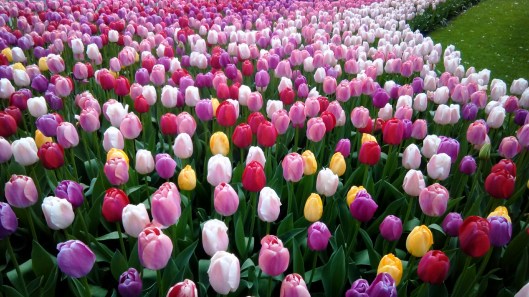
During my recent trip to the Netherlands I joined my sister and brother-in-law for a visit to the Keukenhof. It was a clear dry day, with a slight breeze and a some sun in the afternoon.

The Keukenhof is one of the world’s largest flower gardens incorporating different gardens and styles on a 79-acre site. It’s situated on 15th century hunting grounds and there are beech trees which are centuries old. The original park was designed in the 1830s and the Keukenhof (Kitchen garden) first opened in 1949. Each year some seven million bulbs are planted up.

17 purple tulips

I vaguely recalled the Sylvia Plath poem about tulips, so I looked it up. It was written in 1961 and consists of nine 7-line stanzas. It starts: The tulips are too excitable, it is winter here. The poem is based on Plath’s experience of recovering in hospital from an operation: I am learning peacefulness, I am lying by myself quietly/ In the following stanzas the tulips are not experienced as benign: The tulips are too red in the first place, they hurt me. The vivid tulips eat my oxygen. The tulips should be behind bars like dangerous animals;

I have one poem about tulips (in the Building Bridges anthology published by Ek Zuban last year). It has a very different feel from the fabulous Keukenhof tulips and is more at the Sylvia Plath end of the continuum. The title of the poem is the title of a watercolour painting donated by the (anonymous) artist to Manchester Art Gallery.

Extraordinary Popular Delusions and the Madness of Crowds

They’ve not yet reached one of the tulips,
the central one of this display.
You can imagine a window, if you like.
Five parrot tulips lean towards the light.
Degrees of purpling. The ants appear
half-way up the bulb-shaped vase.
I’ve left the thin pencil lines
indicating a flat surface.
Look closely and you’ll see this vase
should tumble, fall or slip.
Three fingers’ width, water level
in the glass. Greying water extracted.
The tulips were a present.
You can count the ants, if you like.


Greenpeace

Last night I did an open mic slot at a fundraising event for Greenpeace. There were two fabulous readings by the poets Kim Moore and Clare Shaw, as well as music. The open mic slots were four minutes each which meant three poems per person.  This gave a good flavour of each poet’s “voice” and offered plenty of variety. I’d come back from Holland 36 hours earlier, so only just got my tongue round the English…

In the afternoon Clare Shaw ran a short workshop. One of the sample poems was The Low Road by Marge Piercy. The poem starts: What can they do/to you? Whatever they want. The first stanza is then a list of things that can be done, e.g. “bust you, break your fingers, blur you with drugs, burn your brain with electricity.” After a short second stanza starting But two people fighting/back to back can cut through/a mob, there is this third stanza. The recent news in the UK (the ongoing Brexit saga, the “Windrush generation” scandal, the NHS failure with 450,000 women missing out on mammograms and treatment) has been deeply depressing. So, this was a timely reminder of people-power and I found it immensely encouraging and heartening to read.

Two people can keep each other
sane, can give support, conviction,
love, massage, hope, sex.
Three people are a delegation,
a committee, a wedge. With four
you can play bridge and start
an organisation. With six
you can rent a whole house,
eat pie for dinner with no
seconds, and hold a fundraising party.
A dozen make a demonstration.
A hundred fill a hall.
A thousand have solidarity and your own newsletter’
ten thousand, power and your own paper;
a hundred thousand, your own media;
ten million, your own country.